Weft Transport
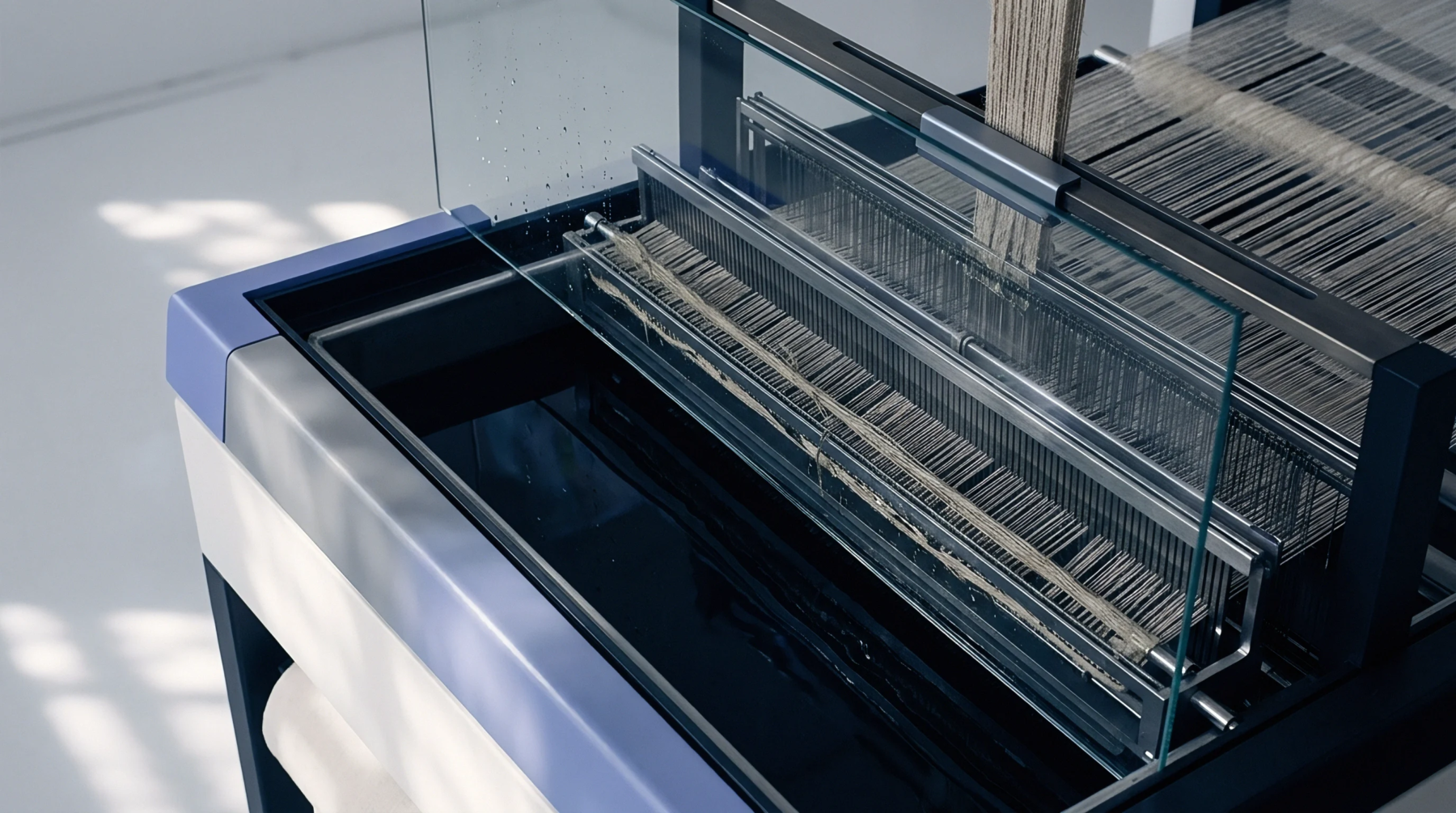
Loom machinery employs mechanical grippers on flexible bands to carry filling yarn across the warp shed. Utilizing a flexible rapier loom allows mills to process delicate linen yarns with minimal tension. This gripper system transfers the weft yarn in the center of the loom from the donor band to the receiver band.
Mechanical Versatility
The mechanical design enables the machine to process yarn counts ranging from fine linen yarn to heavy slubby yarn. Because linen fibres have low elasticity, the controlled tension provided by the gripper heads reduces yarn breakages during the insertion cycle. Mills can adjust the speed of the tape movement to accommodate different fabric widths and weights.
This adjustment reduces the frequency of loom stoppages and improves fabric quality.
Fabric Output
Weft insertion speed and fabric quality on these machines depend directly on the precision of the band guidance and gripper timing. When production lines run high-density linen fabrics, the flexible bands withstand continuous friction without degrading. Modern mills integrate digital tension controls to synchronize yarn delivery with the motion of the rapier bands.
These automated adjustments prevent defects such as weft waviness or missing picks. By ensuring consistent insertion, the machine delivers uniform fabric that meets international buyer standards. If tension is improperly calibrated, the resulting linen fabric will show thick and thin bands that buyers reject.