Particulate Release
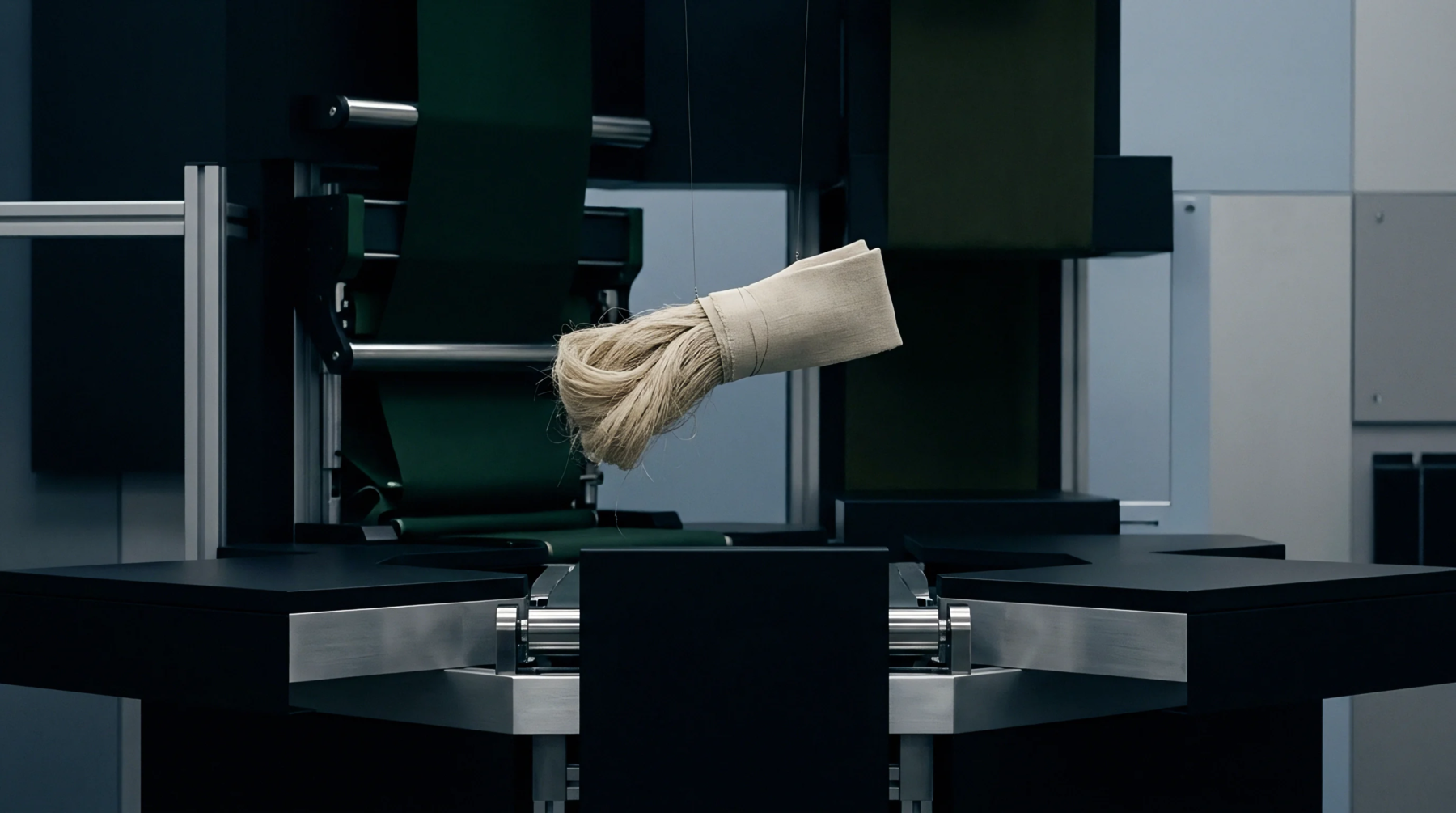
Fibre fragmentation and detachment from yarn surfaces under frictional stress represents a primary source of industrial dust in mills. In linen manufacturing, fibre lint shedding arises when dry yarn passes through high-tension guides and reed eyes during loom operations. This loss of material occurs because flax fibres possess a relatively short staple length after the spinning process, leaving many loose ends protruding from the yarn body.
These loose elements are easily detached by mechanical action, accumulating on the machinery and in the workspace.
Mechanical Abrasion
Dry climates accelerate the detachment of these surface fragments by reducing the natural elasticity of the cellulose chains. When the yarn is kept at a low moisture content, the cohesion between the fibres weakens, causing a higher rate of fibre lint shedding during winding. Mill operators control this by applying sizing agents or by maintaining a high relative humidity of around seventy percent in the assembly room.
This moist environment keeps the protruding fibres pliable and adhered to the main yarn structure.
Detection Limit
Yarn surface hairiness measurements define the point where preventative treatments must be applied. If the hairiness exceeds a predetermined threshold, the risk of machinery clogging and yarn breakages becomes too high to sustain production. Controlling the shed material is therefore mandatory for high-speed automated textile manufacturing.