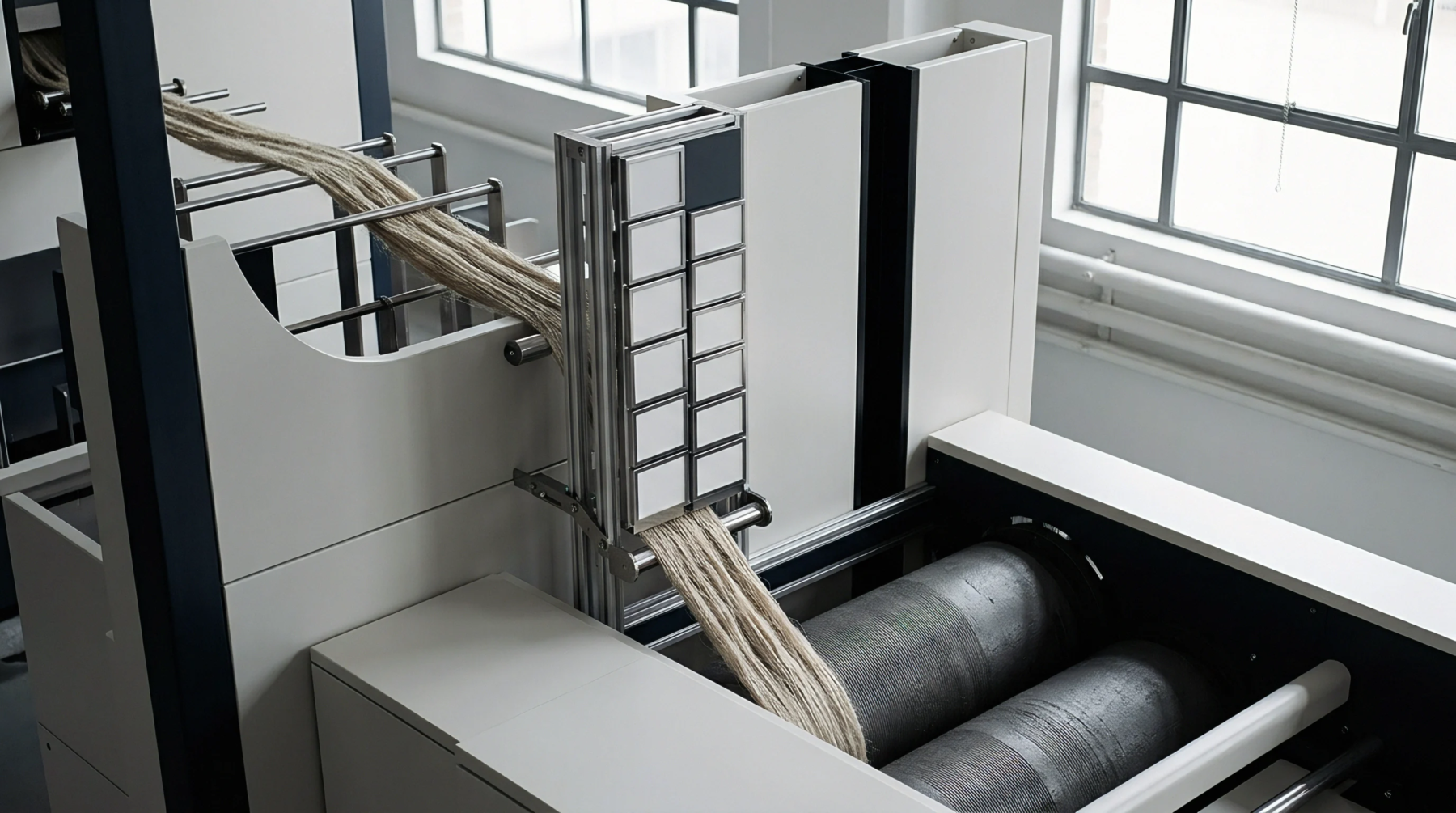
Fibre Division
Mechanical separation metrics quantify the extent to which thick technical flax bundles break down into finer elementary fibres during hackling and preparation. High fiber bundle splitting efficiency indicates optimal division of pectin-bound fiber bundles, yielding finer slivers for wet spinning. In flax processing mills, this parameter is determined by measuring the mean linear density of combed flax ribbons before and after passage through multi-stage hackling pins or chemical degumming baths.
Separation Mechanism
Pin density sequences and chemical treatment durations control the progressive separation of middle lamella pectins. Progressive hackling frames employ rotating pin bars with increasing pins per centimeter to comb out short fibres and split long fiber bundles. When chemical degumming is used prior to wet spinning, controlled temperature and alkaline concentration dissolve targeted hemicelluloses without degrading cellulose crystalline structures.
Laboratory technicians assess splitting efficiency by analyzing cross-sectional fiber counts per bundle using optical microscopy and image analysis software. Higher splitting efficiency enables the production of fine high-count linen yarns with high tensile strength and even yarn structure.
Spinning Boundary
Operational limits balance bundle refinement against structural fibre damage during aggressive mechanical combing. Excessive splitting action cuts elementary fibres, increasing short fibre content and waste generation during hackling.