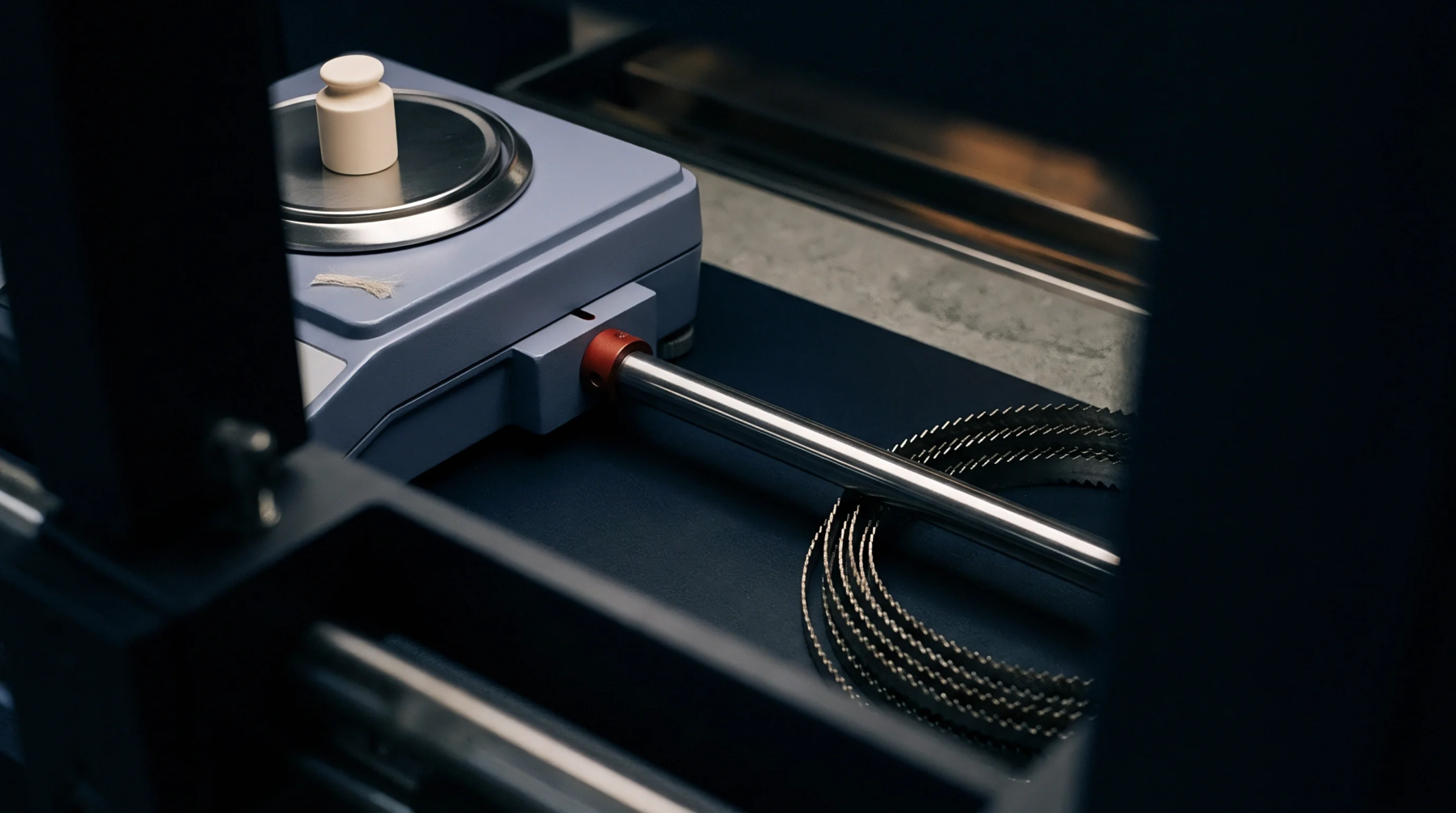
Friction Measurement
Surface resistance between two moving bodies during mechanical contact governs the material response under load. A dynamic frictional slide defines the kinetic energy dissipation occurring when tension reaches the threshold for movement across a tensioning bar or ceramic guide. This phenomenon quantifies the surface roughness of flax roving during high-speed passage through spinning frames.
High values lead to fibre breakage while low values create uneven thread diameter during downstream processing.
Mechanical Variance
Mill supervisors monitor the coefficient of drag to adjust the tension settings on automated drafting machines. Consistent velocity keeps the slide within designated limits recorded in the internal quality control logbook for every production shift. Deviations signal either surface coating degradation on the guides or irregular moisture content within the flax fibre batch itself.
Technicians recalibrate the nip rollers if the slide exceeds the threshold noted in the supplier agreement.
Operational Boundary
Production standards apply to the interaction between the processed flax and metal machine components under specific humidity and temperature constraints. The measurement loses validity when external lubricants interfere with the natural drag of the raw fibre against the hardware. Correct analysis requires isolation of the contact point to prevent contamination from ambient dust or loose fly matter.
This metric determines the maximum throughput speed possible before mechanical degradation occurs within the spinning line.