Technical Classification
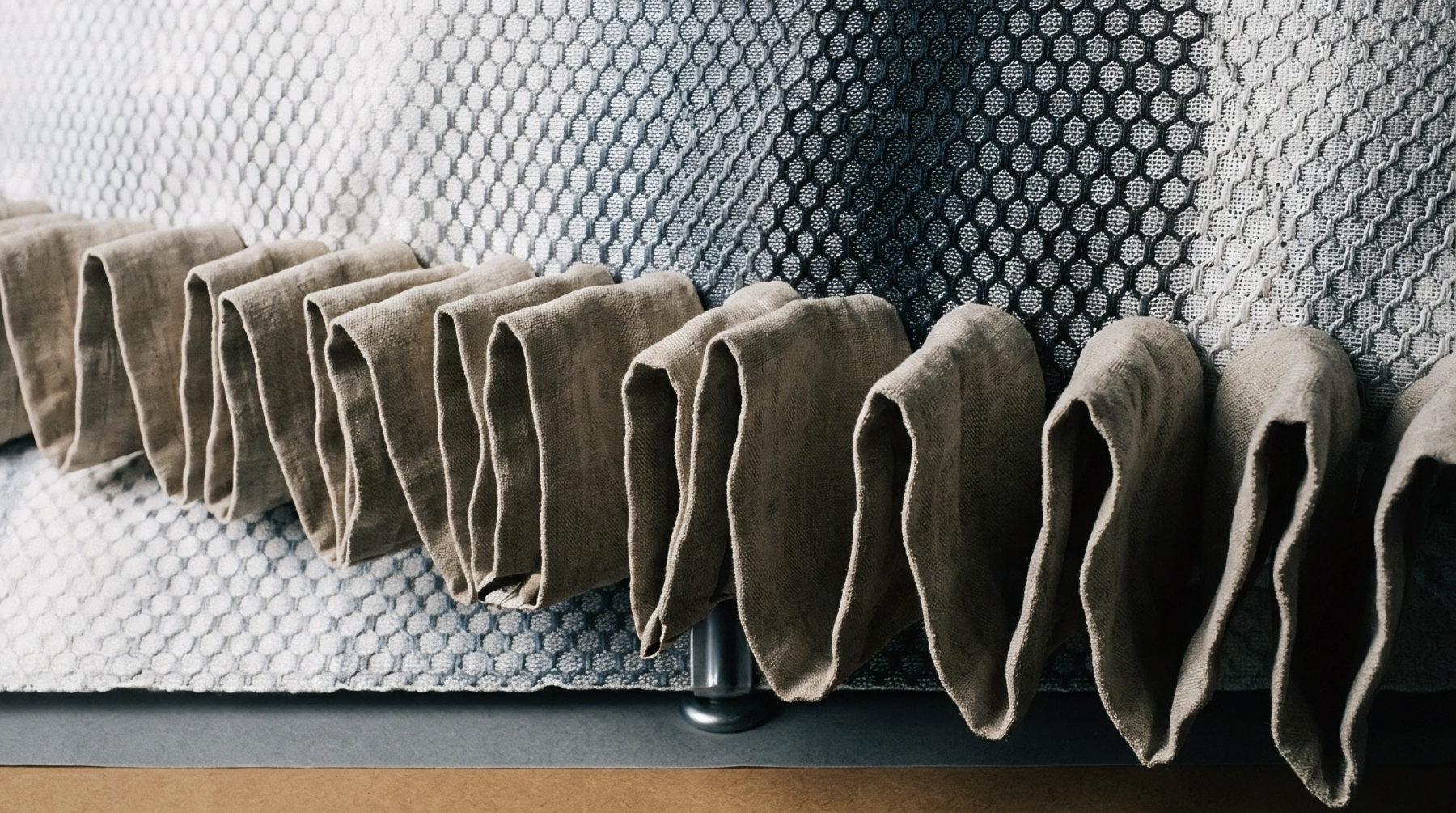
Spinning flax fibers without the application of heat or liquid moisture produces a coarse and highly textured thread suitable for heavy textile applications. The creation of dry spun yarn relies entirely on the natural cohesion and mechanical twist of the long line or short tow fibers. Heavy canvas and rustic home textiles derive their distinctive stiffness from these unsoftened threads.
Production Method
Drafting rollers draw out the raw flax sliver under dry conditions before the winding spindle inserts the binding twist. Because the natural pectins holding the fiber bundles together remain unsoftened by warm water, the fibers do not slide freely past one another during drafting. Spinning frames must operate at lower speeds when processing dry spun yarn to avoid frequent thread breakages on the machine.
Adjusting the distance between drafting rollers accommodates the longer length of the unrefined flax bundles. Mechanical adjustments of roller spacing prevent uneven thickness or drafting defects in the resulting thread.
Structural Feature
Durable home textiles depend on the structural stiffness of these coarse materials to maintain their shape under friction. Since dry spun yarn contains larger fiber clusters, the finished cloth exhibits prominent slubs and irregular texture. Mill specifications dictate this spinning route whenever durability and a rustic appearance are preferred over fine yarn count.