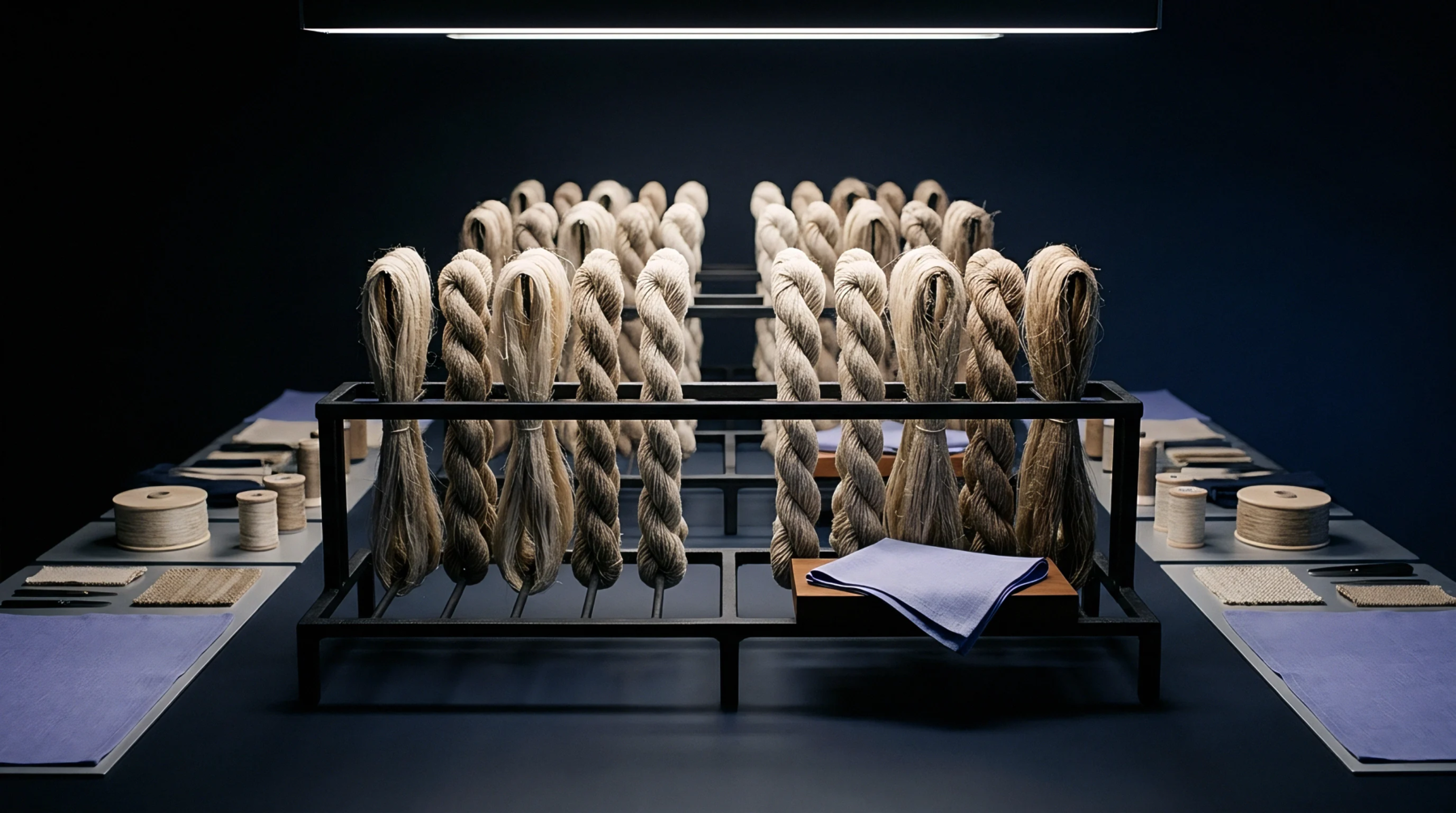
Yarn Characterization
Classification of linen yarns based on the spinning method distinguishes between materials intended for stiff industrial fabrics and those processed for fine apparel. When analyzing dry spun versus wet spun flax, the primary divergence lies in the application of heat and moisture during drawing. Dry spun yarns are manufactured without water, leaving the natural pectin intact and producing a thick, hairy product.
Wet spun yarns involve passing the rove through a hot water bath, which softens the pectin to enable the drafting of fine, smooth filaments.
Tensile Behaviour
Mechanical strength differences influence the efficiency of subsequent weaving and knitting processes. Wet spun fibers exhibit superior alignment and higher tenacity because the hot water allows the individual flax cells to slide past each other before twisting. This process yields a compact yarn with low hairiness, making it suitable for high-density warp grids.
Dry spun threads are weaker and are utilized mostly for coarser weft fillings.
Industrial Application
Selection criteria depend heavily on the final fabric specification and end use. Coarse canvas and upholstery rely on the stiff, bulky structure of dry spun fibers. Fine linen shirting utilizes the wet spun alternative to achieve the desired softness and luster.