Drawing Motion
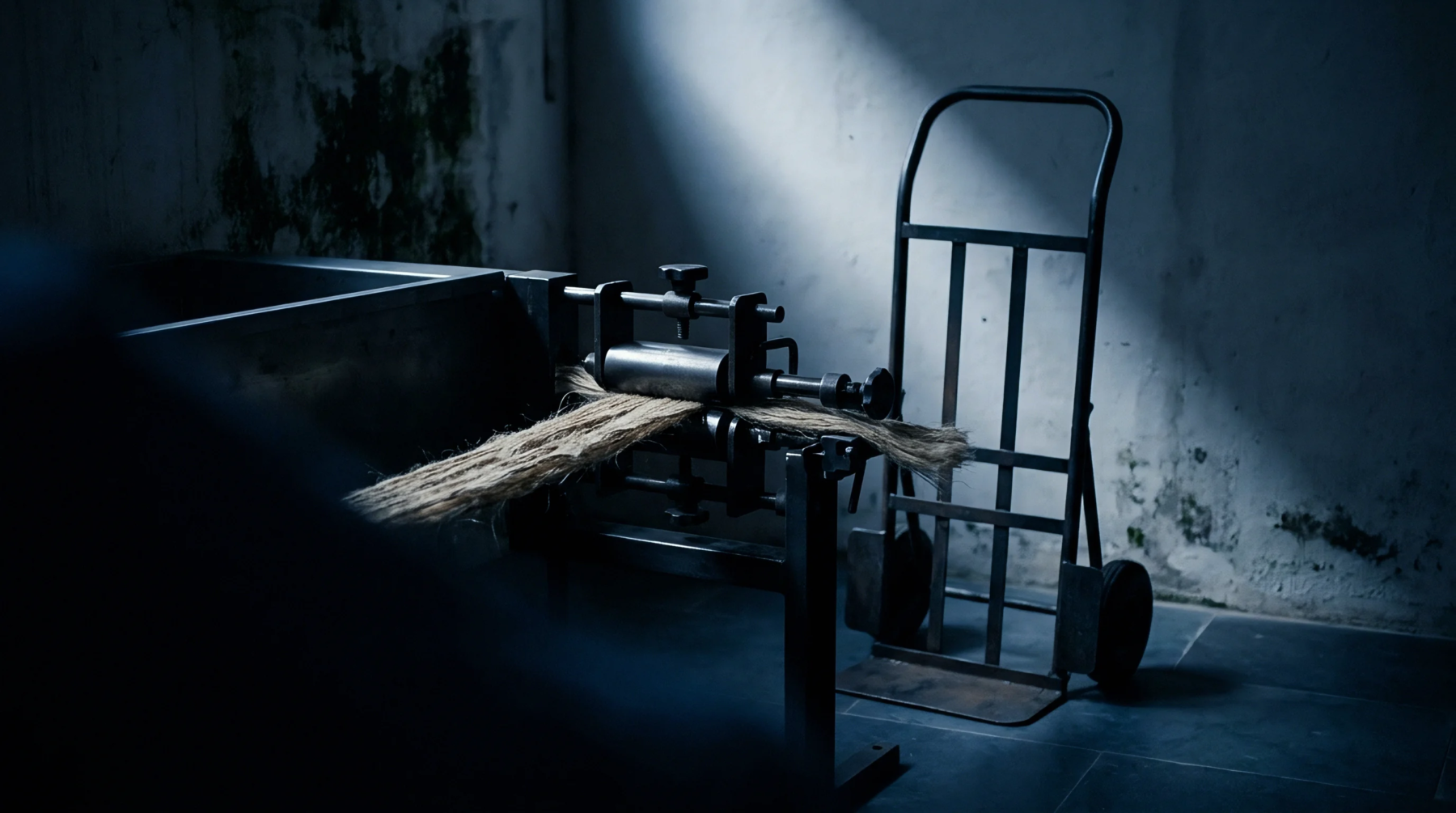
Mechanical relationships in the drawing zone determine how individual fibers are accelerated and rearranged during yarn preparation. These movements, collectively known as drafting kinematics, govern the change in linear density of the flax strand as it passes between pairs of rollers running at different speeds. The process relies on the relationship between the entry feed speed and the higher delivery speed to straighten and align the long linen fibers.
Velocity Profile
Frictional contact dictates the transition of a fiber from the slower back roller speed to the faster front roller speed. When a fiber is gripped by the front rollers, it accelerates rapidly, drawing neighboring fibers along with it if the cohesion is too high. This velocity step determines the uniformity of the resulting sliver, as uncontrolled acceleration creates thick and thin places in the yarn.
Spinners adjust the distance between the roller nips to match the average fiber length to prevent fiber breakage or uncontrolled movement.
Fiber Distribution
Downstream, the resulting arrangement of fibers dictates the strength of the final spun linen yarn. Minor irregularities in drafting kinematics can lead to periodic yarn defects that become visible only during the weaving stage. Proper control is achieved by maintaining a consistent pressure on the top rollers, which ensures a uniform grip across the entire fiber strand.