Mechanical Resistance
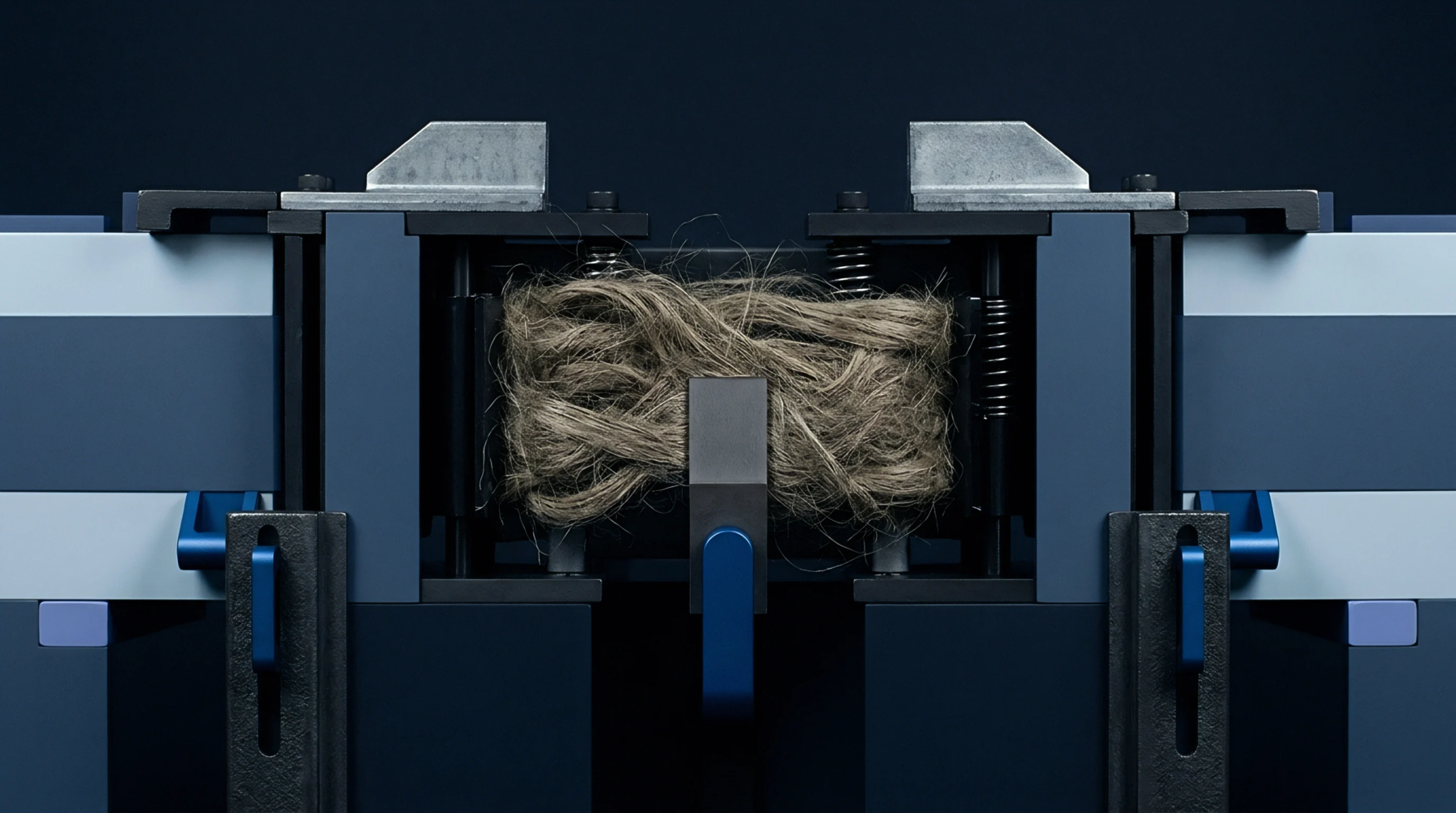
Kinetic frictional loads developed between overlapping bast fibres during mechanical slippage dictate the tension required to draw down a flax strand across spinning roll nips. These drafting forces govern bundle attenuation along draw frames, roving units, and wet ring spinning zones. The measurement quantifies the opposing drag produced as technical fibres slide past adjacent filaments against inter-fibre friction and gummy pectin bonds.
The metric applies solely inside active roller drafting fields, terminating once yarn twist binds the attenuated strand at the front roller nip.
Attenuation Dynamics
Bundle parallelization and linear density reduction generate dynamic resistance fluctuations as irregular flax bundles traverse successive draft zones. Flax drafting forces vary in response to roving moisture content, hot water trough temperatures, roller clamping pressures, and the applied draft ratio. When drafting resistance exceeds inter-roller gripping capacity, sliver choke occurs, jamming fluted rollers and breaking the continuous strand.
Insufficient resistance permits wild drafting, wherein bundle segments slip uncontrollably to generate periodic mass variations and thick yarn slubs. Chinese flax spinning mills record drafting resistance curves using electronic draft dynamometers installed on pilot spinning frames, establishing standard force envelopes across raw flax lots. Technicians adjust roller gauge distances and weighting springs to counter sudden force spikes created by coarse, incompletely retted fibre bundles.
Quality Bounds
Laboratory testing protocols link dynamic drawing tension to final yarn mass irregularity measured on capacitive evenness testers. Internal spinning standards require drafting resistance variations to remain within fifteen percent of the target mean to prevent yarn count deviations. Acceptance criteria for commercial yarn export contracts mandate strict limits on thick-thin defects that originate from unmanaged drafting forces.