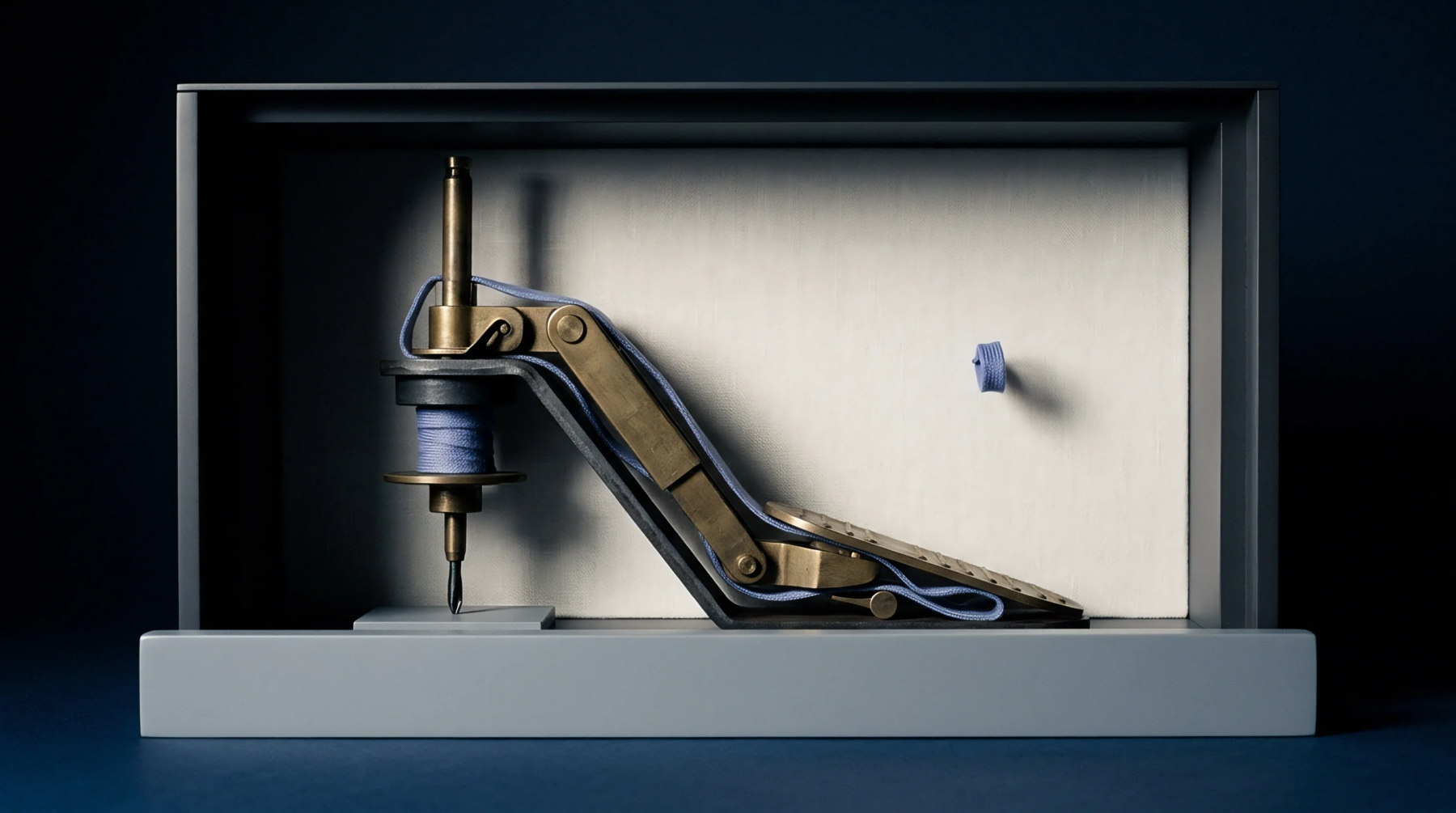
Reed Density
Spacing variation occurs across the reed wire arrangement when preparing flax warps for high speed looms in Chinese textile mills. Dent pitch governs the number of metallic wires per centimetre within the reed frame, setting the physical boundary for yarn clearance during the shedding phase of production. Warp threads pass between parallel steel blades inside the loom mechanism, and correct spacing prevents filament abrasion while maintaining cloth density.
Mill supervisors record these specifications on production routing cards before mass output begins. Operators measure this metric against buyer acceptance thresholds rather than internal mill targets to ensure export compliance.
Wire Configuration
Mechanical stability depends on the thickness of the steel blades and the intervening air gaps that accommodate multiple flax ends per split. Technicians calculate the required count by dividing total reed width by the target warp density, ensuring the resulting layout tolerates high speed mechanical action. Thicker blades reduce distortion under high tension, yet narrow air gaps restrict yarn movement during beat up.
Production floors adjust these parameters when transitioning from coarse tow yarns to fine line flax yarns. Improper wire alignment induces friction spots along the warp sheet, which ultimately breaks individual filaments before the cloth reaches the finishing house.
Export Quality
Finished linen inspection relies on air permeability tests and surface regularity checks recorded in the final shipping documentation. Fabric grade evaluations differ from raw fibre grading because woven cloth inspection accounts for reed marks and warp streak anomalies caused by uneven wire spacing. Buyers reject shipments if periodic density variations exceed allowable tolerances specified in international trade agreements.
Strict adherence to dimensional stability standards ensures that export batches withstand subsequent laundering and dyeing processes without structural distortion.