Yarn Severance
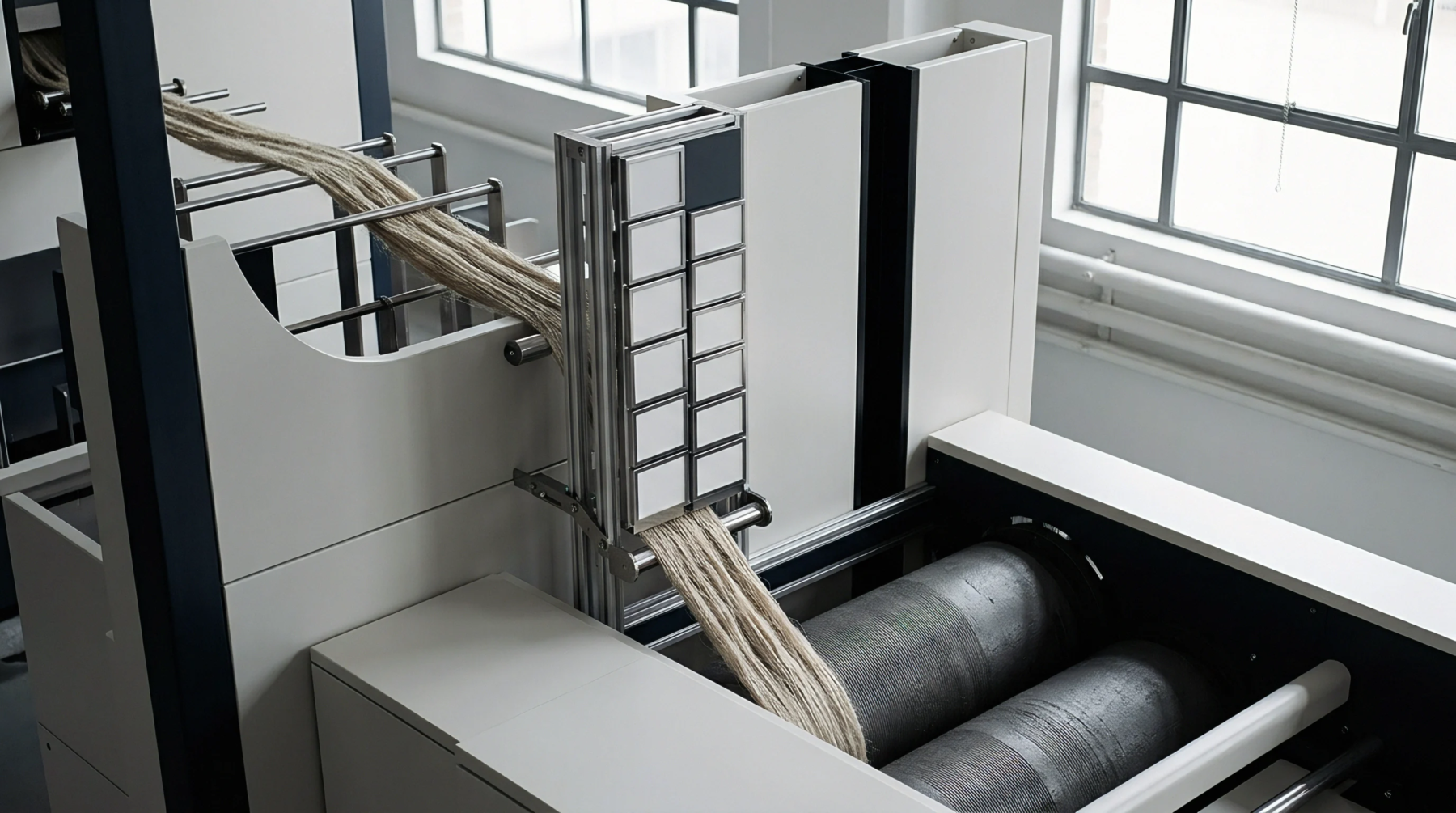
Automated winding systems perform rapid severing operations whenever sensors detect cross-sectional yarn anomalies exceeding programmed tolerance limits. Modern automatic winders execute clearer cuts to purge thick places, slubs, seeds, and thin spots from linen yarn before package assembly.
Defect Threshold
Sensor sensitivities determine the exact physical boundaries where acceptable yarn unevenness ends and actionable fault classification begins. When processing flax yarn, clearer cuts occur more frequently than in cotton winding due to natural fiber length variations and residual shive particles. Setting sensitive thresholds increases clearer cuts per hundred kilometers of yarn, which elevates splice density while improving final fabric appearance.
Mill supervisors log these clearing events on the winder shift sheet to evaluate yarn quality from the spinning frames.
Mill Yield
Production accounting records every physical separation of the yarn strand as a direct interruption to winder efficiency and a source of bobbin waste. Excessive clearer cuts signal inadequate fiber hackling or improper wet spinning draft settings, prompting immediate intervention on upstream frames. High cut frequencies lower machine efficiency across the winding floor and increase mechanical wear on automatic splicers.
Export contracts for woven linen fabrics dictate maximum allowable splice counts per kilogram, making controlled clearer cuts essential for meeting commercial quality guarantees.