Dimensional Alteration
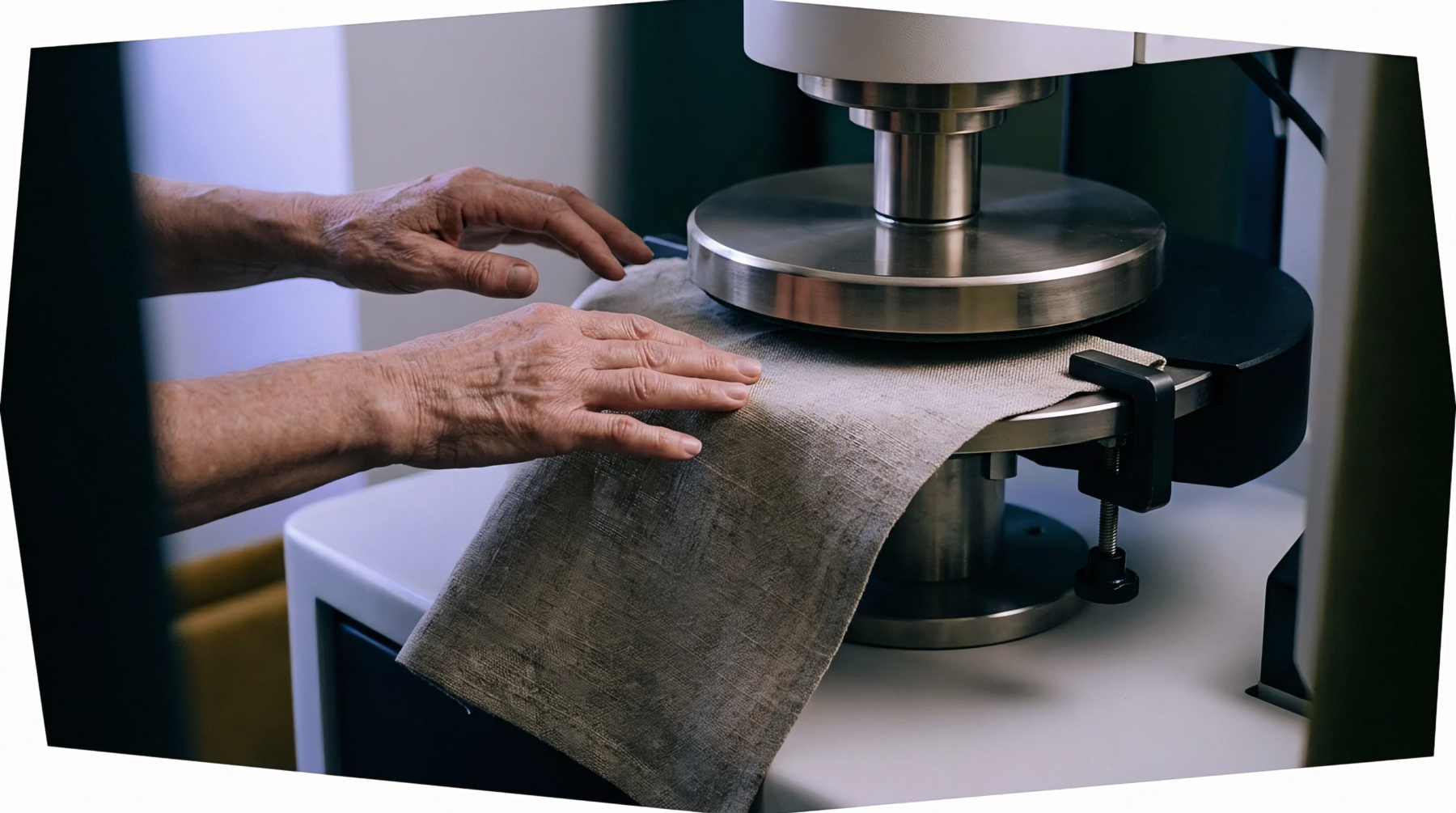
Laboratory testing of thermal dimensional stability measures the percentage reduction in fabric length or width after controlled immersion in water at 100 degrees Celsius. In linen finishing plants across Jiangsu province, boiling water shrinkage evaluates residual internal stresses generated during wet spinning and high-tension weaving. Untreated flax fibers possess high natural stiffness, which locks temporary mechanical extension into the raw fabric matrix until heat and liquid moisture release the strain.
Standard test protocol GB/T 8630 specifies immersion for thirty minutes followed by flat drying without tension.
Finishing Metric
Processing equipment in mill wet-finishing lines applies forced relaxations through sanforizing or continuous tumbling to collapse loose inter-yarn gaps prior to final batching. High values of boiling water shrinkage indicate inadequate mechanical pre-shrinkage or excessive warp tension during drying cycles. When stenter frame drying temperatures drop below operational parameters, the latent strain remains unrelaxed, resulting in unexpected fabric contraction during customer dyeing operations.
Mill technicians sample swatches from both selvedges and the center panel to map differential shrinkage profiles across the full width of the roll. Discrepancies between warp and weft relaxation rates highlight uneven squeeze roller pressure in wet processing units.
Contract Standard
Sales contracts between Chinese export mills and international garment buyers define specific limits for acceptable dimensional change. High-grade table linen contracts often restrict boiling water shrinkage to less than two percent in both warp and weft directions. The buyer acceptance certificate lists measured lab values alongside the mill lot number for every exported shipping container.