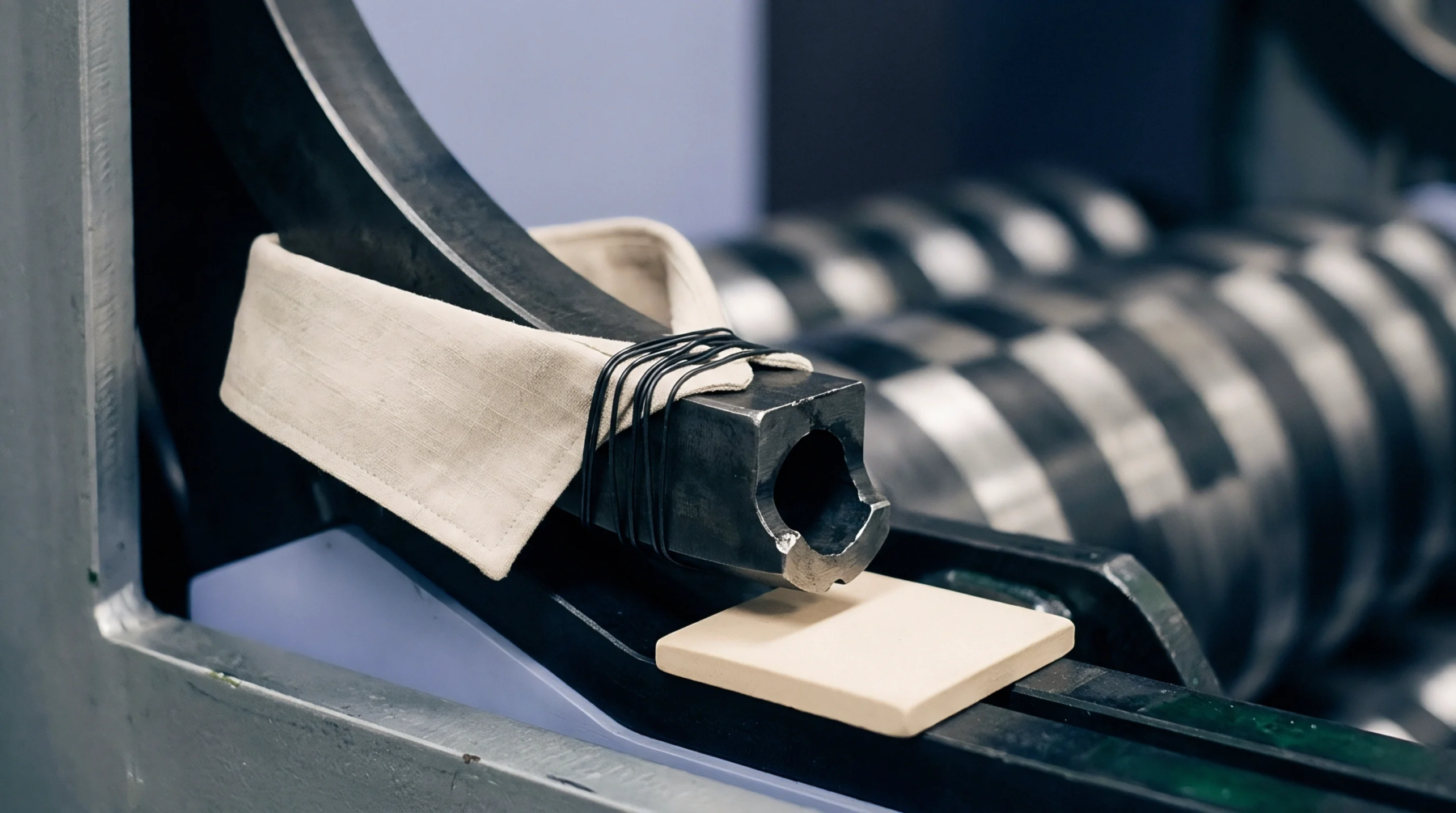
Tension Adjustment
Mechanical regulation of warp tension on a weaving loom ensures uniform yarn stress during the shedding cycle. In linen weaving mills, back rest compensation executes this function by dynamically moving the back rest in synchrony with the heald frame movement. This movement prevents excessive tension peaks during the shed opening, which would otherwise snap the inelastic flax warp yarn.
The action is documented in the loom setup protocol as part of the mill’s internal machine calibration standards.
Shedding Synchronization
Modern high speed air jet looms for linen weaving link the back rest movement to the main drive shaft via a conjugated cam mechanism. This linkage allows the back rest compensation to react to the high frequency demands of the cycle. When the shed is fully open, the back rest moves inward to release yarn length, then moves outward as the shed closes to maintain a baseline yarn tension.
This mechanical movement prevents yarn breakage during beat up. It reduces warp stops during the weave run, which keeps the loom efficiency high and prevents fabric marks.
Fabric Consistency
Uneven tension causes pick density defects in the finished linen fabric. Standard mill acceptance criteria for premium linen export grades limit warp tension deviation to under ten percent of yarn strength. Because flax fibers have low elasticity, back rest compensation is tracked on the shift report to verify weave quality before finishing.