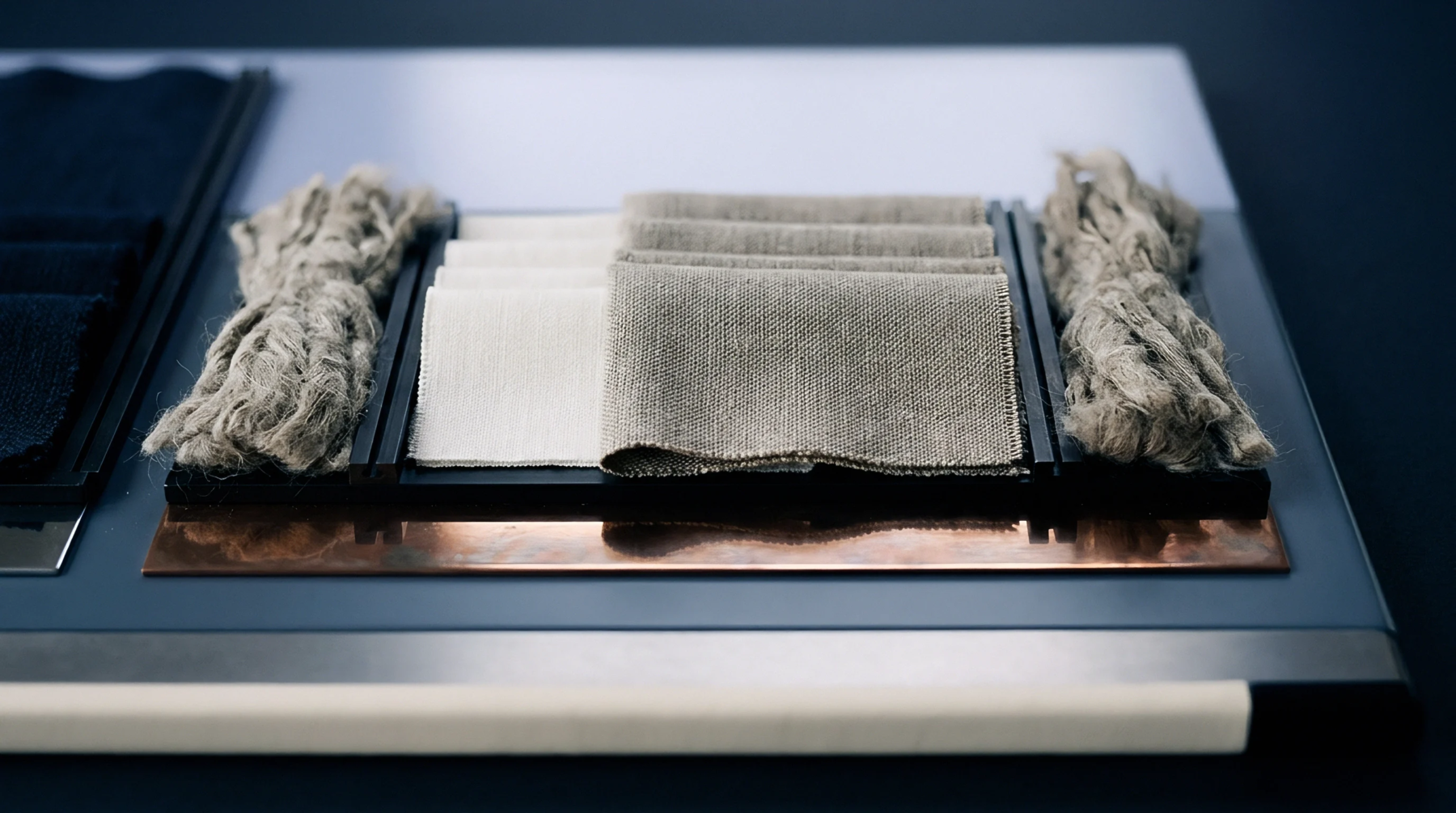
Flax Blend
Spinning mills running Alliance Du Lin Et Du Chanvre combine low count bast fibres with decorticated hemp to achieve yarn regularity targets that pure bast lines routinely miss during carding. Mechanical properties vary widely between the two agricultural inputs, requiring technicians to adjust drafting roller pressure before the blend enters the wet spinning frame. Jiangsu processors record bale moisture contents on mill acceptance sheets before operators feed the raw stock into preliminary breakers.
Bast processors separate grade designations according to lignin content and residual shive weight, ensuring that export lots meet buyer specifications agreed upon prior to dispatch.
Technical Standard
Inspection protocols for Alliance Du Lin Et Du Chanvre establish maximum allowable defect counts per one hundred metres of grey cloth produced on rapier looms. Quality controllers measure tensile strength recovery after standard boiling procedures, rejecting lots that fall below agreed load limits. Buyers demand specific elongation percentages recorded in laboratory certificates issued by certified testing houses located near coastal export hubs.
Weaving sheds maintain internal tolerances that are stricter than general commercial rules to secure premium pricing in European garment markets.
Export Grade
Finished fabric batches containing Alliance Du Lin Et Du Chanvre undergo final visual grading under standardized daylight lamps before packaging inspectors sign customs clearance documents. Packaging teams wrap bolts in moisture resistant polyethylene and heavy kraft paper to prevent mildew formation during maritime transit to foreign ports. Commercial invoices list exact weight measurements taken on calibrated platform scales at the warehouse dispatch bay.
Final settlement depends entirely upon independent surveyor reports verifying that delivered rolls match original purchase order parameters.