Optimizing Enzyme Bath Temperatures for Native Starch Removal on Linen
Optimizing amylase bath temperatures between 80 and 90 degrees Celsius maximizes native starch removal on linen while preserving fiber tenacity.

Heat
Thermal regulation inside the desizing bath governs the rate of enzymatic starch breakdown on linen warps. Native starch films applied during warp sizing consist of amylose and amylopectin molecules tightly bound to the flax bundle exterior. Raw flax fibers contain up to twenty percent non-cellulosic matter, including natural pectins, waxes, and hemicellulose.
Water-insoluble native starches require thermal energy to loosen their semi-crystalline granular structure before enzymes can cleave the long alpha-1,4-glycosidic polymer chains. Starch holds flax yarns together. Without precise bath temperature management, native maize or potato size remains gelled on the yarn surface or denatures the amylase proteins required to hydrolyze the film.

Thermodynamic Activation of Bacterial Amylase
Enzyme molecules require specific thermal kinetic energy to convert water-insoluble starch polymers into water-soluble dextrins. Alpha-amylase enzymes operate by endo-cleavage, breaking internal starch bonds at random points along the polymer backbone. Fungal alpha-amylases perform efficiently within low temperature ranges between 50 and 55 degrees Celsius.
Bacterial mesophilic amylases function optimally between 60 and 70 degrees Celsius. Advanced thermophilic bacterial amylases derived from Bacillus licheniformis maintain activity up to 95 degrees Celsius under continuous industrial steaming conditions. Amylase breaks long glucose chains.
Operating below an enzyme class minimum temperature slows reaction kinetics, extending dwell requirements beyond realistic finishing line speeds.
Residual starch ratings below 6 on the Tegewa scale void dye-levelness guarantees on light-weight linen plain weaves.
Thermal stability of the protein structure determines the operational ceiling of the bath. When temperatures rise past the critical denaturation threshold, the tertiary structure of the enzyme unfolds permanently, eliminating catalytic capacity. Calcium ions present in the bath act as structural stabilizers, raising the thermal denaturation threshold by five to ten degrees Celsius.
Maintaining calcium hardness between 50 and 100 parts per million prevents premature enzyme inactivation during high-temperature continuous processing runs.
Gelatinization Points of Native Maize and Potato Size
Swelling of native starch granules occurs within distinct temperature bands determined by their botanical origin. Native maize starch gelatinizes between 62 and 72 degrees Celsius, expanding into a viscous hydrogel film. Potato starch exhibits lower gelatinization thresholds between 58 and 65 degrees Celsius, creating high-viscosity surface coats on wet-spun linen yarns.
Gelatinization precedes enzymatic cleavage. Amylase enzymes cannot diffuse efficiently into raw, unswollen starch granules. The desizing bath temperature must exceed the gelatinization point of the specific size formulation to enable rapid enzyme penetration into the yarn core.
| Enzyme Class | Optimum Bath Temperature Range (°C) | Peak Stability Threshold (°C) | Recommended Bath pH | Dwell Time Window |
|---|---|---|---|---|
| Fungal Alpha-Amylase | 50 – 55 | 60 | 5.0 – 5.5 | 4 to 8 Hours (Pad-Batch) |
| Bacterial Mesophilic Amylase | 60 – 70 | 75 | 6.0 – 7.0 | 15 to 30 Minutes (Continuous) |
| Bacterial Thermostable Amylase | 80 – 95 | 105 | 5.8 – 6.5 | 30 to 120 Seconds (Steam) |
Flax yarn structure presents physical barriers to fluid circulation. High-twist warp yarns retain size deep inside the bundle interstices. Running bath temperatures ten degrees above the gelatinization threshold lowers liquor viscosity, accelerating enzyme transport into dense linen plain weave structures.
Cold liquor halts enzymatic activity. Improper thermal control locks swollen amylose molecules into the fiber interstices, producing permanent blotches during subsequent reactive dyeing.
Liquor
A continuous aqueous bath carries alpha-amylase and non-ionic wetting agents directly to the core of sized flax yarns. Uniform wet pick-up across the cloth width ensures consistent chemical action during desizing. Linen greige carries natural hydrophobic fats and waxes that resist aqueous penetration.
Wetting agents lower surface tension. Incorporating heat-stable non-ionic surfactants speeds liquor absorption into raw flax bundles without suppressing enzymatic catalytic conversion speeds.
Surfactant Synergies and Calcium Ion Stabilization
Divalent metal cations shield the tertiary structure of thermophilic enzymes against thermal denaturation. Adding calcium chloride at concentrations between 0.2 and 0.5 grams per liter reinforces protein bond stability under elevated thermal loads. Surfactant selection dictates bath performance.
Anionic surfactants deactivate many bacterial amylase formulations by disrupting ionic charges on the active catalytic site. Non-ionic ethoxylated alcohols maintain compatibility across broad temperature ranges while lowering surface tension to less than 30 dynes per centimeter.
- Thermal Enzyme Denaturation occurs when bath temperatures exceed structural stability limits, causing irreversible unfolding of the protein chain.
- Starch Retrogradation develops when solubilized amylose fractions drop below sixty degrees Celsius, forming insoluble crystalline precipitates inside the yarn matrix.
- Pectin Co-Extraction takes place under alkaline conditions above eighty-five degrees, stripping structural binder from raw flax fibers and reducing yarn tenacity.
- Surfactant Cloud-Point Inversion manifests when non-ionic bath additives reach their thermal limit, losing wetting ability and depositing oil droplets onto greige cloth.

Is Thermal Spiking Effective for Encapsulated Starch Core Removal?
Rapid elevation of fluid temperature during initial pad impregnation accelerates starch granule swelling without damaging bast structural components. Passing grey linen cloth through a flash steam chamber immediately after padding elevates the surface film temperature to 98 degrees Celsius within two seconds. High temperatures denature active enzymes if applied without proper chemical stabilization.
Thermostable alpha-amylases survive short flash-steam exposures, hydrolyzing dense starch outer skins before retrogradation can take place during subsequent storage steps.
High viscosity starch gels impede enzyme diffusion into the core of dense wet-spun linen warps.
Bath pH balancing works alongside thermal controls. Most bacterial alpha-amylases operate within a tight neutral pH band between 6.0 and 7.0. Acidic drift below pH 5.5 accelerates thermal inactivation, while alkaline conditions above pH 8.0 promote unwanted extraction of natural flax pectins during desizing.
Constant pH monitoring and automatic buffer additions stabilize the bath environment during continuous open-width runs. Chemical suppliers frequently attribute uneven size breakdown to initial sizing chemical variation rather than bath temperature drift across long production runs.


Dwell
Time under reaction conditions dictates the complete cleavage of high-molecular-weight amylose chains. Short reaction times require high thermal energy and elevated enzyme concentrations. Extended dwell times allow lower process temperatures, preserving thermal energy while maintaining desizing performance.
Matching machinery selection to production speed determines the total dwell capacity required on the finishing floor. Desizing precedes caustic scouring. Balancing line speed against thermal exposure prevents structural degradation of natural flax fibers.
Continuous Steaming versus Pad-Batch Dwell Kinetics
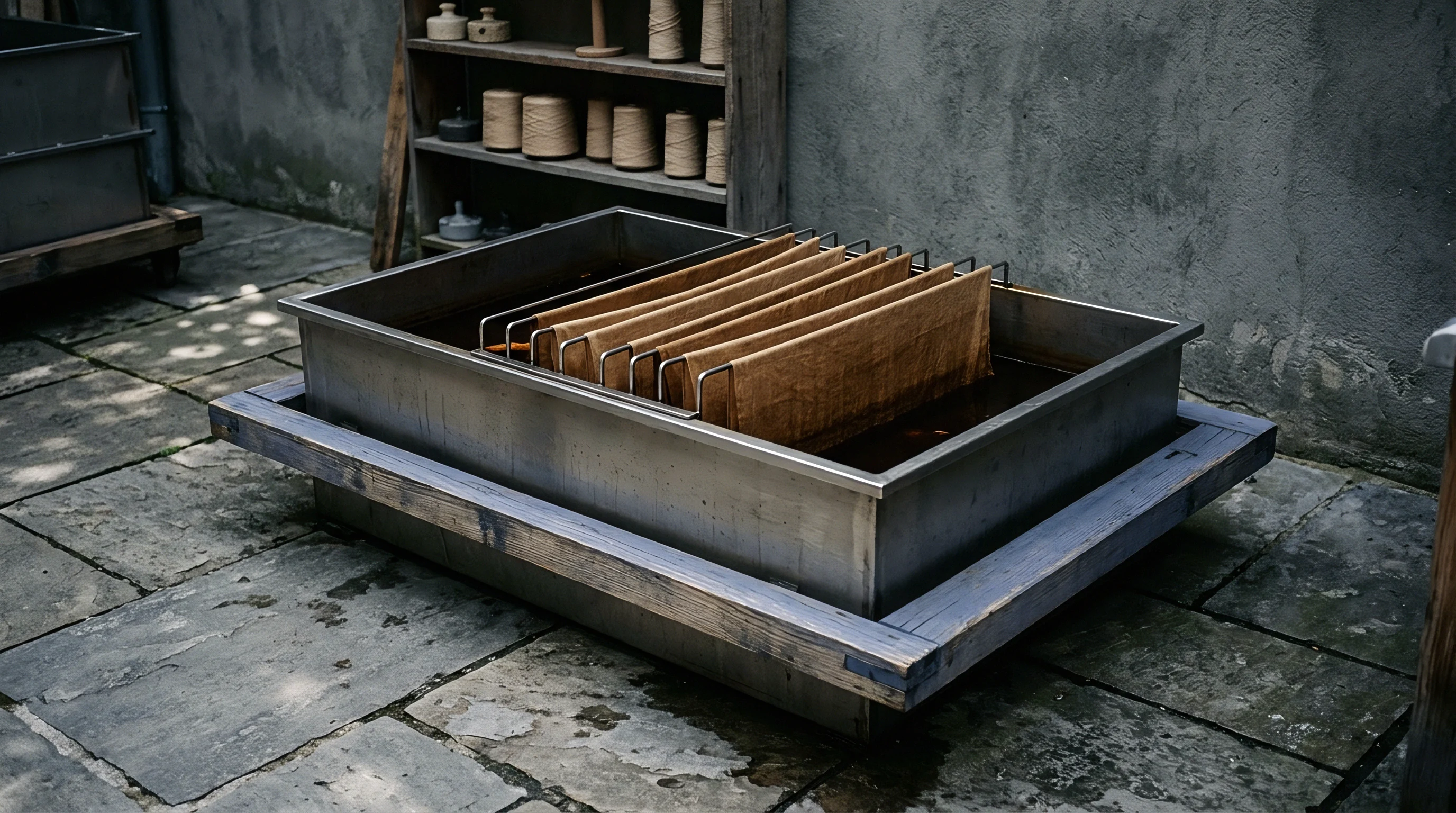
Process architecture establishes the velocity at which amylase enzymes penetrate native starch films on flax. Continuous pad-steam lines expose liquor-impregnated linen cloth to saturated steam at 100 to 102 degrees Celsius inside closed chambers. Steam heating transfers heat rapidly through condensation on the wet fabric surface.
Rapid thermal transfer activates thermostable amylases within five seconds, completing starch degradation within 60 to 90 seconds of total dwell. Cold pad-batch processing operates at ambient room temperatures between 20 and 25 degrees Celsius, substituting thermal energy with long dwell times of 16 to 24 hours on rotating batch rolls.
| Process Configuration | Temperature (°C) | Bath Dwell Time | Wet Pick-up (%) | Water Consumption (L/kg cloth) |
|---|---|---|---|---|
| Cold Pad-Batch | 20 – 30 | 16 – 24 Hours | 85 – 95 | 4 – 6 |
| Warm Jigger / Winch | 60 – 70 | 45 – 60 Minutes | 200 – 300 | 15 – 25 |
| Continuous Pad-Steam | 90 – 98 | 45 – 90 Seconds | 90 – 110 | 8 – 12 |
Mass Balance Calculation for Industrial Continuous Wash Rigs
Fluid mass conservation models determine the liquor turnover rate required to clear hydrolyzed dextrins. High-speed continuous desizing generates short-chain alpha-dextrins that dissolve into the wash bath. Accumulation of dissolved dextrins increases bath viscosity, inhibiting rinsing efficiency and re-depositing size fragments onto cleared linen fibers.
Washing removes hydrolyzed hydrolyzed dextrins. Maintaining continuous counter-flow hot washing at 85 to 95 degrees Celsius strips residual dextrins from the cloth before drying.
- Extract a ten-gram sample from the mid-roll position of the washed linen cloth.
- Submerge the swatch in a 0.005 molar potassium iodide solution for thirty seconds.
- Compare the developed shade against the nine-point Tegewa visual standard card under northern sky lighting.
- Record residual starch weight loss by drying the sample to bone-dry mass at 105 degrees Celsius.
Rinse water requires adequate flow. Cold wash water causes cleaved starch fractions to precipitate inside the yarn structure. High temperature wash boxes preserve solubility, carrying degraded size into the waste effluent stream.
Thermal energy spent during hot rinsing yields measurable improvements in absorbency, preparing the linen plain weave for uniform bleaching and dyeing operations. Standard processing agreements assign financial liability for strength loss directly to the finisher whenever bath temperatures exceed maximum enzyme stability limits by more than four degrees for ten continuous minutes.


Batch
Cold enzymatic impregnation provides an alternative pathway for processing heavy flax constructions without continuous steam consumption. Heavy density plain weaves and damasks retain large volumes of size chemistry due to high warp yarn end counts per centimeter. Padding cold enzyme liquor at 85 percent wet pick-up deposits the necessary chemical charge throughout the warp core.
Plastic film encapsulation prevents moisture evaporation during extended room-temperature storage. Extended dwell allows mesophilic enzymes to hydrolyze native starch films without thermal input.
Cold Pad Optimization for Energy Reduction
Ambient processing demands targeted selection of mesophilic amylase blends engineered to perform between twenty and thirty degrees Celsius. Low-temperature amylase formulations require higher dosage rates to compensate for reduced kinetic reaction rates. Chemical stabilization prevents bacterial degradation of the natural starch film during overnight batch storage.
Maintaining tight roll tension during batch winding prevents liquor migration toward the lower edges of the rotating batch roll, ensuring side-to-center desizing uniformity across 300-centimeter wide linen sheeting goods.
- Thermal Tolerances Clause specifies maximum allowable bath temperature deviation during continuous desizing runs.
- Enzyme Activity Certification documents the initial enzymatic strength measured in International Units per gram.
- Tegewa Target Threshold sets the minimum acceptable blue-violet rating for cleared greige rolls.
- Rinse Bath Metering Log records continuous water refresh rates and counter-flow wash temperatures.
Quality Verification Protocols for Desized Greige
Analytical testing confirms the thorough removal of starch film from warp yarns before subsequent bleaching steps. Visual colorimetry using iodine potassium iodide reagents provides immediate feedback on residual starch presence. A Tegewa scale rating of 1 indicates unreacted, heavy starch coverage displaying dark violet coloration.
Tegewa rating 9 indicates total starch elimination with zero iodine color change on the linen fiber surface. Iodine turns amylose dark blue. Absorbency drop testing measures the time required for a droplet of distilled water to sink completely into the dry fabric surface, with target thresholds set below three seconds for fully cleared greige goods.
Slower bath throughput paired with lower chemical dosing yields higher absorbency than rapid thermal processing.
Weight loss measurements quantify total sizing removal. Greige linen swatches oven-dried before and after enzymatic treatment indicate total size mass fraction removal. Sizing formulations containing native maize starch typically account for 6 to 10 percent of greige warp yarn weight.
Residual starch content below 0.5 percent by weight ensures soft hand feel and consistent absorbency during subsequent wet processing stages. Thorough mechanical agitation during rinsing matters more for final size removal than forcing high enzyme concentrations into cold wash liquor.
Toll
Thermal processing costs account for a substantial fraction of total finishing expenses in linen fabric production. Energy balance calculations track boiler fuel consumption, water volume charges, enzyme unit pricing, and line operational speeds per thousand linear meters of cloth. High-temperature continuous steaming consumes significant natural gas volume to generate saturated steam, but delivers immediate throughput efficiencies.
Cold pad-batch processing trades thermal steam expenditure for extended factory floor footprint requirements and inventory holding costs.
Landed Cost Impact of Steam Energy and Water Consumption
Energy balance calculations demonstrate the financial trade-off between chemical enzyme cost and boiler fuel usage. Steam generation costs scale directly with bath temperature targets. Operating continuous wash boxes at 95 degrees Celsius requires 1.2 kilograms of steam per kilogram of processed linen cloth.
Lowering wash box temperatures to 75 degrees Celsius cuts steam consumption by 28 percent, but risks incomplete removal of high-molecular-weight dextrins. Finisher profit margins rely on balancing chemical amylase additions against boiler fuel burn rates.
| Route Architecture | Thermal Energy Cost (USD) | Enzyme & Chemical Cost (USD) | Total Processing Time (Hours) | Landed Cost per Metre (USD) |
|---|---|---|---|---|
| Fungal Amylase Cold Pad-Batch | 4.20 | 18.50 | 20.0 | 0.048 |
| Mesophilic Continuous Jigger | 42.10 | 12.30 | 2.5 | 0.081 |
| High-Temp Continuous Pad-Steam | 28.60 | 24.10 | 0.4 | 0.063 |
Capacity Allocation between Rapid Steam and Extended Dwell Routes
Finishing plant throughput determines whether capital investment favors compact high-speed steaming lines or large pad-batch storage zones. Continuous pad-steam installations process up to 80 meters of heavy linen cloth per minute, maximizing output per loom-hour of upstream weaving capacity. Cold pad-batch systems run pad speeds up to 120 meters per minute but tie up floor space for 24 hours per roll batch.
Selection of the optimum desizing thermal route balances plant capacity against landed cost per finished linear meter. Whether ultra-thermostable engineered amylases can justify their premium chemistry unit cost against the steam energy savings achieved at lower bath temperatures remains open to seasonal energy tariff fluctuations.