Isotopic Ratio Drift Patterns in Chemically Bleached Flax Cellulose under Industrial Processing
Industrial bleaching alters flax cellulose isotope ratios by stripping depleted matrix components and exchanging hydroxyl oxygen and hydrogen with process water.

Tank
Industrial scouring vessel operations remove non-cellulosic components from raw bast fibers through high-temperature alkaline baths. Raw flax straw harvested from agricultural fields consists of approximately seventy to seventy-five percent alpha-cellulose by dry weight. The remaining material comprises fifteen to twenty percent hemicellulose, two to five percent pectin, two to five percent lignin, and one to two percent lipophilic waxes and extractives.
Each organic component carries a distinct stable isotope composition inherited from plant metabolic pathways and localized environmental growth factors.

Cellulose Enrichment Dynamics during Alkaline Scouring
Raw flax bast bundles enter processing vats carrying matrix components with distinct isotopic ratios. Lignin contains depleted carbon. Relative to pure structural cellulose synthesized by the flax plant, plant lignin and lipid waxes exhibit carbon-13 depletion ranging between two point zero and four point five per mil.
When raw fiber undergoes hot alkaline scouring in sodium hydroxide solutions at temperatures between ninety and one hundred ten degrees Celsius, these non-cellulosic compounds hydrolyze and dissolve into the wash liquor.
Caustic baths strip hemicellulose. Extracting depleted non-cellulosic fractions leaves residual alpha-cellulose enriched in carbon-13 compared to the unrefined green straw. Yields drop during boiling.
The magnitude of this carbon isotopic shift correlates directly with the mass loss of non-cellulosic matter. In industrial kier boiling, mass loss routinely reaches twelve to eighteen percent of initial raw fiber weight.
| Processing Stage | Bath Temperature (°C) | δ13C Shift relative to Raw Fiber (‰) | δ18O Shift relative to Raw Fiber (‰) |
|---|---|---|---|
| Raw Scutched Flax | 20 | 0.00 | 0.00 |
| Alkaline Caustic Scour | 105 | +1.15 to +1.45 | -0.20 to +0.30 |
| Sodium Hypochlorite Stage | 45 | +1.20 to +1.50 | +0.80 to +1.60 |
| Hydrogen Peroxide Bleach | 90 | +1.25 to +1.60 | +2.10 to +3.85 |
| Sulfuric Acid Sour | 25 | +1.20 to +1.55 | +2.00 to +3.70 |
Removing pectin and hemicellulose concentrates the heavy carbon isotope within the solid phase. Measurements of unrefined bast fiber yield a baseline carbon-13 value that reflects total plant carbon assimilation. Industrial scouring shifts the measured isotopic signature toward the heavier value of structural cellulose.
Analysts testing processed yarn without adjusting for scouring mass loss risk misidentifying Western European flax as material originating from drier regions with higher natural baseline carbon-13 values.
Alkaline boiling at ninety five degrees Celsius raises residual straw carbon thirteen values by one point two per mil after non-cellulosic removal.
Failing to account for matrix extraction shifts causes genuine European flax to fall outside reference datasets, triggering false origin rejections at border control points.

Reagent
Chemical oxidative baths transform functional groups on pure cellulose molecules. Industrial bleaching relies on strong oxidants to alter light-absorbing chromophores present in residual lignin fragments. Sodium hypochlorite, sodium chlorite, and hydrogen peroxide react with the glucopyranose rings of the cellulose polymer under alkaline or acid conditions.
These oxidation reactions introduce structural modifications while altering the oxygen and hydrogen isotopic composition of the bleached fiber.

Oxidative Cleavage and Isotopic Fractionation Rates
Hydrogen peroxide liquor splits glycosidic bonds while adding hydroxyl groups to degraded polymer chains. During bleaching at pH ten point five to eleven point five and temperatures exceeding eighty-five degrees Celsius, hydrogen peroxide decomposes into hydroxyl radicals and superoxide anions. These radical species attack the C2, C3, and C6 carbon sites on glucopyranose units, generating carbonyl and carboxyl group additions.
Peroxide oxidizes hydroxyl groups.
Incorporating oxygen atoms from oxidation reagents alters the overall oxygen-18 value of the cellulose derivative. Reagent oxygen derived from atmospheric oxygen or synthetic industrial peroxide carries an isotopic signature distinct from groundwater absorbed by the growing flax plant. Atmospheric oxygen maintains a global oxygen-18 signature near plus twenty-three point five per mil relative to Vienna Standard Mean Ocean Water.
Industrial hydrogen peroxide synthesized via the anthraquinone process exhibits oxygen-18 values reflecting its synthetic production water.
Chemical processing introduces specific analytical failure modes that obscure raw material origin through isotopic alteration.
- Peroxide Oxygen Imprinting shifts structural oxygen-18 values upward by incorporating heavy oxidant oxygen into newly formed carboxyl groups on cellulose chains.
- Chlorite ring cleavage degrades amorphous cellulose regions, selectively removing lighter oxygen isotopes and concentrating heavy isotopes in crystalline domains.
- Acid Sour Trace Leaching strips mineral cations, changing elemental ratios and reducing strontium concentrations below detection thresholds needed for geographic matching.
- Over-bleaching Degradation Drift lowers molecular weight while artificially elevating carbon-13 ratios through severe degradation of low-density amorphous cellulose zones.
Acid neutralizing steps follow oxidative bleaching to strip residual chemical salts and stabilize yarn brightness. Sulfuric or hydrochloric acid sours operate at ambient temperatures and low pH. While acid sours do not cleavage carbon backbones significantly, they exchange trace mineral cations bound to pectin residues.
Calcium, magnesium, and trace strontium ions wash out into effluent streams during acid rinsing.
Mills frequently explain away anomalous oxygen values by claiming process water sources varied between production shifts.

Isotope
Hydroxyl groups on the glucopyranose backbone continuously swap hydrogen atoms with ambient process liquor. Each anhydroglucose monomer contains three hydroxyl (-OH) groups located at positions C2, C3, and C6. The hydrogen atoms attached to these oxygen atoms constitute exchangeable hydrogen, accounting for exactly twenty-three point one percent of total hydrogen present in pure cellulose molecules.
The remaining seventy-six point nine percent consists of non-exchangeable hydrogen bound directly to carbon atoms on the pyranose ring.

Is Process Water Exchange Fully Reversible through Nitration?
Chemical conversion to cellulose nitrate isolates non-exchangeable carbon-bound hydrogen atoms for accurate source matching. When flax fibers sit in aqueous process baths during scours, bleaches, and washes, exchangeable hydroxyl hydrogens swap rapidly with hydrogen atoms in the surrounding water. Water chemistry shifts oxygen ratios.
This isotopic exchange reaches thermodynamic equilibrium within minutes at standard wet processing temperatures.
Exchange occurs within minutes. If a mill in Asia imports greige European flax yarn and subjects the material to industrial bleaching using local municipal water, the exchangeable hydrogen fraction assumes the hydrogen-2 signature of local process water. Local river or groundwater isotopic signatures reflect local precipitation regimes, which differ markedly between geographical latitudes and continental interiors.
| Bath pH Level | Temperature (°C) | Exchange Rate (% total hydroxyls per min) | Unmodified δ2H Offset from Process Water (‰) |
|---|---|---|---|
| 3.0 (Acid Sour) | 25 | 14.2 | -12.5 |
| 7.0 (Neutral Wash) | 60 | 42.8 | -8.1 |
| 10.5 (Bleach Bath) | 95 | 98.6 | -1.4 |
| 12.0 (Caustic Scour) | 105 | 100.0 | 0.0 |
Measuring bulk fiber hydrogen isotopes without removing exchangeable hydrogen yields a hybrid value. This hybrid value combines true agricultural origin signals with the isotopic footprint of the processing facility’s water supply. A buyer attempting to verify European origin on fully finished linen fabrics using bulk hydrogen testing will obtain false negative results due to local water exchange.
Unnitrated cellulose hydrogen data reflects the bath water origin rather than the growing field location.
Isotopic analysis of oxygen-18 in bleached cellulose exhibits similar vulnerabilities. Approximately thirty percent of structural oxygen atoms in cellulose undergo exchange or chemical replacement during high-temperature alkaline scouring and peroxide bleaching. Hydroxide ion addition to aldehyde groups formed during oxidative chain cleavage incorporates water oxygen directly into carboxyl positions.
Nitration fixes hydrogen atoms. Converting bleached cellulose to cellulose nitrate replaces exchangeable hydroxyl (-OH) groups with nitrate (-ONO2) groups derived from concentrated nitric acid. This derivatization eliminates exchangeable hydrogen completely, leaving only carbon-bound hydrogen for isotope ratio mass spectrometry.
Unnitrated data misleads auditors. However, nitration does not remove exchanged structural oxygen. Oxygen bound into newly synthesized carboxyl groups remains permanently attached to the carbon frame, leaving a permanent chemical process footprint on the oxygen-18 profile of bleached linen fabric.
Whether online near-infrared spectroscopy can accurately predict isotope exchange extent prior to nitration remains unresolved across industrial bleach runs.

Assay
Laboratory testing procedures convert processed woven yarn into pure cellulose nitrate prior to mass spectrometry. Verifying geographic origin requires isolating the non-exchangeable isotopic signal from process-induced analytical artifacts. Isotope ratio mass spectrometry coupled with elemental analysis provides precision measurements of carbon, hydrogen, and oxygen isotopic ratios expressed in standard delta notation relative to international standards.
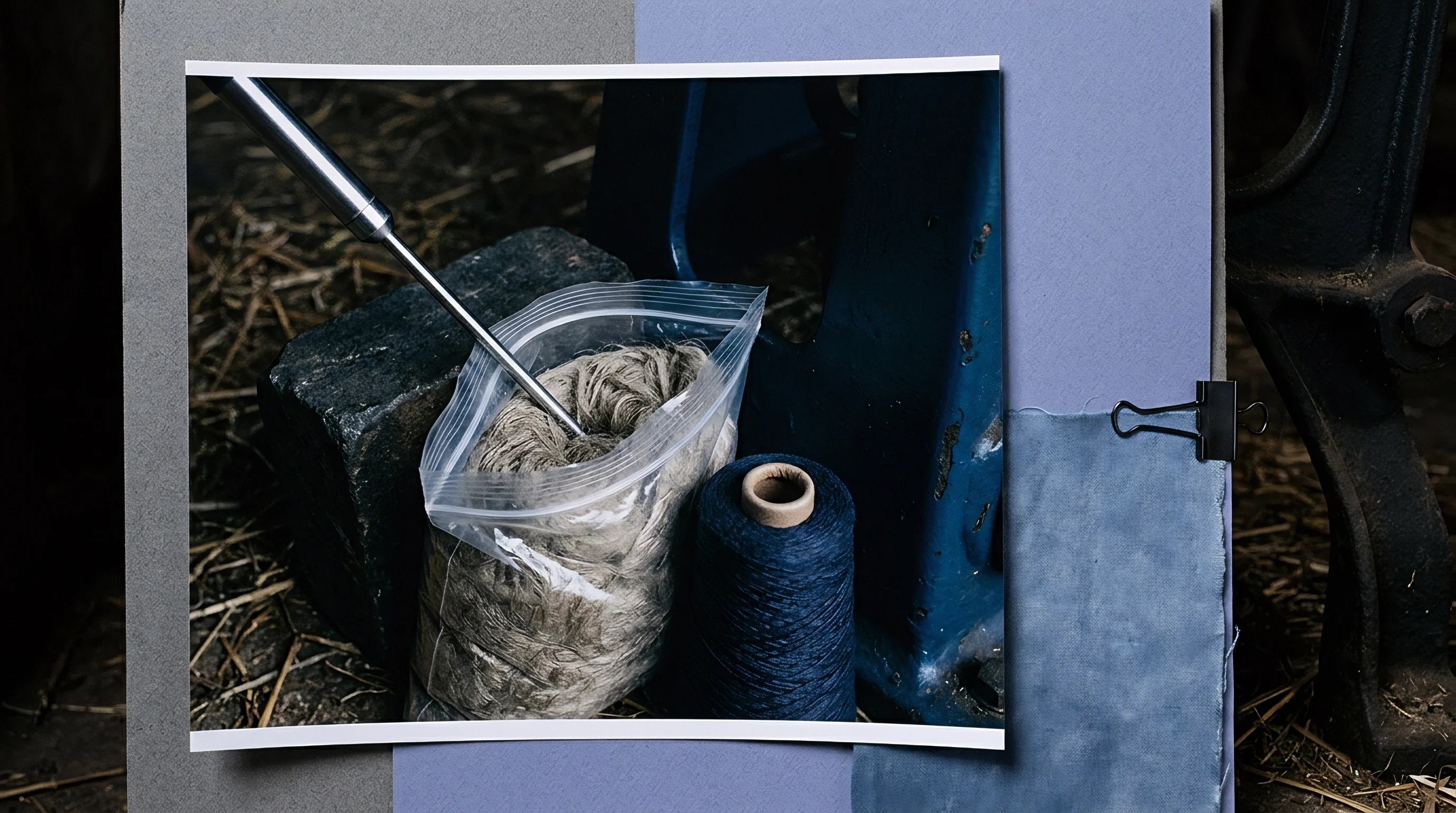
Sample Preparation and Nitration Protocol Execution
Analytical technicians remove lipids using dichloromethane extraction before reacting dried fibers with nitric acid. Solvents remove surface lipids. Removing processing oils, wax lubricants, and softening agents prevents organic contamination that would otherwise skew carbon and hydrogen isotope determinations.
After solvent extraction, fibers undergo nitration using a mixture of nitric acid and phosphorus pentoxide at zero degrees Celsius to prevent polymer degradation.
Pyrolysis yields carbon monoxide. Mass spectrometry measures ratios. Testing facilities run standardized preparation sequences to isolate pure cellulose nitrate prior to mass spectrometer insertion.
- Extract residual waxes and spinning lubricants using solvent extraction for four hours.
- React dried cellulose with concentrated nitric acid and acetic anhydride at zero degrees Celsius.
- Wash precipitated cellulose nitrate with cold deionized water until neutral pH registers.
- Pyrolyze dried samples at fourteen hundred degrees Celsius inside an elemental analyzer coupled to the mass spectrometer.
Elemental analyzers convert cellulose nitrate samples into simple gases for isotopic measurement. High-temperature pyrolysis at fourteen hundred degrees Celsius over a carbon bed converts cellulose oxygen into carbon monoxide gas and cellulose hydrogen into hydrogen gas. Combustion at one thousand twenty degrees Celsius in the presence of copper oxide converts cellulose carbon into carbon dioxide gas.
ISO 17025 laboratory accreditation for isotopic analysis requires explicit baseline corrections for chemical processing shifts before issuing origin certificates.
Mass spectrometers measure ion current ratios corresponding to mass-to-charge values of converted gas molecules. Precision for carbon-13 measurements reaches plus or minus zero point one per mil. Precision for hydrogen-2 measurements reaches plus or minus one point zero per mil, while oxygen-18 precision achieves plus or minus zero point two per mil.
Baseline mathematical corrections shift raw data points to account for known scouring enrichment values verified through control sample runs.
A sample that skips solvent extraction before nitration yields unreliable isotopic data regardless of mass spectrometer calibration.
Dossier
Commercial origin declarations depend on aligning laboratory measurements with physical mill shipping records. Global trade regulations require precise country of origin determination for preferential tariff treatment and forced labor compliance enforcement. High-value linen brands specifying European flax must defend origin claims using documentary evidence verified by isotopic testing when challenged by customs authorities.

Reconciling Mass Balance against Isotopic Signatures
Verification auditors match scutching yield weights to yarn spinning lot numbers across processing sites. Bale tags verify lot identity. Raw flax grown in France, Belgium, or the Netherlands carries distinct isotopic signatures corresponding to maritime Western European precipitation and soil conditions.
When greige flax yarn exports to Asian spinning and weaving facilities, wet processing alters the raw isotopic fingerprint according to local water supplies and bleaching chemistry.
Audits expose document gaps. Origin claims demand proof. Customs holds unverified shipments.
Verification auditors employ audit criteria to validate linen fabric origin declarations when chemical processing drift is present.
| Isotopic Data Status | Documentary Evidence Match | Origin Risk Level | Mandatory Buyer Compliance Action |
|---|---|---|---|
| δ13C within raw baseline zone | Complete chain of custody certificates from farm to loom | Low | Approve origin declaration and release shipment lot. |
| δ13C shifted +1.2‰; δ2H nitrated matches Europe | Scutcher delivery notes present; missing bleach water logs | Moderate | Request mill process water sample for laboratory calibration check. |
| δ13C shifted >+2.5‰; δ18O elevated >+4.0‰ | Spinning lot numbers missing from bale store intake ledger | High | Reject origin claim; re-audit spinning mill inventory ledgers. |
| Unnitrated δ2H matches regional Asian water | Transaction certificates present without scope attachment | Critical | Hold invoice payment; mandate nitrated derivative re-testing. |
A structured review process prevents commercial exposure when auditing bleached flax invoices.
- Bale Tag Reconciliation verifies that physical lot numbers on incoming fiber bales match transaction certificates issued by scutching cooperatives.
- Bleach Water Baseline Audit collects regional groundwater samples from processing mills to calibrate oxygen and hydrogen isotopic drift models.
- Mass Balance Verification reconciles raw flax fiber input weights against finished bleached yarn output volumes to detect blending with uncertified fibers.
- Nitration Derivatization Proof requires testing laboratories to submit documentation showing hydrogen isotope analysis occurred on isolated cellulose nitrate rather than raw bulk fiber.
Enforcement agencies seize imported linen items when isotopic profiles contradict declared retting regions. Importers relying solely on paperwork declarations face severe commercial penalties if laboratory audits reveal non-European isotopic signatures caused by unverified fiber blending during spinning operations.
Customs authorities reject origin certificates when isotopic signatures contradict declared retting regions regardless of transactional paperwork.
Incorporating European Flax Standard Annex 4 warranty clauses transfers financial liability for isotopic origin mismatch directly onto the spinning mill.