Determining Commercial Dry Mass in Flax Consignments
Commercial dry mass in flax consignments resolves by desiccation at 105C to isolate bone-dry mass, adjusted by official 12.00 percent regain for invoice settlement.
Allowance
Cross-border trade in raw scutched flax, combed sliver, and wet-spun linen yarn depends on an agreed moisture standard rather than the gross scale weight taken at berth. Hydroxyl groups along the amorphous cellulose chains in bast fibers draw in atmospheric vapor, shifting total consignment mass by several percentage points at sea without adding a single gram of spinnable fiber. Commercial contracts manage that climate swing through an official moisture regain allowance, which pegs the recognized water weight directly to the lot’s bone-dry cellulose content.
Both the Bureau International pour la Standardisation des Fibres Artificielles and ISO 6741-1 set commercial moisture regain for scutched flax fiber at 12.00 percent on dry mass. Combed flax tow and sliver use that same baseline, while pure wet-spun linen yarns land at 12.00 percent or 13.00 percent depending on whether specifications call for boiled, bleached, or greige yarn. If a container leaves an inland warehouse in Normandy or Flanders showing a scale weight of 20,000 kilograms at 14.50 percent ambient moisture, the shipment contains only 17,467 kilograms of dry substance.
Factoring the 12.00 percent allowance back onto that dry core leaves an invoiced commercial weight of 19,563 kilograms.
Under standard European Flax trade terms, settlement adjustments apply directly against the bill of lading value whenever laboratory regain deviates more than half a percent from the agreed commercial allowance.
Disputes often start when purchasing teams treat container manifest figures as payable mass. Carriers weigh containers purely to calculate ship displacement and crane moves, indifferent to whether the baled cellulose inside sits at eight percent or sixteen percent relative humidity. Customs authorities require gross physical mass under tariff heading 5301, but settlement under documentary letters of credit rests on certified dry mass plus the commercial allowance.
That split between customs figures and invoice weights draws scrutiny during post-clearance audits whenever declared value cannot be reconciled with test certificates issued by an accredited laboratory.

Contractual Standards across Bast Fiber Consignments
Trade rules fix moisture allowances for each processing stage to keep damp sea passages from turning into supplier margin. Differences in natural wax fractions, residual pectins, and storage history alter how readily each fiber form absorbs ambient humidity.
| Fiber Processing Stage | Applicable Standard | Commercial Allowance | Typical Residual Content | Reference Condition |
|---|---|---|---|---|
| Scutched Long Flax | ISO 6741-1 | 12.00% | 1.5% waxes, 2.8% pectins | Raw dew-retted baled fiber |
| Combed Sliver and Top | BISFA Rules | 12.00% | 0.8% waxes, 1.2% pectins | Hackled continuous sliver |
| Bleached Flax Yarn | ISO 6741-2 | 10.00% | 0.2% non-cellulosic matter | Boiled and bleached packages |
| Flax Tow and Waste | CELC / European Flax | 12.50% | 2.5% shives, 3.2% pectins | Coarse mechanical uncombed fiber |
| Allowances express theoretical moisture addition calculated as a percentage of bone-dry mass under standard atmosphere of 20 degrees Celsius and 65 percent relative humidity. | ||||
Contractual terms keep weather out of the invoice ledger. Under the standard commercial rules of the Confédération Européenne du Lin et du Chanvre, certified dry mass tests override any weighbridge tickets issued at the dispatch yard.

Bale
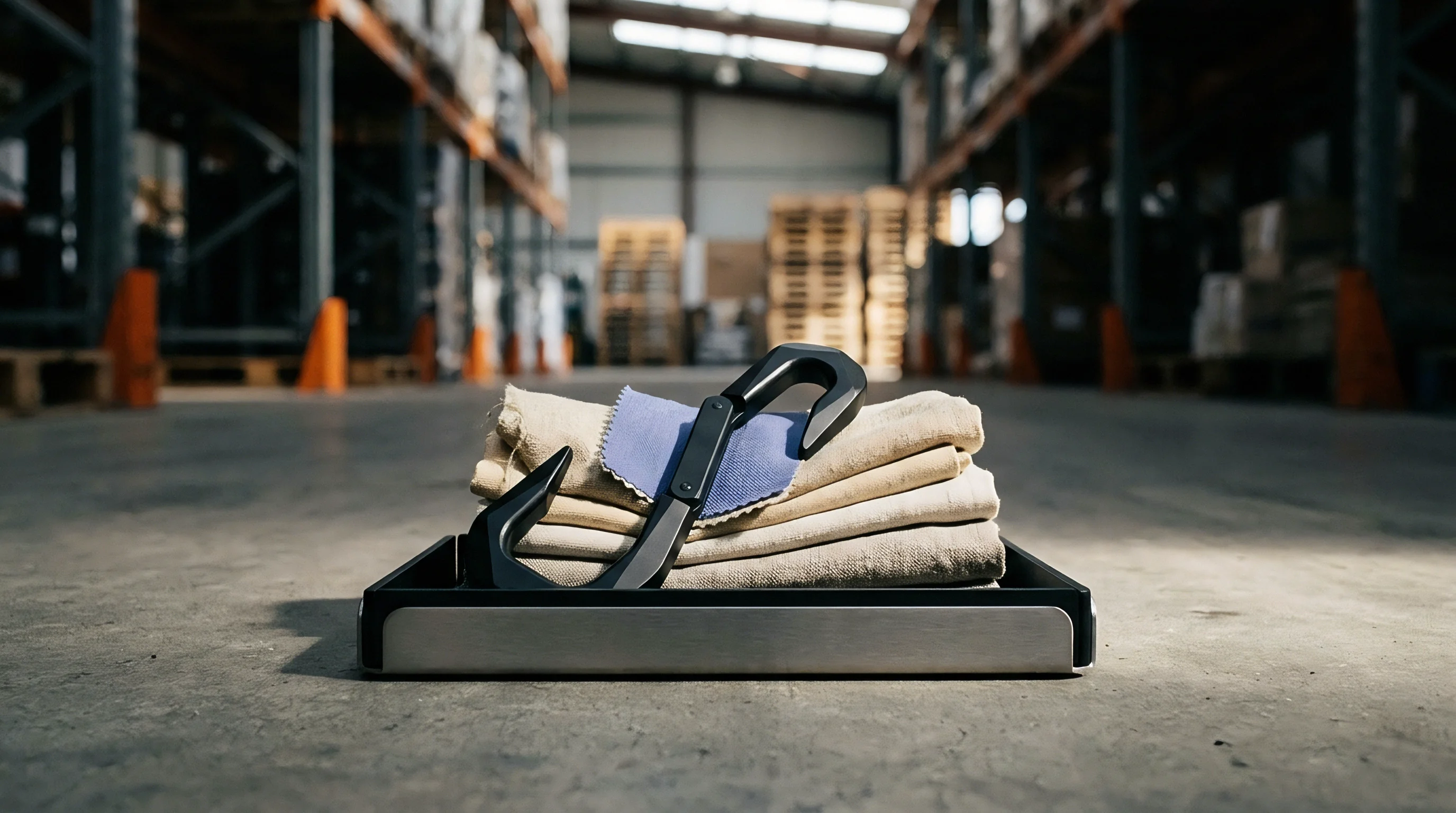
Drawing an accurate sample from dense, hydraulically pressed flax on an open dock is notoriously difficult. Units arrive strapped in steel at 180 to 250 kilograms each, packed past 350 kilograms per cubic meter. Moisture settles unevenly through the bale: humid sea air wets the outside layers while the center stays at whatever equilibrium it held when baled in the field.
Grabbing fiber off the surface skews the reading for the whole shipment.
Samplers working to ISO 5085-1 drive motorized coring tools with serrated tungsten-carbide teeth deep into the bale. Core points follow a grid across the face, reaching at least two-thirds of the depth of the unit. Those cores must go straight into airtight foil-laminate pouches or heavy polyethylene bags, with excess air squeezed out before sealing.
Waiting even sixty seconds on a wet quay gives the fiber time to exchange moisture with the air, compromising the test before it reaches the oven.
Where Do Discrepancies Surface between Conditioning Benchmarks?
Disputes frequently center on whether sampling occurred at origin consolidation or destination discharge. Moisture shifts inside the container as temperatures cycle: water evaporates from warm upper bales, collects on the corrugated steel ceiling, and drips back onto the top tiers, producing wet zones that distort destination sampling.
- Perimeter moisture bias occurs when samplers take fiber without driving the tube past the outer fifteen-centimeter boundary.
- Headspace condensation losses happen when samples sit in unsealed polyethylene bags, allowing water to evaporate onto inner plastic surfaces before initial laboratory weighing.
- Internal core drying happens when high-speed coring bits run hot, cooking off moisture through friction before the plug can be sealed.
- Lot stratification failure occurs when samplers pull material only from accessible doorway pallets, missing the center rows that experienced different temperatures in transit.
Transit moisture uptake functions as natural conditioning that aids mill-floor hackling, though it directly conflicts with contractual settlement weights.
Heat
Drying bast fiber down to absolute dry mass requires controlled heat so that free and bound water evaporate without breaking down hemicellulose, lignin, or plant waxes. Flax fiber runs roughly seventy to seventy-five percent crystalline cellulose, alongside up to fifteen percent hemicellulose, five percent pectins, two percent waxes, and trace minerals. If oven temperatures climb too high, hemicelluloses begin depolymerizing into volatile organic compounds that vent from the chamber, leading the balance to record lost fiber matter as moisture.
A drying chamber held at 105 degrees Celsius produces stable bone-dry mass for raw scutched flax within four hours when ventilated with dry air.
Testing laboratories use forced-draft ovens conforming to ISO 6741-1, holding the chamber at 105 degrees Celsius plus or minus two degrees. Filtered air dried to an absolute humidity below 0.5 grams of water per cubic meter circulates through the unit so that the fiber cannot settle into equilibrium with humid exhaust air. Weighing occurs inside the hot chamber on an integrated balance, or inside sealed, ground-glass vessels moved into a phosphorus pentoxide desiccator.
Left exposed to ambient bench air at 20 degrees Celsius and 60 percent relative humidity, a bone-dry flax specimen regains one percent of its mass in under ninety seconds.

Is Laboratory Desiccation Accepted over Rapid Electronic Testing?
Handheld resistance and dielectric moisture meters deliver quick numbers on the warehouse floor, but commercial contracts bar them from dispute settlement. Surface conductivity along flax fibers changes with electrolyte traces, retting depth, residual pectins, and bale compaction, leaving an uncertainty margin wider than three percent moisture content. Oven desiccation remains the binding standard in international trade.
- Tare clean, labeled specimen baskets inside the conditioning oven at 105 degrees Celsius, recording baseline empty container mass to within 0.001 grams.
- Transfer approximately 200 grams of extracted, uncombed core fiber directly into the tared basket, sealing transport containers to prevent room-air absorption.
- Place baskets in the drying chamber at 105 degrees Celsius under continuous dry-air airflow, initiating thermal desorption.
- Perform an initial intermediate weight check after 180 minutes, returning the basket to the chamber for a subsequent 30-minute interval.
- Verify mass stabilization when consecutive weighings separated by 30 minutes show a mass difference under 0.05 percent of the specimen mass.
Continued weight loss after five hours at temperature points to thermostat drift and thermal breakdown of fiber components rather than residual water.

Correction
Determining commercial dry mass converts laboratory oven results into an invoicing figure. Once the lab establishes the dry-to-gross ratio of the sample, settlement applies that percentage to the gross intake weight of the lot. The total dry fiber content simply equals the consignment’s scale mass scaled by the bone-dry fraction measured in the test.
The commercial formula scales absolute dry mass by the agreed allowance. For a delivery with gross intake weight M, initial sample mass m, and oven-dry mass d, the lot’s dry fiber mass equals M multiplied by d divided by m. Invoiced commercial weight Mc is calculated as:
Mc = M (d / m) (1 + R / 100)
In this equation, R is the agreed regain allowance, set at 12.00 percent for raw scutched flax. If an invoice covers 40,000 kilograms gross weight of baled flax tested at 15.50 percent regain, commercial payable weight adjusts down to 38,788 kilograms.
Consignments with audited moisture content exceeding commercial regain allowances carry price reductions equal to the unsupplied dry fiber mass multiplied by landed contract price.
These adjustments mount quickly on routes between European scutching co-operatives and mills in Jiangsu and Zhejiang provinces. A 100 metric ton shipment priced at 4.80 euros per kilogram has a baseline value of 480,000 euros. A two percent surplus in ambient moisture translates to 9,600 euros billed for phantom fiber, alongside non-recoverable ocean freight, terminal haulage, and import value-added tax paid on dead weight.
| Arrival Gross Weight | Audited Regain | True Dry Substance | Calculated Commercial Mass | Financial Settlement Delta |
|---|---|---|---|---|
| 40,000 kg | 10.00% | 36,364 kg | 40,728 kg | +3,494 EUR (Credit to Seller) |
| 40,000 kg | 12.00% | 35,714 kg | 40,000 kg | 0 EUR (Neutral Parity) |
| 40,000 kg | 14.00% | 35,088 kg | 39,299 kg | -3,365 EUR (Debit to Buyer) |
| 40,000 kg | 16.50% | 34,335 kg | 38,455 kg | -7,416 EUR (Debit to Buyer) |
Audit Requirements for Moisture Settlement Dossiers
Pursuing weight claims through trade arbitration demands an unbroken paper trail linking port scale tickets to oven logs. Gaps in chain-of-custody documentation invalidate debit notes presented against commercial letters of credit.
- Original weighbridge ticket displays stamped gross, tare, and net weights with calibration certificates for the intake scale.
- Superintendent sampling certificate records container numbers, seal serials, core extraction dates, and package coordinate selections.
- Laboratory analytical report details ISO 17025 accreditation, oven operating temperatures, weighing intervals, and desiccator cooling logs.
- Commercial reconciliation statement translates raw oven data into contract value adjustments using the agreed base fiber price.
Overlooking calculation tolerances leads directly to letter-of-credit discrepancy charges and leaves buyers paying premium European bast fiber prices for trapped water.
Exposure
Customs officers and commercial auditors scrutinize consignments where moisture calculations alter declared border values. In jurisdictions with rigorous preferential trade regimes, including the European Union under the Union Customs Code or the United States under the Tariff Act, net declared mass determines whether duties are assessed accurately against specific commodity codes. While raw scutched flax enters many destinations duty-free under chapter 53, related fiber categories attract ad valorem duties, meaning inaccurate net weights distort declared customs values.
Depressing declared fiber mass through aggressive moisture adjustments exposes importers to customs misdeclaration fines. If an intake declaration clears 40,000 kilograms at the terminal while bank remittances reflect payment for 38,000 kilograms of commercial weight, border authorities cross-check shipping entries against commercial wire records. Customs filings need to show physical scale mass matching transport manifests, supported by a valuation note explaining that final invoice value derives from commercial weight calculated under standard trade regain allowances.
Clear transaction dossiers separate physical weight recorded on maritime manifests from certified commercial weight applied to payment settlement invoices.
Chain-of-custody programs like European Flax and Masters of Linen require strict mass-balance audits through each processing stage. Auditors follow physical volume into the hackling shed, comparing scutching output kilograms against carded sliver yields. When spinning mills enter raw fiber on unadjusted scale weights rather than certified commercial mass, apparent yield drops.
Processing wet fiber generates phantom waste, mistaking transit water evaporation during spinning for actual production loss.
Setting uniform contractual tolerances across diverse shipping routes remains the primary defense against routine arbitration over ocean transit moisture loss.