Calculating Fine Count Organic Linen Extractive Yield Adjustments for Certification
Fine count organic linen yield calculations require adjusting mass balances for non-cellulosic chemical extraction losses up to fourteen percent in scouring.
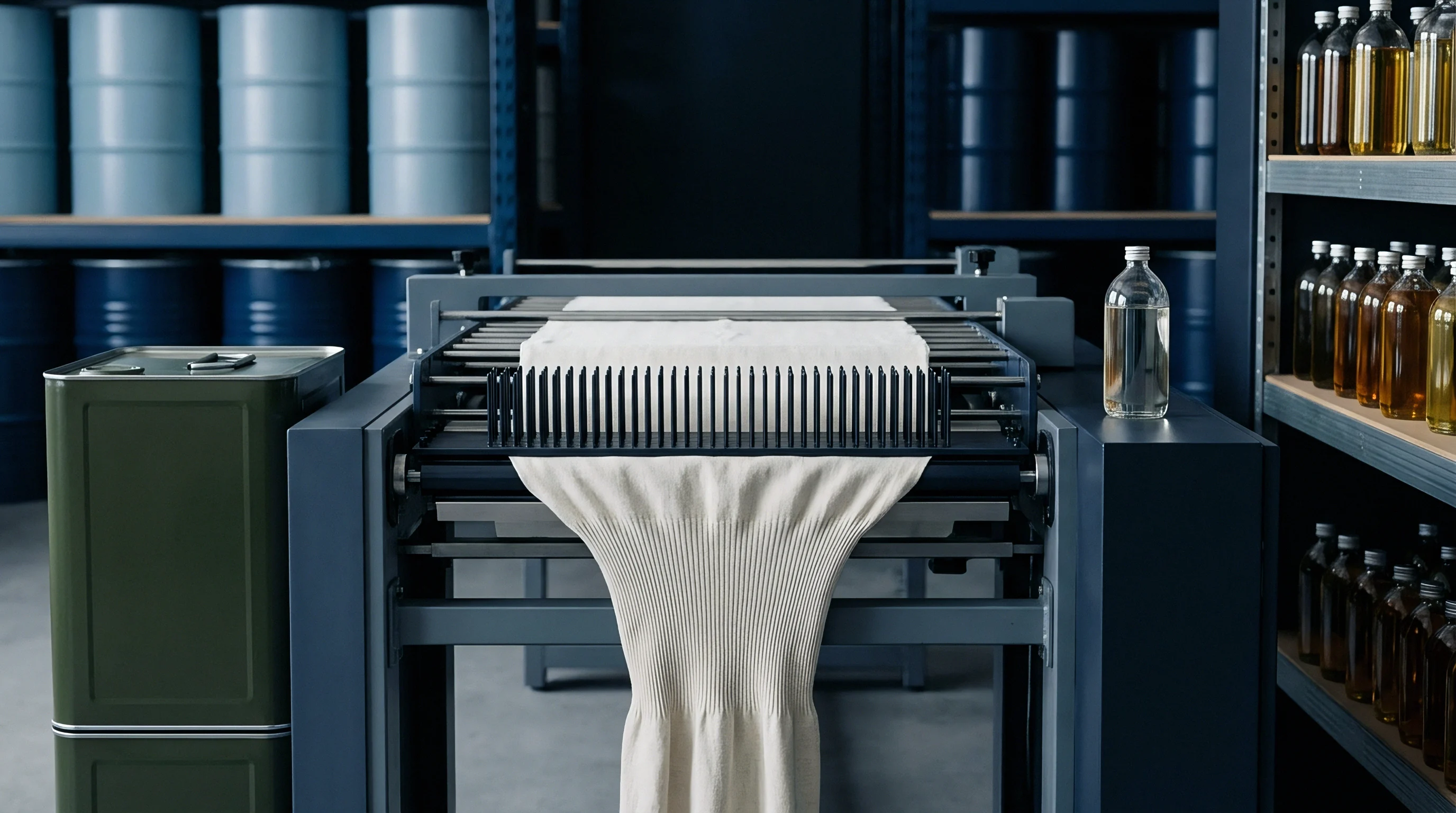
Pectin
Raw bast fibre bundles inside the flax stem remain bound together by a complex matrix of non-cellulosic polysaccharides, resins, and surface waxes. In coarse count production, a substantial fraction of this inter-cellular binder remains within the yarn structure after mechanical scutching and hackling. Fine count organic linen yarns, defined as count specifications reaching Nm 40 and above, demand extensive liberation of individual ultimate fibres to achieve uniform drafting during wet spinning.
Achieving these fine yarn counts requires removing up to twenty-six percent of the raw fibre mass prior to the final winding stage.

Non-Cellulosic Matrix Breakdown in Organic Processing
The removal of binding agents occurs across distinct mechanical and chemical stages. Initial field retting uses micro-organisms to break down the middle lamella. Scutching and hackling remove the woody core and broken short fibres.
Fine count processing requires a secondary chemical extraction step, where roving passes through alkaline baths before wet spinning frame drafting. Flax fibres extract unevenly. Standard industrial processing relies on aggressive sodium hydroxide boils to strip non-cellulosic material rapidly.
Organic processing specifications under the Global Organic Textile Standard restrict chemical inputs to mild alkaline agents, predominantly sodium carbonate, paired with specialized enzymatic treatments.

Hot Water Extraction Dynamics
Wet spinning troughs operate at temperatures between sixty and seventy degrees Celsius. Hot water softens residual binder, allowing drafting rollers to draw individual ultimate fibres past one another without structural breakdown. This aqueous environment leaches water-soluble sugars, low-molecular-weight hemicellulose, and residual pectin directly into the bath liquor.
Pectin holds the bundle. The volume of mass extracted inside the spinning trough increases non-linearly as yarn target counts become finer. Fine count yarns require higher twist insertion and smaller bundle diameters, forcing spinners to run roving through longer trough dwell times or elevated bath temperatures.
Organic wet spinning at sixty degrees Celsius leaches eleven percent of non-cellulosic dry mass into the trough water.
The physical mass lost inside the spinning trough disappears from the mill ledger if incoming hackled flax weights are recorded without adjustment for hot-water extractive yield loss. A mill receiving one thousand kilograms of organic long line flax cannot output an equivalent mass of fine yarn and marketable tow. The chemical extraction of non-cellulosic compounds reduces the actual mass of spun yarn harvested per kilo of raw fibre input.
Certification bodies auditing organic inputs against final yarn output frequently flag this natural mass loss as an unaccounted inventory discrepancy, mistaking chemical extraction for uncertified conventional fibre substitution.
The precise rate at which enzymatic scouring alters the ratio of soluble pectin extraction relative to residual crystalline cellulose across varying retting degrees remains unquantified across commercial fine-spinning runs.


Hackling
Comb pin density governs the initial segregation of long line flax from short staple tow. Fine line preparation utilizes sequential hackling beds with pin density escalating to twenty-five pins per centimetre on the final finishing heads. High pin density splits bundle structures into finer slivers while simultaneously combing out short fibres, residual shive, and weak filaments.
Yield losses accrue rapidly. Fine counts demand long fibre. The mechanical yield of combed long line sliver drops significantly when processing fibre lots intended for fine counts compared to standard coarse weaving yarns.

Pin Density Impact on Fine Line Fibre Yield
Aggressive combing shifts the ratio between long line fibre and hackling tow. While hackling tow retains commercial value as a spinning input for coarse dry-spun yarns, its generation represents a structural loss in fine count line yield. Mechanical combing also generates unrecoverable dust and short fibre fly that escapes into filtration systems.
Combing operations produce multiple mass transfer channels that complicate organic yield auditing:
- Long line sliver yield retains organic certification status and carries the full fine-count raw material cost allocation into the roving department.
- Hackling tow output diverts into secondary organic yarn lines, requiring separate batch tracking to prevent double-counting input certificates.
- Comber dust and shive waste collects in extraction cyclones as non-spinnable waste, representing permanent physical mass loss.
- Moisture evaporation loss occurs during mechanical friction, altering net lot weight between bale opening and sliver execution.
Fine hackling pin densities reduce long line mass yield while increasing total surface area exposed to subsequent wet extraction steps. High comb pin densities extract short fibres into tow fractions while leaving fine line sliver vulnerable to higher chemical mass loss in subsequent boiling operations. Fine counts demand uniform sliver structure.
Combing intensity sets the baseline for all downstream extractive adjustments.
Hackling line yield tables calibrated for conventional fibre understate tow generation rates when applied to organic flax lots exhibiting uneven field-retting characteristics.
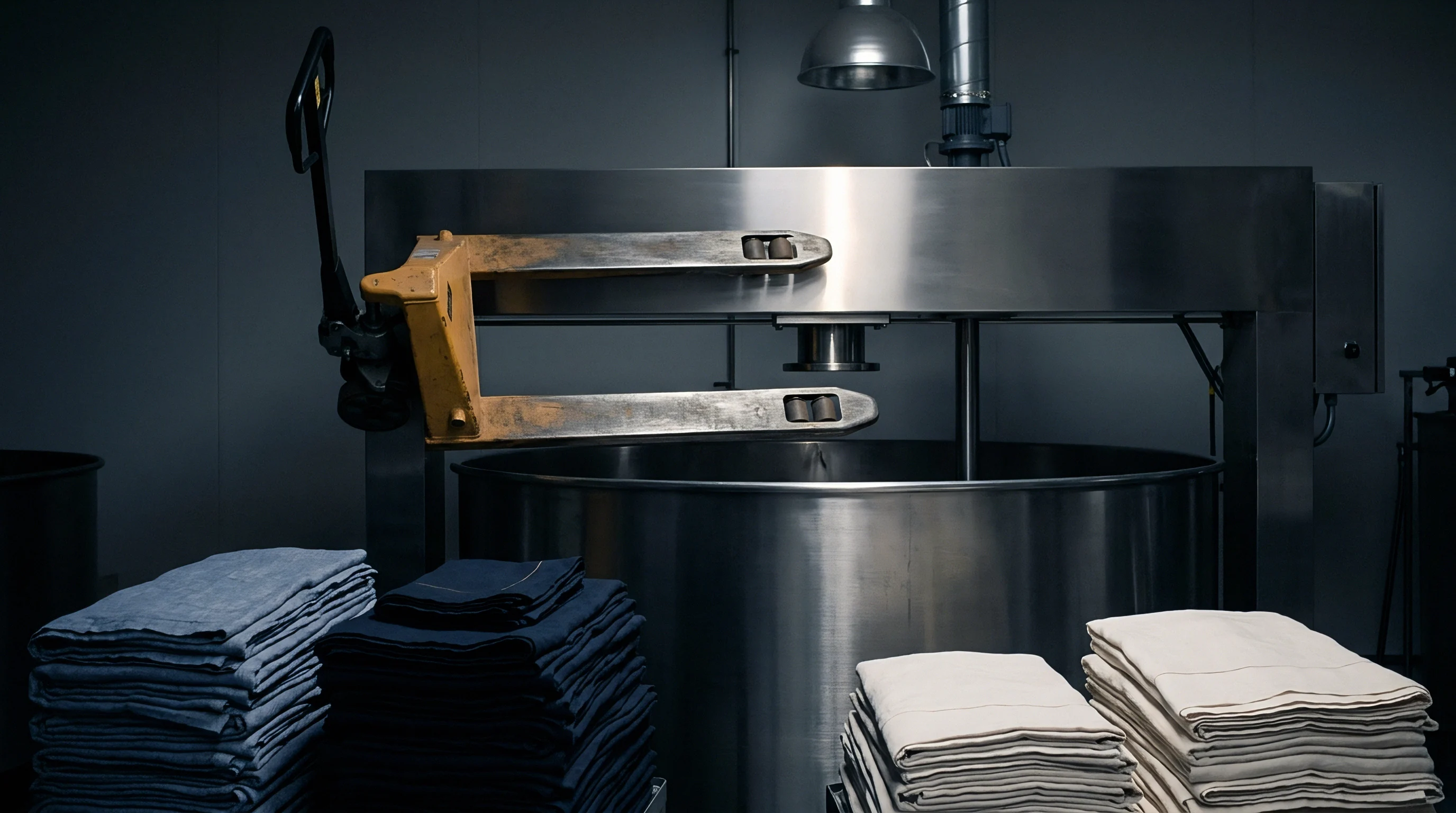

Boil
Roving bobbins destined for fine count wet spinning undergo mild alkaline treatment to scour surface waxes and partially solubilize binding materials. Scouring removes residual wax. In conventional mills, high-pressure caustic boiling achieves uniform wax extraction within ninety minutes.
Organic processing restrictions limit alkali concentrations and bath temperatures, extending processing times and altering mass extraction ratios. The mass loss during organic roving scouring ranges between seven and thirteen percent of dry roving weight, depending on liquor ratio, alkali selection, and cycle duration.

Alkaline Scouring Parameters for Fine Roving
The chemical bath extracts water-soluble material while emulsifying natural flax waxes. Mass loss during roving scouring directly reduces the linear density of the roving prior to drafting. If a mill drafts a roving bobbin based on its un-scoured weight, the resulting yarn count will run finer than target specifications, or the net yarn yield by weight will fall below calculated targets.
Auditing organic mass balances requires measuring dry-to-dry mass before and after the scouring stage.
| Processing Stage | Coarse Count (Nm 10 to Nm 26) | Medium Count (Nm 30 to Nm 40) | Fine Count (Nm 50 to Nm 80) |
|---|---|---|---|
| Field Retting & Scutcher Loss | 22.0% – 26.0% | 24.0% – 28.0% | 26.0% – 31.0% |
| Hackling Combing Line Split | 30.0% – 35.0% Tow | 35.0% – 42.0% Tow | 42.0% – 52.0% Tow |
| Roving Alkaline Scour Extraction | 3.5% – 5.5% | 6.0% – 8.5% | 9.0% – 13.5% |
| Spinning Trough Leaching Loss | 1.5% – 2.5% | 2.5% – 4.0% | 4.5% – 7.0% |
| Cumulative Extractive Mass Shift | 27.0% – 34.0% | 32.0% – 40.5% | 41.5% – 53.5% |
Transaction certificates derived from unadjusted greige weight fail organic audit reconciliation upon chemical scour verification.
Standard moisture regain allowances further obscure chemical extraction losses. Flax has an official commercial regain rate of twelve percent. Mills operating without dry-weight moisture meters frequently confuse moisture loss during thermal drying after scouring with true chemical extraction mass loss.
Calculating adjustments requires desiccating samples to absolute dry weight, subtracting chemical mass loss, and re-applying standard commercial moisture regain coefficients.
Failing to isolate chemical extraction from moisture evaporation during roving drying causes certifiers to reject mill inventory reports due to unresolved mass balance balance discrepancies.


Accounting
Chain-of-custody standards such as the Global Organic Textile Standard and the Organic Content Standard require strict quantitative accounting for all input certified material. Every kilogram of certified organic scutched flax entering a spinning facility must balance against output products, certified by-products, and documented waste streams. Extractive mass loss represents an invisible waste channel.
If a mill inputs ten thousand kilograms of certified long line flax, outputting five thousand kilograms of fine yarn and three thousand kilograms of organic tow, two thousand kilograms remain unaccounted for without extractive yield adjustments. The mill records wet weight.

Which Yield Coefficients Satisfy Organic Mass Balance Audits?
Certifiers accept specific standardized Mass Loss Conversion Factors when mills validate extraction rates through empirical testing. Audit logs track weight. Standard conversion factors established for coarse hemp or conventional linen undercount mass loss in fine count organic production.
Implementing accurate yield adjustment factors requires establishing documented material input parameters across every processing machine.
Verifying organic mass balance accuracy across fine count spinning sequences requires specific documentary evidence:
- Bale scale weighbridge slips verified against input scope certificates establishing net certified dry weight.
- Hackling yield breakdown ledgers detailing long line sliver weight, tow weight, and cyclone dust collection logs per batch.
- Scouring bath gravimetric test sheets showing sample bone-dry weight before and after chemical treatment.
- Spinning trough bath filtration logs recording solids precipitating out of hot water trough circulation loops.
- Commercial regain calculation sheets adjusting final yarn packaging weight to standard twelve percent regain baselines.
Consider a practical worked calculation for a mill processing a ten-thousand-kilogram lot of certified organic hackled long line flax into Nm 60 fine wet-spun yarn. Assume the incoming lot carries a verified moisture content of ten percent, giving an initial bone-dry mass of nine thousand kilograms. Combing operations yield forty-eight percent long line sliver and forty-four percent organic hackling tow, with eight percent lost as dust and unrecoverable shive.
The long line sliver dry mass equals four thousand three hundred and twenty kilograms. Roving scouring removes eleven point five percent of non-cellulosic dry mass. The scoured dry mass drops to three thousand eight hundred and twenty-three point two kilograms.
Wet spinning trough extraction removes a further five point two percent of dry mass, leaving three thousand six hundred and twenty-four point four kilograms of dry yarn.
Applying the standard twelve percent commercial regain allowance to the final dry yarn mass yields a final certified yarn mass of four thousand fifty-nine point three kilograms. The net mass yield of fine organic yarn from the initial ten-thousand-kilogram input lot equals forty point five nine percent. The remaining mass divides between four thousand eight hundred eighty-eight point nine kilograms of certified organic tow at commercial regain, and one thousand fifty-one point eight kilograms of legitimate, documented non-cellulosic extractive and mechanical waste.
Without registering the eleven point five percent scouring loss and five point two percent trough loss as extractive adjustments, an auditor comparing input to output would identify an unexplained deficit of seven hundred and forty kilograms of certified organic material, triggering a non-conformity report and blocking Transaction Certificate issuance.
| Yarn Count Range | Standard MLCF (Default) | Empirical Fine Count MLCF | Unadjusted Yield Deficit | Audit Status |
|---|---|---|---|---|
| Nm 10 – Nm 26 | 1.15 | 1.18 | 2.5% | Accepted within standard tolerance |
| Nm 30 – Nm 40 | 1.20 | 1.28 | 6.2% | Requires mill batch validation |
| Nm 50 – Nm 60 | 1.25 | 1.39 | 10.1% | Non-Conformity without adjustment |
| Nm 70 – Nm 80 | 1.30 | 1.52 | 14.5% | Automatic TC suspension risk |
| Methodology note: Values calculated using bone-dry gravimetric testing adjusted to 12.0% commercial moisture regain according to ISO 6741 standards. Empirical MLCF incorporates combined alkaline roving scour loss and wet-spinning trough leaching for organic certified processes. | ||||
Mill managers frequently defend mass deficits by claiming that certified raw fibre was consumed in trial runs or absorbed into machine maintenance waste.
Tolerance
Certifiers establish specific discrepancy thresholds before revoking scope certificates or denying Transaction Certificate requests. Standard organic certification protocols permit a maximum unexplained mass discrepancy of three percent across an annual audit cycle. In fine count linen processing, chemical extraction alone exceeds this limit by multiple percentage points.
Scutcher yields vary by lot. Extractive mass shifts across baths. Mills attempting to fit fine count organic production within default coarse-linen mass loss templates regularly breach certifier tolerance limits.
Validating mill-specific yield adjustment factors follows a defined verification protocol:
- Draw representative five-hundred-gram sliver samples from incoming hackled long line lots prior to roving preparation.
- Desiccate samples in a ventilated drying oven at one hundred and five degrees Celsius until mass constancy is achieved.
- Process the corresponding lot through roving scouring and wet spinning under standard mill operational parameters.
- Sample wet-spun yarn directly from the spinning frame bobbins prior to package drying and conditioning.
- Determine the bone-dry mass of the spun yarn sample using identical oven-drying parameters.
- Calculate the absolute extractive mass loss coefficient by dividing dry sliver mass by dry yarn mass.
- Submit gravimetric test reports and independent laboratory test certificates to the certification body for baseline approval.
Establishing formal, approved Mass Loss Conversion Factors with certification bodies protects mills from false non-conformity findings. The approval process requires updating conversion factors whenever raw fibre origins shift, retting conditions change, or chemical scouring formulations undergo adjustment. The mass balance must align.
Landed costs reflect raw fibre yield. Documenting physical extraction loss converts an audited inventory short-fall into a compliant processing record.
Standard organic certification contracts state that any unverified mass loss exceeding three percent across consecutive transaction cycles results in the immediate freeze of outgoing Transaction Certificate issuance until gravimetric yield audits are completed by an accredited third-party inspector.

Valuation
Yield loss directly inflates the landed cost per kilogram of fine organic linen yarn. Certified organic flax raw material commands a price premium of thirty to sixty percent over conventional fibre. When processing fine counts where total mass yield drops below forty-five percent of raw input weight, the cost of raw material allocated to every kilogram of finished yarn doubles.
Ignoring extractive loss calculations during product costing leads to mispriced yarn contracts and severe margin erosion for the mill.
Commercial contracts must explicitly define how organic waste and extractive losses affect billing units. Hackling tow retains value, but its price per kilogram sits well below the cost of certified long line input fibre. The value difference between input raw material and generated tow must be absorbed by the fine yarn price structure.
Extractive loss represents complete financial value destruction, as dissolved pectin and low-molecular sugars carry zero commercial resale value.
Unadjusted mass yields shift the entire financial risk of organic fibre loss onto the weaver.
When selling finished fine-count linen fabric, weavers and brand buyers must account for the cumulative yield loss originating at the spinning frame. A linen fabric specified at one hundred grams per square metre woven from Nm 60 yarn requires substantially more raw organic flax fibre per metre than an equivalent fabric woven from dry-spun coarse yarn. Sourcing managers reviewing supplier quotes must evaluate whether the quoted price per metre correctly reflects verified mass yield adjustments or conceals uncertified fibre blending designed to cover unadjusted mass losses.
Purchasing agreements that incorporate explicit yield adjustment clauses protect both mill and buyer. These clauses tie final yarn billing rates to verified gravimetric mass loss reports generated during production. If a raw flax lot exhibits higher non-cellulosic content due to weather conditions during field retting, the contract adjusts the certified yield allowance dynamically, ensuring transaction documentation remains fully compliant with global organic auditing requirements.