Pin Width Retention
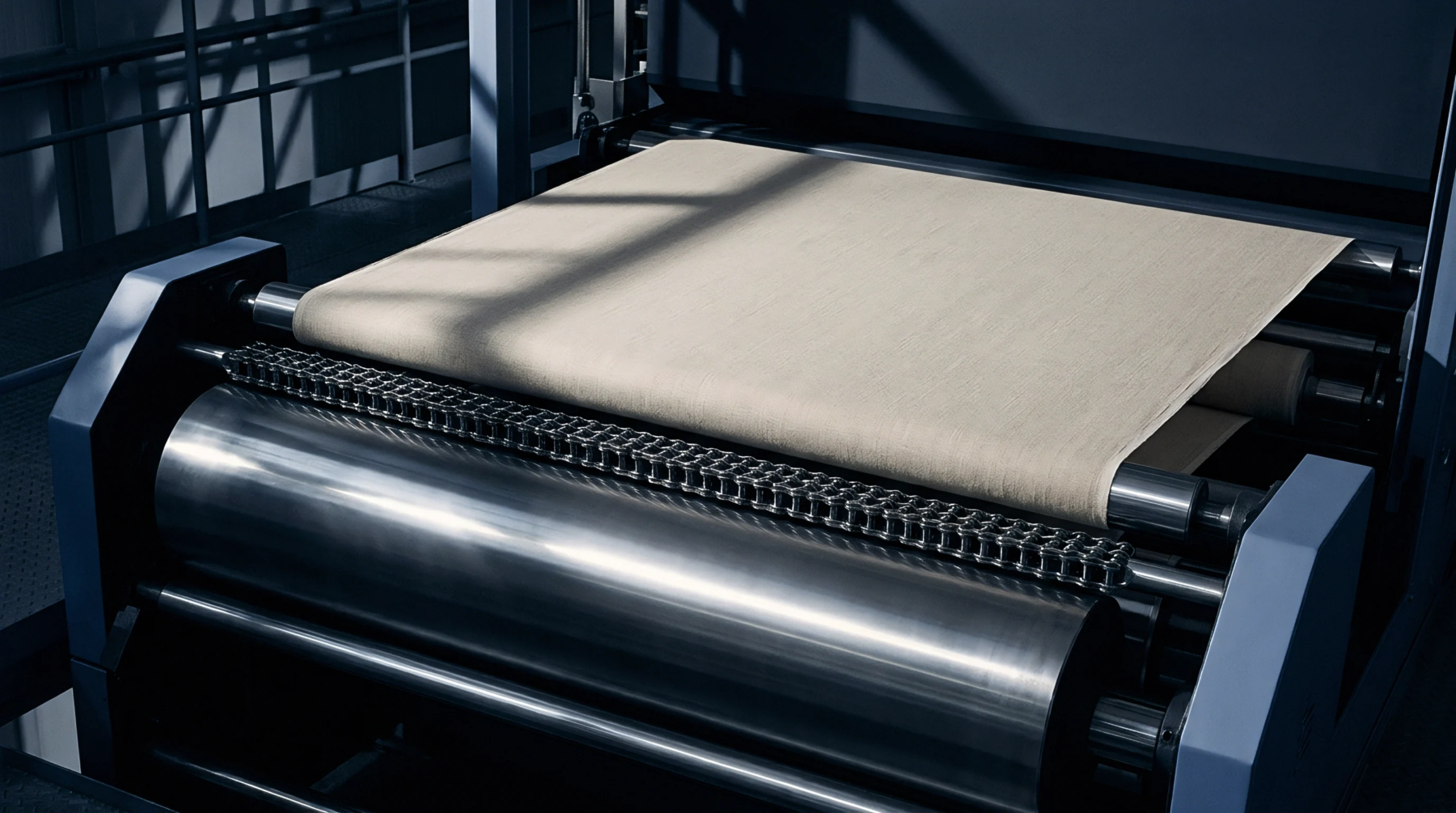
Wooden or metal tenter hooks grip the wet selvedges of woven linen cloth on a stretching frame to counteract the natural shrinkage that occurs during high temperature drying. Operators mount damp yardage onto the pins manually or through automated feeder wheels while the material passes into a steam heated drying chamber. Tension adjustments along the rails maintain the precise lateral dimension specified in the purchase contract.
Uneven pull distorts the warp threads and ruins the geometric squareness of the final textile. That mechanical constraint stops applying once the cloth reaches the cool down zone at the exit end of the dryer.
Selvedge Pinning Accuracy
Precise alignment of the pin bar prevents bowing across the weft direction during continuous heat setting operations. Mill inspectors measure the distance between opposing rows of needles at regular intervals to verify that the fabric maintains uniform width from the starting cut to the final roll. Misaligned pins tear the edge yarns and create jagged holes that force workers to downgrade prime stock into cutting room remnants.
Automated photoelectric sensors monitor edge wander and signal hydraulic actuators to adjust rail spread before distortion enters the finished bolt. Buyers reject shipments carrying more than a fixed millimetres per metre of width variation because irregular tension makes garment construction unpredictable.
Finishing Width Standard
Finished flax fabric must measure within agreed dimensional tolerances before the export packing house accepts the consignment for international transit. Laboratory technicians check conditioned samples against the purchase order parameters to confirm that the heat setting process locked the yarn geometry permanently in place. Relaxation tests measure how much the material contracts after a standard water wash so that clothing manufacturers can pre shrink their own lots accordingly.
Final acceptance documents record the exact width figures alongside the batch identification numbers for traceability. That technical verification closes the mechanical processing cycle for each run of woven linen.