Geometric Configuration
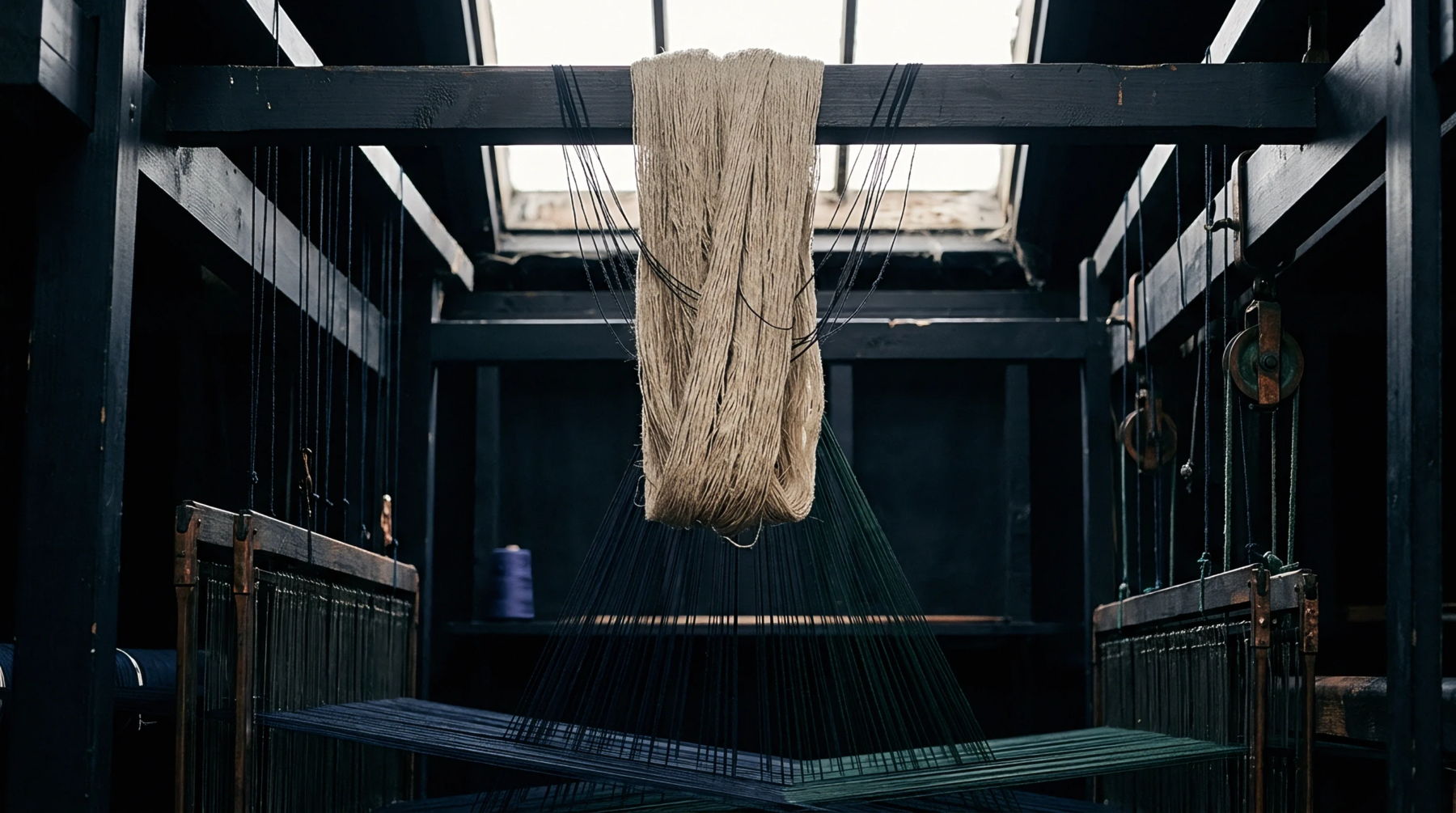
Loom setup where the top and bottom warp layers move equal distances from the neutral line facilitates the insertion of the weft. For balanced weave structures, symmetric shedding is the standard configuration for producing linen fabrics with a uniform surface texture. This arrangement distributes the mechanical stress evenly between the two sets of warp threads.
It reduces the likelihood of one set of yarns failing before the other.
Tension Balance
Maintaining equal displacement for both warp layers prevents the uneven stretching that can lead to fabric curling or bowing. In linen weaving, where the fibre has very low elasticity, this balance is required for preventing warp breaks and maintaining high machine efficiency. The geometry of the shed is controlled by the timing and stroke length of the heald frames.
A perfectly centered shed allows the rapier or shuttle to pass through the opening with minimal contact. Consistent tension across the shed ensures a flat and stable fabric.
Structural Stability
Deviations from this setup are sometimes used to create specific decorative effects or to handle fragile yarns. For the majority of industrial linen production, however, symmetry ensures the most reliable performance. Constant monitoring of the heald frame height is required to sustain this state throughout the production of the beam.