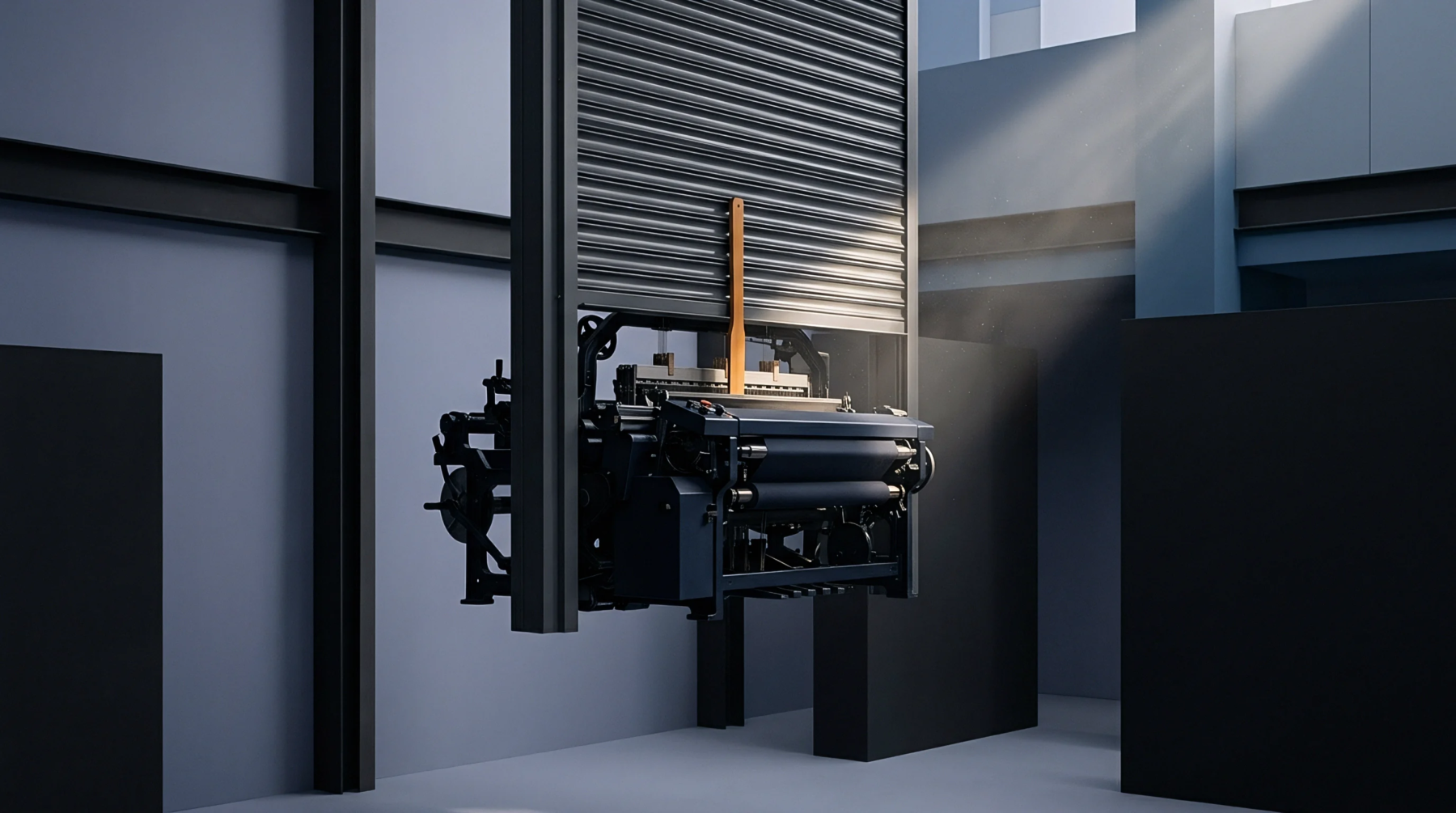
Tensioning Device
Auxiliary pneumatic channel positioned at the receiving edge of an air-jet loom applies axial tension to the weft tip prior to shed closure. The stretch nozzle catches the leading end of the inserted yarn, straightening loops and eliminating slack across the warp width. In linen production, stiff flax fibers tend to curl or form snarls upon arrival, requiring controlled pneumatic stretching.
Mill setup sheets detail nozzle air pressure and firing angle relative to beat-up timing.
Straightening Action
Controlled airflow pulses from the nozzle pull the weft yarn taut milliseconds before the reed pushes the pick into the cloth fell. Precise air timing prevents double pick defects and selvedge distortion on wide linen fabrics. High-pressure air jets align stiff flax bundles, ensuring clean edge formation without over-stretching tender yarns.
Mill technicians balance stretch nozzle air duration against main line compressor capacity to control mill energy consumption. Inspection frames check edge tightness on export linen bolts to ensure uniform fabric width along the entire roll length.
Pressure Limit
Excessive nozzle air pressure causes tip fraying or weft yarn breakage at the selvedge boundary. Insufficient pressure leaves loose loops along the right fabric edge. Soft dry-spun flax yarns require lower blowing force than heavy coarse wet-spun yarns.