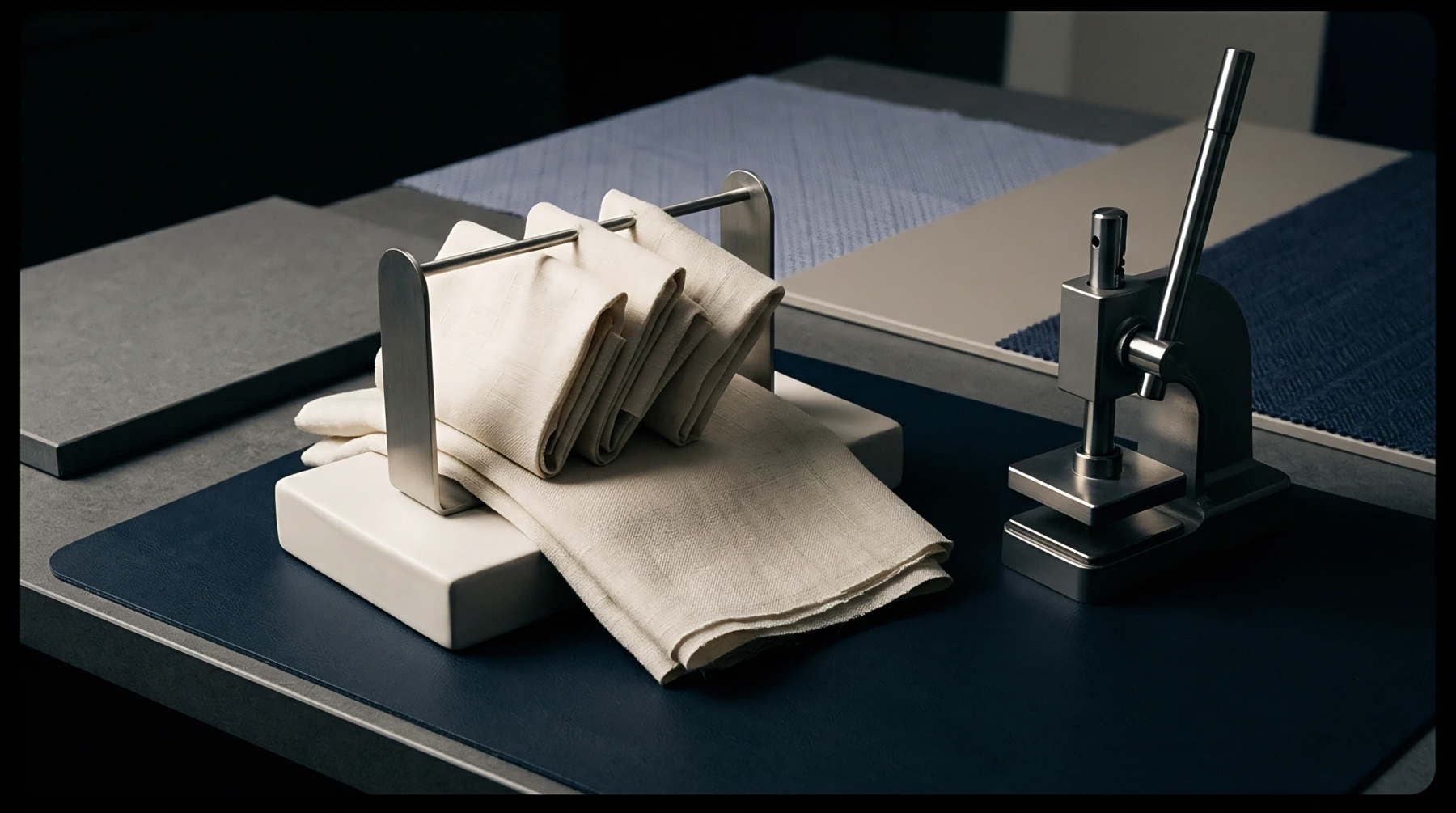
Fibre Orientation
Parallel arrangement of individual strands within a sliver or roving determines the efficiency of the spinning process. Proper strand alignment reduces the likelihood of tangles and ensures a smooth flow through the drafting rollers. This condition is achieved through the repetitive combing and drawing actions in the early stages of production.
The metric ceases to apply once the yarn has received its final twist.
Mechanical Procedure
Gills and pins are used to straighten the flax bundles and remove any remaining vegetable matter. Better strand alignment results in a yarn with higher tensile strength and a more consistent diameter. Mill technicians inspect the sliver visually and through mechanical tests to verify that the fibres are not crossing at oblique angles.
Misaligned strands cause thick spots known as neps in the final fabric.
Operational Effect
Uniformity of the weave depends on the precision of this orientation. When strand alignment is high, the yarn absorbs dye more evenly because the surface is smooth and the fibres are tightly packed. Failure to maintain this order during the roving stage leads to weak points that break during the high tension of weaving.
This property is especially important for the warp yarns that must withstand the constant motion of the loom. Careful monitoring of the pin density in the gill box prevents the fibres from bunching together.