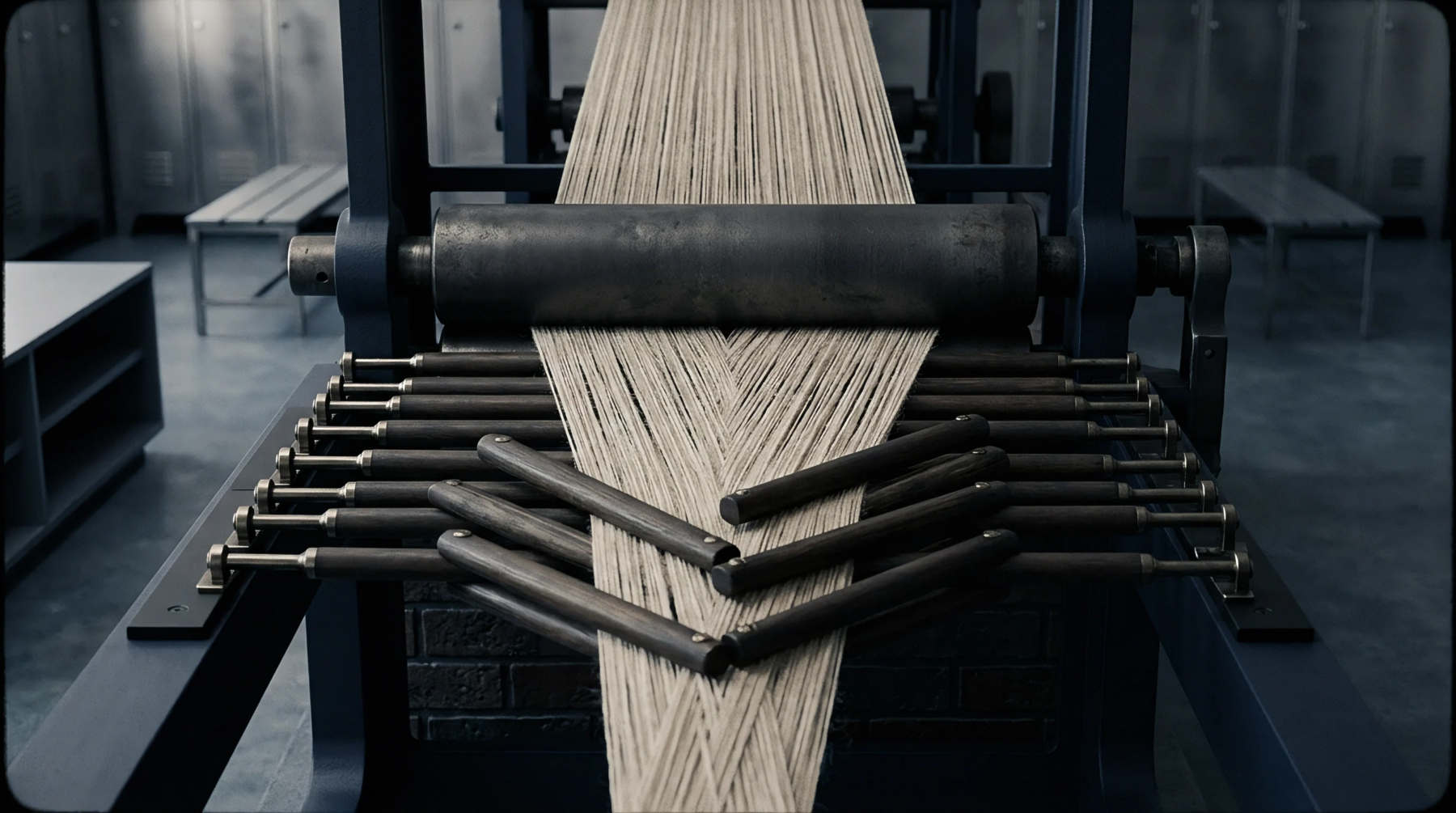
Electrical Separation Mechanism
Mechanical detectors function as active circuit closers inside the loom harness during the production of heavy linen yard goods from retted flax yarns. Stop motion drop wires hang individually astride each warp end between the heald frames and the rear reed. When a single filament snaps under high tension or slackens beyond operational tolerance, gravity pulls the severed strand of metal downward onto a contact bar.
This physical descent completes a low voltage circuit that halts the motorized loom before a broken end creates a weaving defect in the grey cloth. Chinese mills operating automated jacquard and dobby machinery rely on this instantaneous interruption to protect the reed from damage by tangled debris. Factory supervisors record the frequency of these electrical stoppages in daily shift logs to monitor yarn strength consistency across different spinning lots.
Fault Detection Calibration
Specific weight tolerances govern the selection of metallic contact elements for different yarn counts during the preliminary setup phase. Fine wet spun flax requires a light gauge detector to avoid placing excessive mechanical drag on delicate natural fibres, whereas coarse dry spun yarns demand heavier components to ensure reliable gravitational descent upon snapping. Technicians adjust the sensitivity of the control box by measuring the electrical resistance across the copper contact rails during routine maintenance shifts.
Production managers separate internal mill quality standards from external buyer acceptance thresholds by documenting the maximum allowable warp stop frequency per linear metre of finished fabric. Export contracts often stipulate stricter limits for broken ends than standard domestic supply agreements to prevent structural weaknesses in the final export bales.
Operational Circuit Integration
Automated manufacturing environments depend upon the continuous flow of electrical signals from the loom harness to the central programmable logic controller. Maintenance engineers inspect the insulated bus bars regularly to remove flax dust accumulations that might cause false circuit closures and unnecessary production halts. Power relays respond immediately to the grounding action of the fallen metal element by cutting current to the main drive motor within milliseconds.
Plant technicians calibrate the braking distance of the loom flywheel to prevent coasting after the signal is received from the detection zone. Proper synchronization between the mechanical drop elements and the electronic control panel ensures high loom efficiency across extended operating runs.