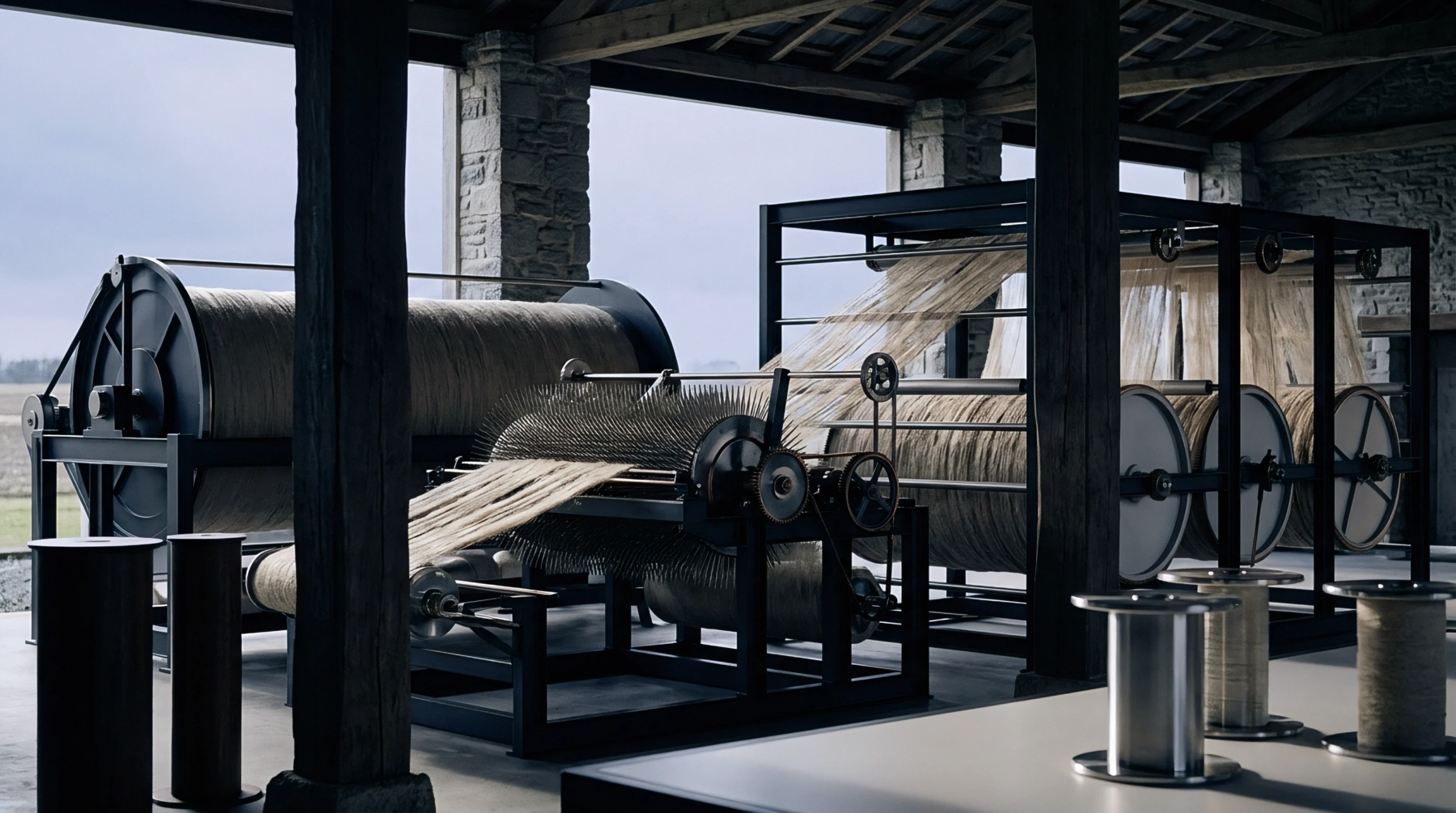
Strand Titration
Gravimetric mass evaluation over standardized lengths defines the intermediate thickness of lightly twisted textile strands prepared for ring spinning. Known across international processing mills as roving linear density, this metric is expressed numerically in units of grams per kilometre, tex, or metric count. The measurement identifies the mass per unit length of flax roving as it leaves the gill box or flyer frame before entering final wet or dry spinning drafting systems.
Determining this intermediate density ensures that the total draft ratio on the spinning frame produces the targeted final yarn number without exceeding the mechanical drafting range of the machine. Strand uniformity at this stage underpins final yarn regularity, as drafting mechanisms multiply input irregularities.
Draft Calculations
Mechanical transformation from combed flax sliver into fine, manageable roving involves controlled attenuation paired with the insertion of protective protective twist. Roving linear density directly dictates the required draft gearing, traveler selection and ratch settings on the production spinning frame. If the roving enters the spinning drafting zone too heavy, high drafting resistances induce roller slippage, causing erratic mass surges and elevated end-breakage rates.
Conversely, a roving strand that is excessively light requires higher processing draft ratios, stretching the floating fibres beyond frictional cohesion boundaries and causing weak, thin places. Technicians balance flyer spindle rotation with strand delivery speed to establish the precise protective twist per metre needed to transport the roving without drafting it prematurely during bobbin unwinding. Moisture conditions in the roving store must remain stable to prevent unpredictable swelling of bast fibres before weight evaluation.
Mill Standardization
Quality assurance departments monitor linear mass uniformity by wrapping standardized skein lengths on calibrated roving reels followed by precision analytical weighing. Standard operating procedures require daily sampling of bobbins from multiple flyer frames, logging roving linear density data into statistical process control charts. Mill internal specifications establish narrow tolerance bands, rejecting lots that drift beyond three percent of nominal weight parameters.
In export-oriented linen yarn operations, inspection documentation records roving density alongside sliver weight and spun yarn tex to prove cross-stage mass control. Buyer contracts frequently inspect these intermediate process records during supplier audits to assess spinning floor capabilities. Systematic tracking of roving linear density ensures consistent running conditions and maintains target fabric weights across production cycles.