Surface Abrasion
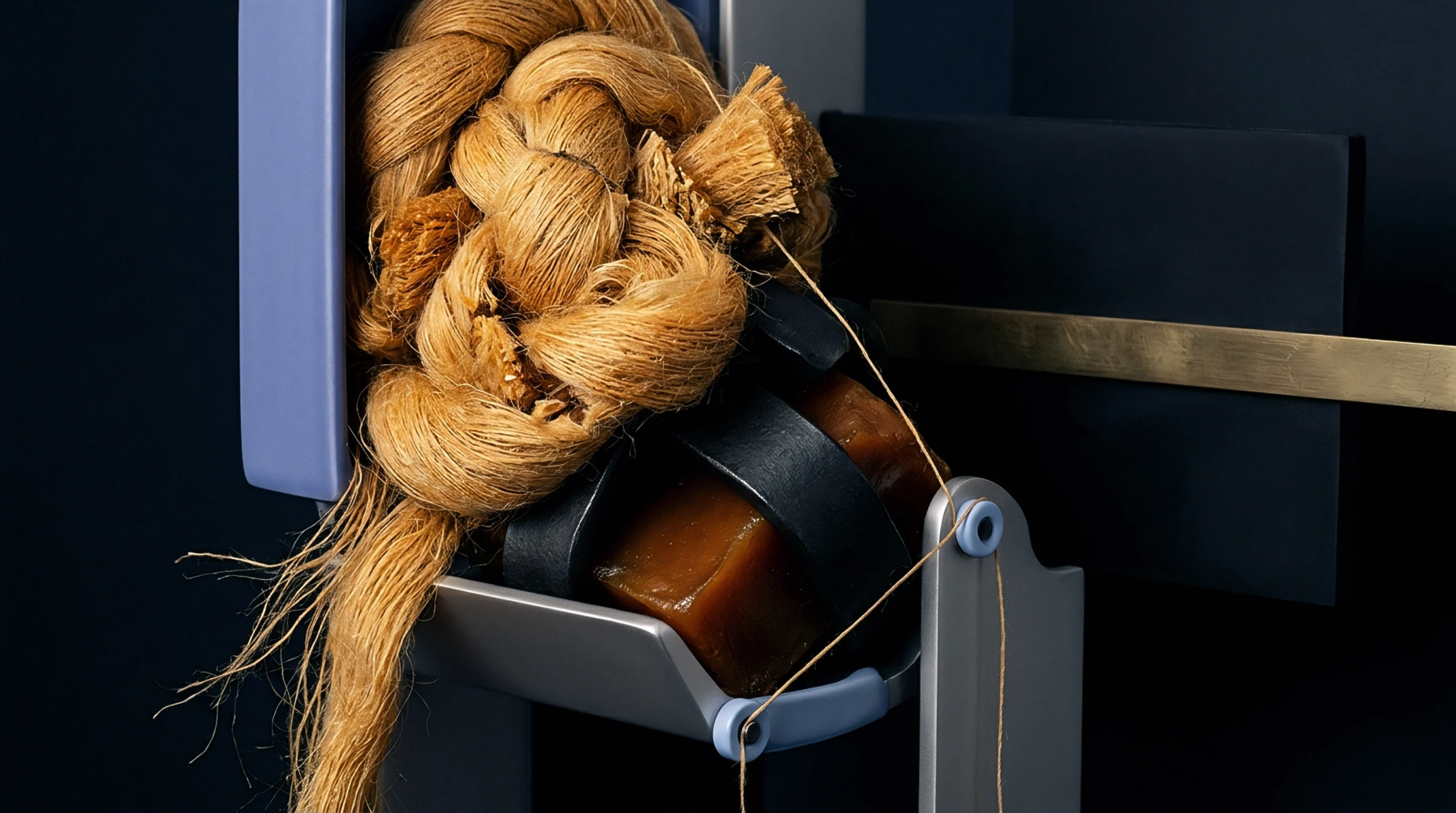
Concentrated mechanical friction and repetitive fiber tracking carve circumferential depressions around the synthetic elastomeric covers of textile top rollers. Designated as roller cot grooving, this mechanical wear pattern forms when stiff, abrasive fibrous strands traverse an identical transverse path across the roller cot surface over prolonged operational cycles. The phenomenon applies to drafting roller coverings in spinning preparation and yarn formation, terminating when cots are ground down, buffed or resurfaced by maintenance machinery.
Wear severity is governed by fiber abrasiveness, cot polymer hardness and the sweep efficiency of mechanical traverse motions.
Spinning Degradation
In wet spinning operations throughout Chinese flax mills, abrasive bast bundles rapidly cut narrow tracks into polyurethane and synthetic rubber cots running on wet-spinning frames. Workshop maintenance managers schedule regular cot buffing intervals, logging roller diameters and resurfacing dates on workshop maintenance cards to preserve drafting uniformity. Grooved cots lose the ability to apply even clamping pressure across the width of the roving ribbon, allowing fibers running along the edges of the wear track to slip freely while pinching fibers in the groove base.
Mill quality teams monitor yarn evenness with continuous mass-variation instruments, identifying spindles that require roller changes whenever thin places and nep counts exceed mill baseline standards. Weaving clients reject yarn deliveries that exceed contractual count variation thresholds, making cot maintenance a central point of factory quality control systems. Technical work orders mandate specific traverse motion strokes on spinning rails to spread the fiber contact zone across the entire cot width, mitigating deep grooving patterns.
Refurbishment rooms run high-precision cylindrical grinders to remove grooved layers, testing the finished rollers on laser gauges before returning them to spinning frames.
Traverse Failure
Mechanical failure or improper adjustment of the yarn traverse mechanism concentrates the passage of stiff linen rovings onto a single stationary point on the cot face. Localized abrasive action rapidly cuts a deep groove, breaking through the outer micro-finished surface of the elastomer into the underlying porous core. Deep grooves trap and sever short flax fibers, generating loose fly waste that accumulates on roller beams and gets spun into adjacent yarns as heavy slubs.
Water additives used in flax wet spinning carry dissolved minerals that deposit within these wear grooves, forming rough, abrasive tracks that shred passing filaments. Severely grooved cots generate excessive frictional heat, degrading the synthetic rubber compound and producing catastrophic roller cot cracking during continuous spinning shifts.