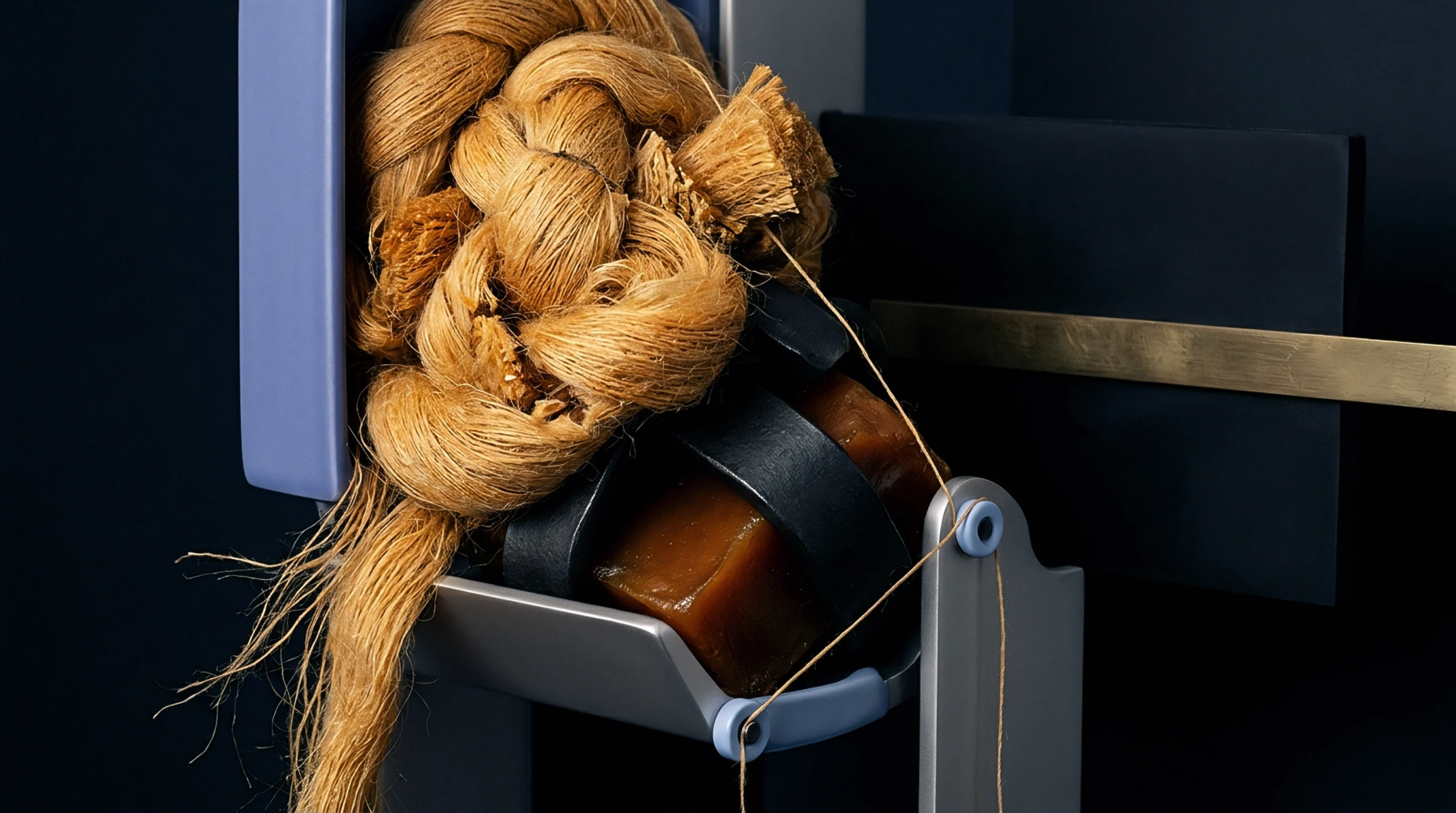
Drafting Measurement
Distances between the nip of the back drafting rollers and the forward delivery rollers dictate the extent of fiber attenuation during the wet spinning of flax. The wet drafting reach governs how mechanical tension acts upon the roving as the fiber passes through the hot water bath. Excessive settings cause irregularities in yarn thickness by allowing uncontrolled fiber movement, whereas insufficient spacing prevents the necessary drafting force.
High humidity and temperature adjustments influence the fiber plasticity, requiring periodic validation of the setting against the specific fiber fineness.
Roller Interaction
Accurate alignment of the drafting elements maintains consistent yarn quality across long production runs in linen mills. Operators adjust the physical gap based on the average staple length of the flax batch to ensure that individual fibers remain supported during the passage through the bath. Proper synchronization between the apron speeds and the roller nip prevents the breakage of fibers.
Mechanical resistance increases as the fiber bundles absorb moisture, necessitating a tighter calibration than the settings used in dry spinning systems. Strict adherence to these spacing parameters determines the uniformity of the yarn diameter during the final winding stages.
Quality Specification
Technical datasheets for industrial spinning equipment document the optimal ranges for these settings to match the mechanical capabilities of the rollers with the physical properties of the processed flax. These documents define the mill acceptance criteria for yarn regularity and strength, serving as the basis for performance verification during batch processing. Fabric manufacturers require compliance with these structural parameters to guarantee the consistency of the finished linen product.
Any deviation from the established distance translates into measurable variance in the final thread count and mechanical integrity of the material.