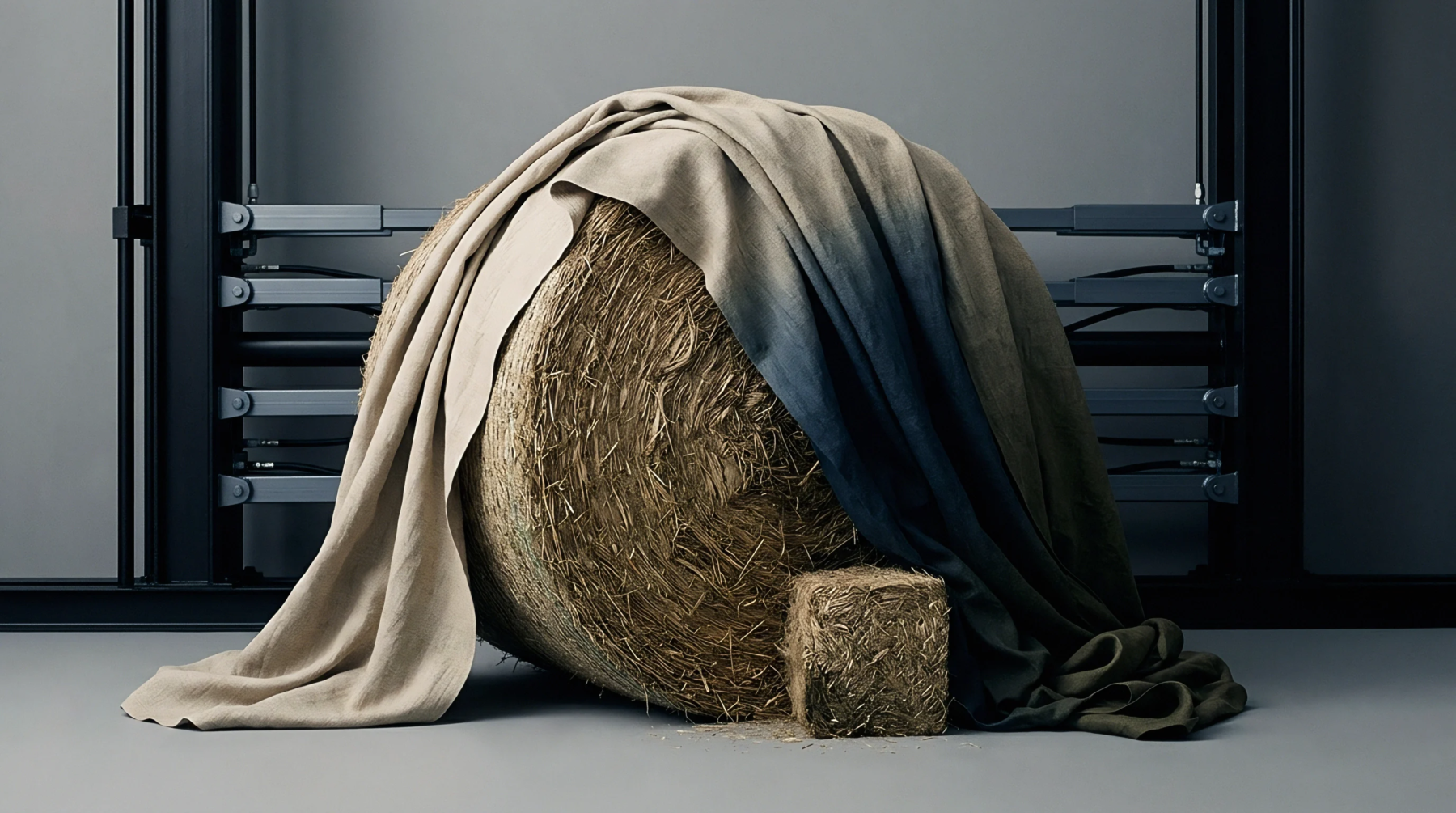
Bale Extraction
Customs inspection protocols extract cylindrical fiber cores from dense raw material packages at maritime container terminals to verify commercial declarations. Executing port entry core sampling allows port authorities, independent surveyors, and mill buyers to test imported flax bales for moisture regain, residual trash content, and fiber clean yield. Hollow stainless steel tubes penetrate deep into compressed fiber masses to retrieve representative samples without destroying bale ties or outer wrapping materials.
Laboratory technicians weigh retrieved core samples immediately to prevent ambient moisture loss before oven drying tests. The protocol applies to raw scutched flax or hackled tow bales at import terminals, ceasing once bales are opened at mill spinning preparation plants.
Moisture Determination
Moisture regain testing measures the weight difference between fresh core samples and oven-dried fiber masses under standardized drying protocols. Excess water content increases gross shipping weight, creating artificial tonnage calculations that inflate customs duty liabilities and ocean freight billing. Oven drying at one hundred five degrees Celsius establishes true dry fiber mass for commercial weight adjustment calculations.
Test results establish binding settlement weights between overseas fiber merchants and importing mills.
Lot Verification
Core testing reveals hidden internal contamination such as sand, shive, or damp spots inside high-density flax bales. Discrepancies between core sample quality and contract quality specifications justify price adjustments or lot rejections before customs clearance completes. Systematic sampling protects importing mills from accepting water-damaged fiber lots.