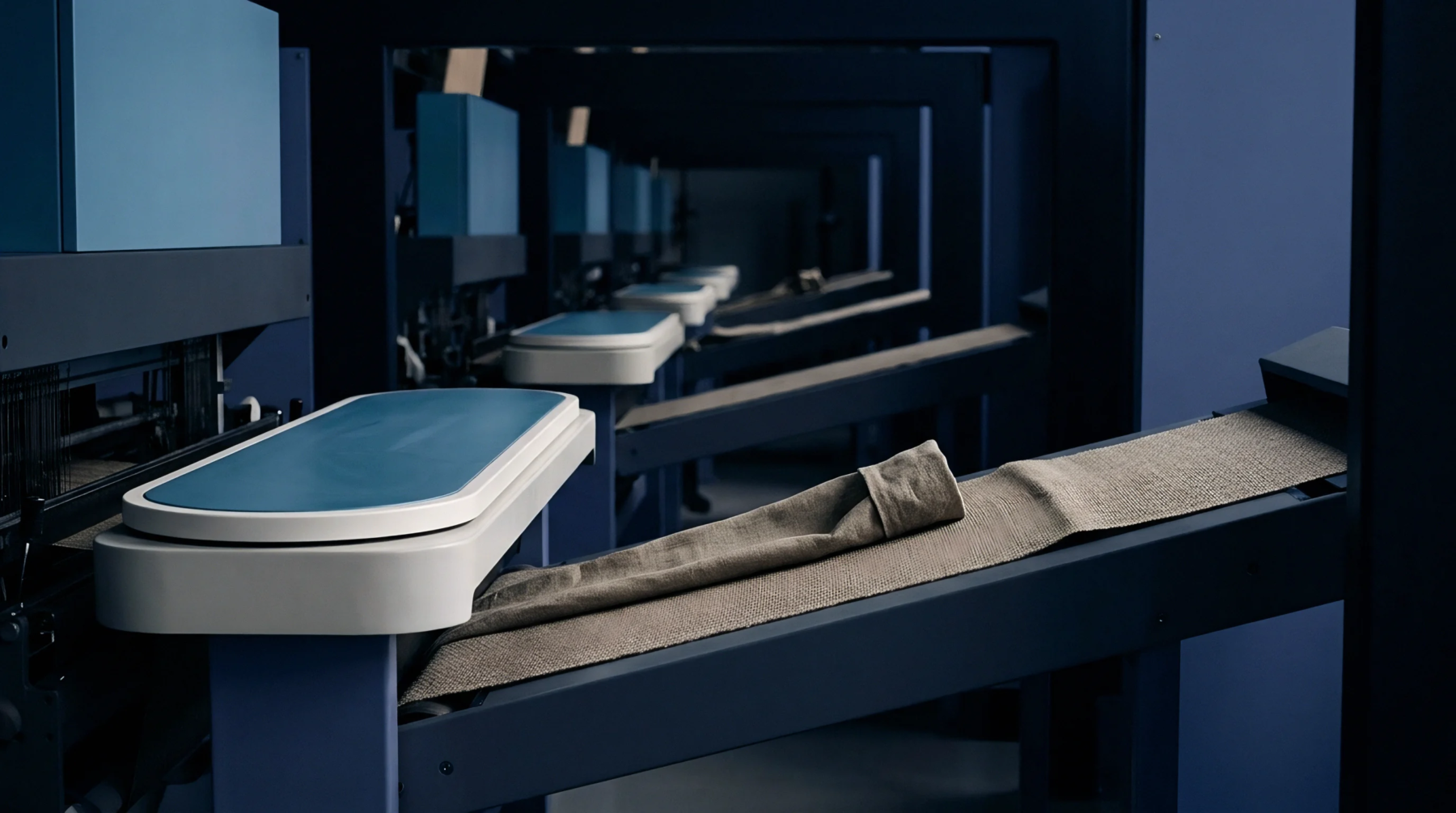
Primary Alignment
Fabric tension control ensures stability during the multi-stage finishing process in Chinese linen production. Pinned aprons provide the mechanical grip required to hold cloth edges flat as the material moves through high-temperature stenter frames. This physical restraint prevents shrinkage and distortion caused by the exposure of flax fibres to intense heat.
Maintaining exact alignment avoids uneven drying patterns across the width of the bolt.
Technical Specification
Precision settings dictate the spacing and density of the metal pins mounted along these transport chains. Operators adjust the apron width to match the specific gauge of the linen batch, as improper positioning creates permanent holes in the selvedge or allows the fabric to slip. Factories record these adjustments in the daily production log to confirm that the heat-setting protocol remains within the accepted tolerance for the grade of cloth.
Each individual pin requires periodic inspection for sharpness to guarantee that the fabric remains firmly anchored under tension.
Quality Verification
Compliance audits compare the finished dimensions against the original specifications defined in the initial purchase order for the textile. Inspectors check for excessive pin marks along the edge of the material because dense clusters of needle perforations indicate that the apron pressure exceeded the structural limits of the linen. When the selvedge shows clean, uniform contact points, the finishing process satisfies the standards for both width consistency and fibre orientation.
Final approval rests on the ability of the finished roll to maintain its shape after the cooling phase concludes.