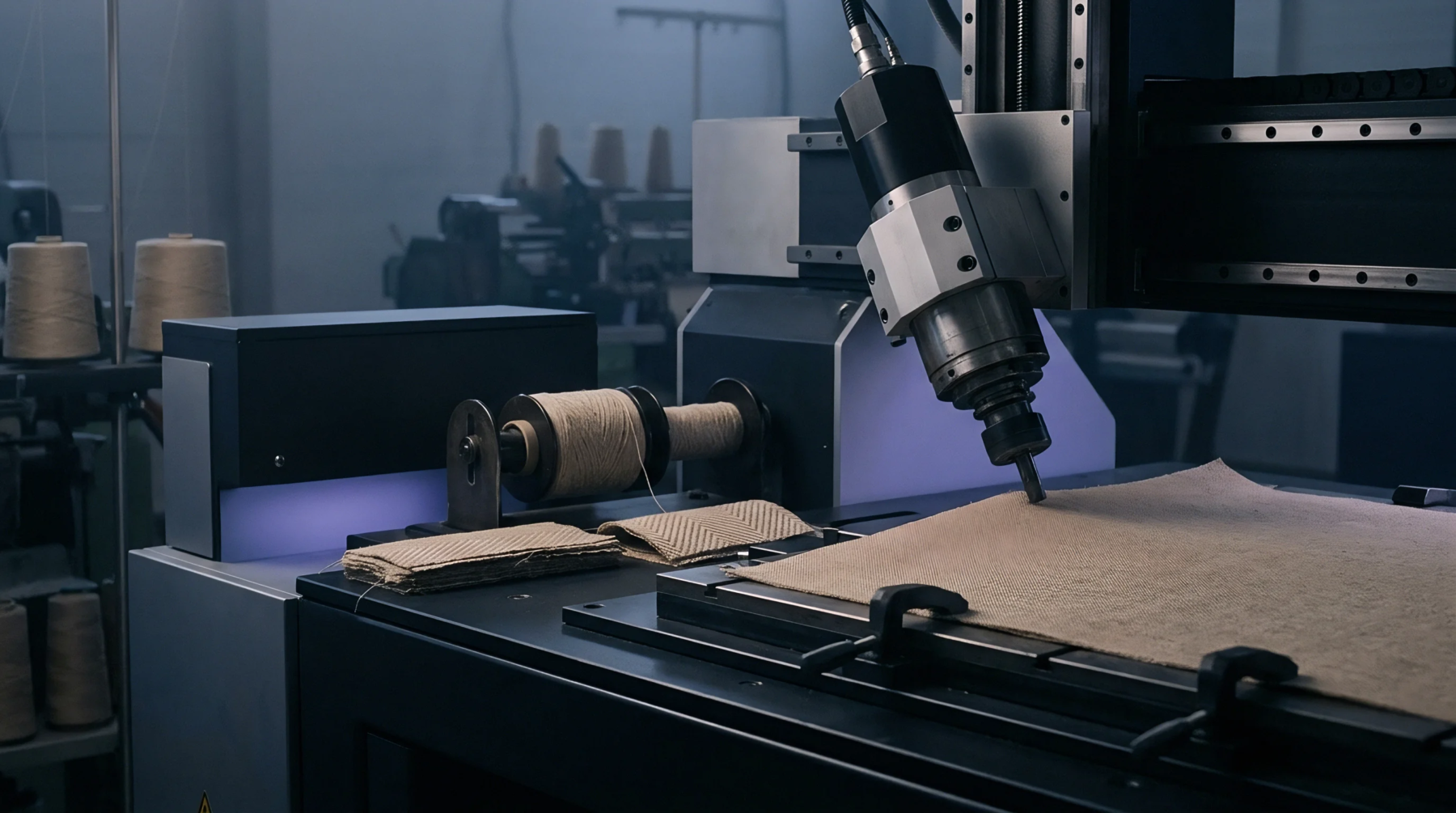
Automated Rectification
Advanced weaving control systems execute automated reverse mechanical movements to locate and expose broken filling threads after loom stops. The pick finding cycle disengages the main loom drive and reverses harness frame movement to open the exact shed where weft insertion failed. This automated reversal allows weaving operators to extract broken pick segments without manual hand turning of the main shaft.
Correct execution prevents double picks and start-mark imperfections.
Sequence Dynamics
Upon receiving a stop signal from the yarn detector, the main drive stops within a single loom revolution. Electronic controls then engage an auxiliary motor to reverse the let-off and take-up motions in synchronization. For stiff linen yarns, tension control during reversal must remain precise to avoid shifting the fell line position or causing warp end slackness.
The reed moves back, shedding frames return to the broken pick position, and the yarn clamp exposes the broken thread tail for easy removal.
Quality Control
Incomplete or poorly synchronized reversal leaves irregular beat-up marks or mispicks in finished cloth. Mill technicians fine-tune reversal parameters based on fabric density and yarn stiffness. Complete execution of the pick finding cycle ensures pristine fabric surface uniformity across premium linen production rolls.