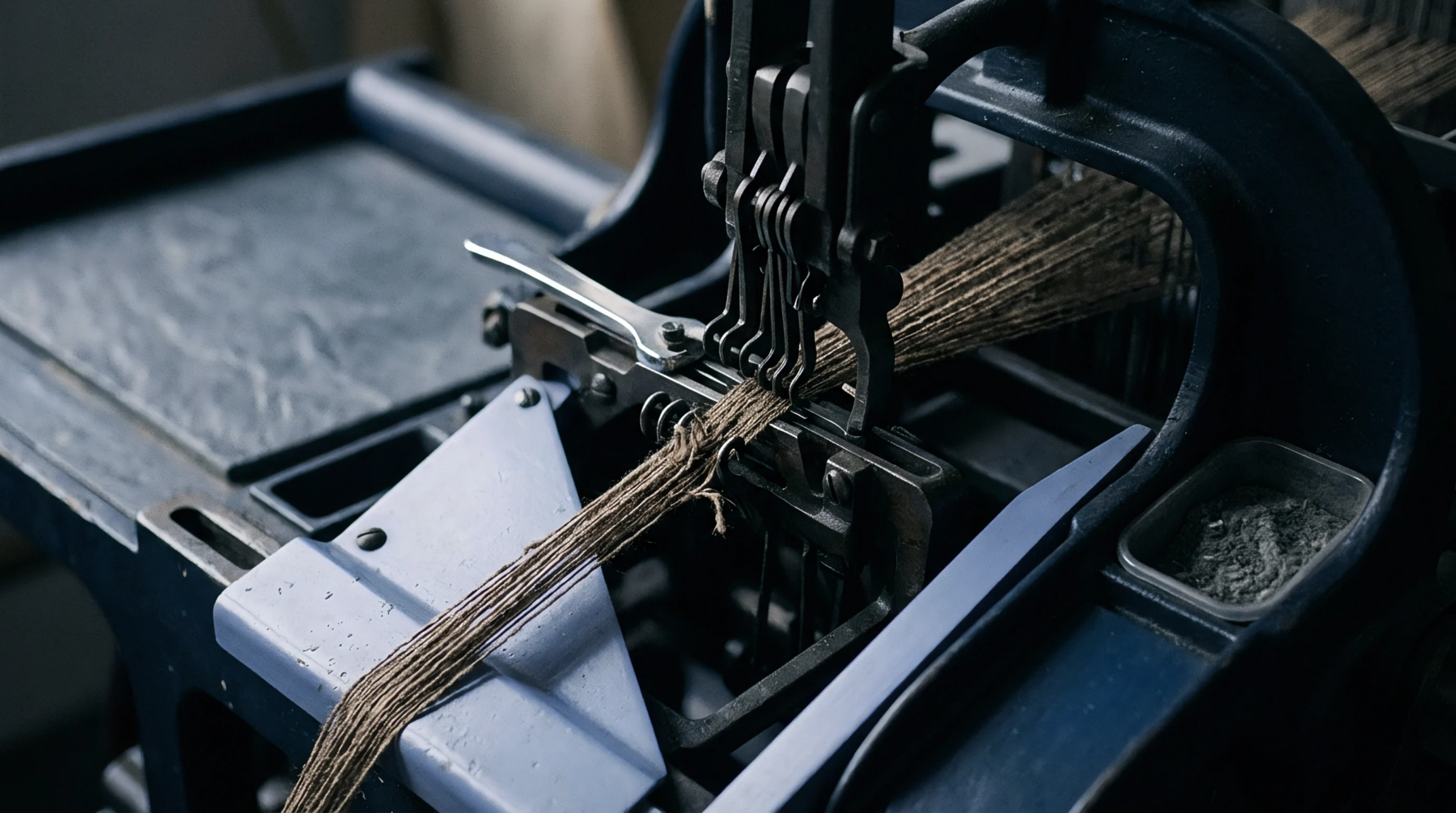
Roller Spacing
Physical distance between the contact rollers in drafting and squeezing frames determines the pressure applied to the moving fiber strand. The nip clearance regulates the thickness of the flax sliver as it passes through the wet preparation stage. When this spacing is calibrated correctly, the liquid extraction and fiber alignment proceed evenly.
These gap settings are documented in the mill machine setup log.
Drafting Accuracy
Spinning operations rely on precise mechanical gaps to control the movement of short fibers within the drafting zone. Adjusting the nip clearance allows the mill to process different lengths of flax line and tow without causing fiber damage or drafting slippage. If the gap is too small, the fibers are crushed and broken, leading to weak yarn.
If the gap is too large, the fibers bunch together and create irregular slubs. Technicians measure these mechanical tolerances using feeler gauges to maintain the high precision required for export yarn.
Finishing Uniformity
Weaving and finishing mills use roller gaps to control the application of sizing agents and starches to the woven linen. A uniform nip clearance prevents uneven chemical pickup, ensuring that the fabric has a consistent hand and color throughout. These final fabric grades are logged in the dyehouse run sheets.