Transverse Deflection
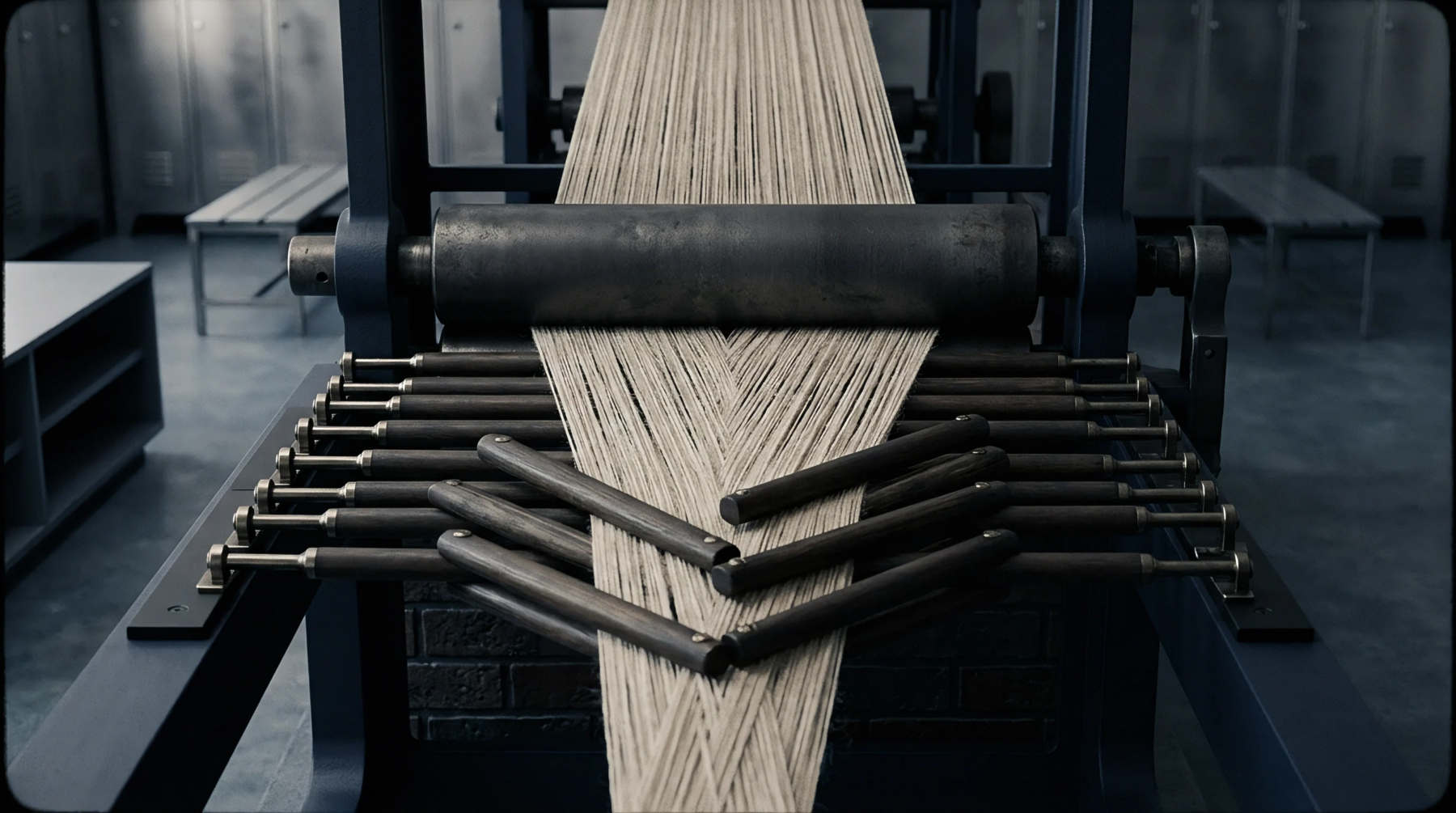
Horizontal vector force acting perpendicular to the primary line of pull develops when angled mechanical drive linkages displace sideways during machine motion. In jacquard linen production, lateral thrust acts upon the neck board and comber board as harness cords pull toward outer warp ends at diagonal angles. The directional pull pushes harness cords against the sidewalls of comber board perforations, concentrating frictional loads during shed lifting.
Operational scope limits this phenomenon to perpendicular force components, excluding normal axial pull loads aligned directly along the longitudinal axis of cords.
Perforation Abrasion
Excessive transverse force accelerates perforation wear along the outer perimeters of perforated boards, creating oblong holes that alter heddle drop positions. Uneven heddle positioning causes misaligned warp sheds, resulting in linen fabrics with skipped interlacing or abraded yarn surfaces. Rapid friction also generates localized heat that degrades synthetic harness cord jackets over prolonged production cycles.
Force Dissipation
Mathematical modeling and engineering calculations determine the horizontal force distribution across guide plates based on loom width and cord count. Production masters minimize lateral thrust by widening the distance between the neck board and comber board or by incorporating low-friction ceramic eyelet sleeves inside comber board holes. Loom maintenance records track perforation wear depths periodically, mandating board replacement before diagonal rubbing abrades expensive harness assemblies.
Export linen inspection sheets note visual faults linked to lateral harness drift, driving mills to enforce strict machine alignment protocols on wide jacquard looms producing high-sett flax fabrics. Installing anti-friction guide combs distributes transverse loads across larger surface areas, stabilizing harness cord paths without requiring machine speed reductions.