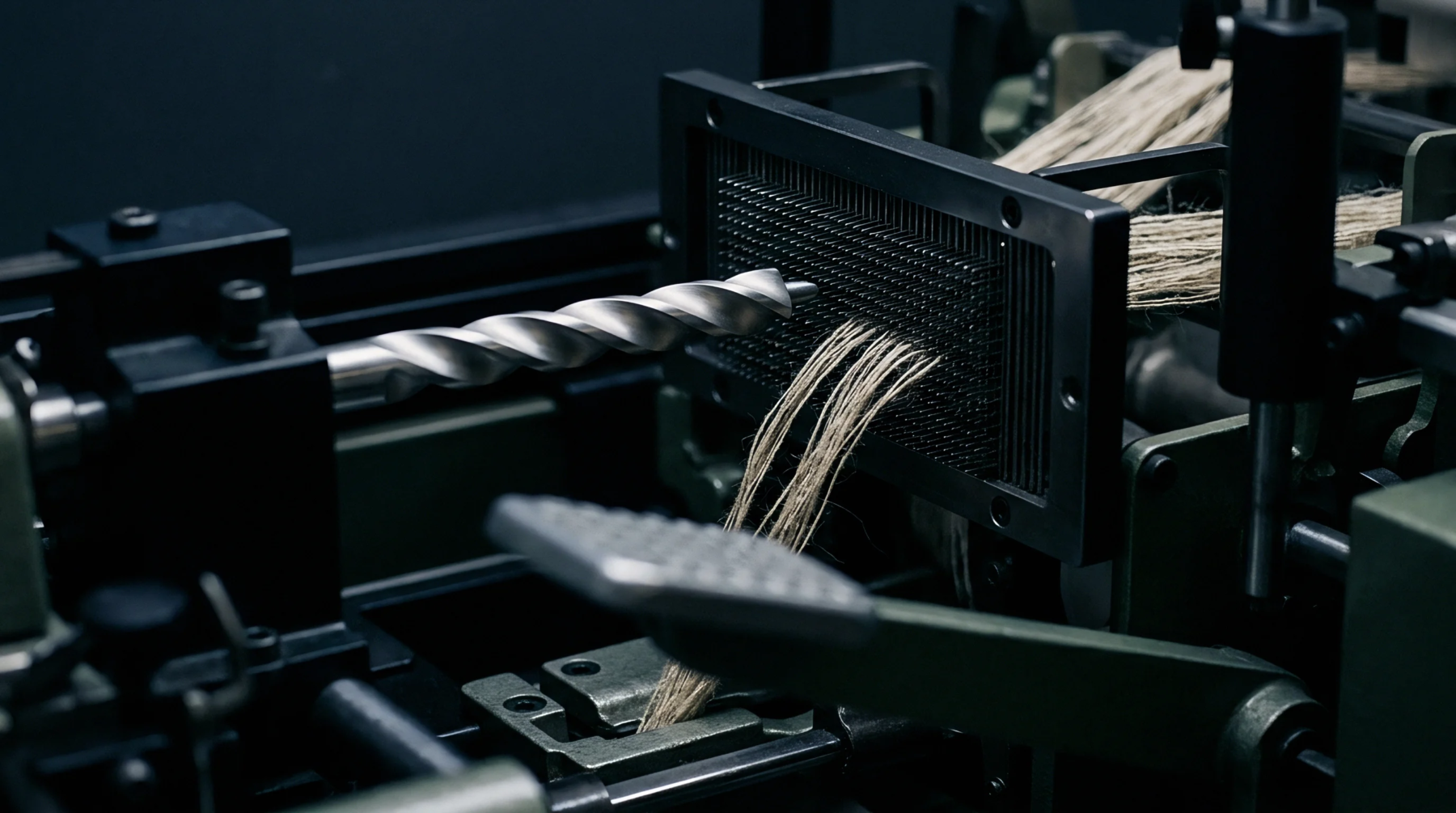
Fibre Fineness
Kilotex designates the linear density of a fibre bundle calculated by the mass in grams per thousand meters. This ktex measurement defines the thickness of untwisted flax sliver or roving before the spinning stage. Production facilities record the value on technical control sheets to ensure consistent tension across the frames.
The unit provides a stable basis for calculating yarn count during the transformation from raw stalk to finished textile product.
Processing Limits
Spinning machines require precise input values to maintain the mechanical draft necessary for yarn uniformity. High ktex values indicate heavy sliver that risks jamming rollers or overloading the drafting apron. Low values signal thin material prone to breakage under the load of high speed spindles.
Operators monitor the output from the carding lines to keep the roving within a narrow band of this density.
Quality Verification
Compliance protocols distinguish between the mass of the raw fibre bundle and the final density of the twisted yarn. Buyers demand specific records of the ktex at the roving stage to verify that the moisture content and fibre distribution meet the contract terms. These acceptance criteria differ from the final fabric weight standards applied during the finishing inspection.
A stable ktex value across production lots provides the only evidence of uniform material preparation for subsequent weaving operations.