Roller Alignment
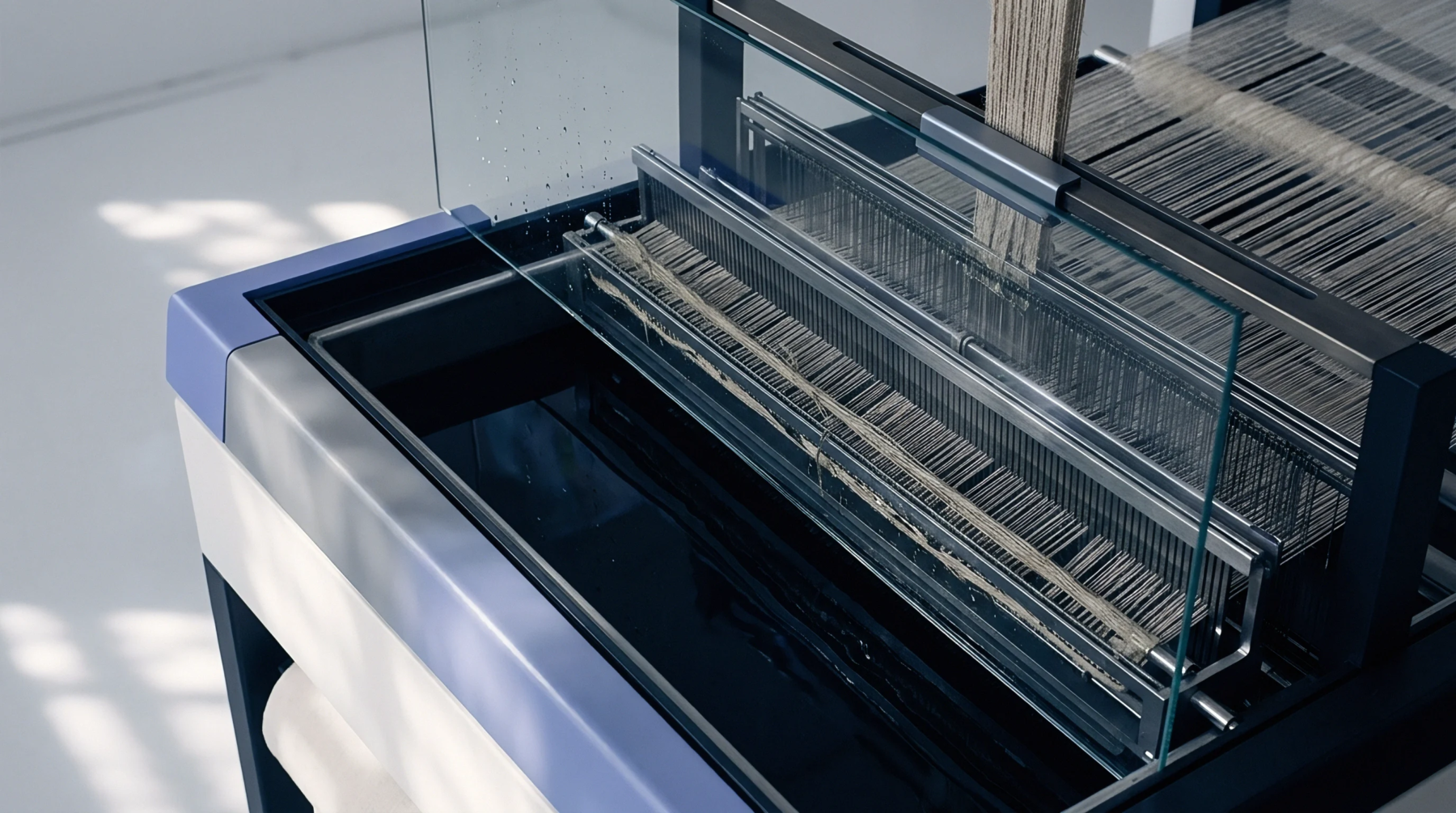
Wet finishing lines in Chinese flax mills rely upon the kiss roll to apply sizing agents directly onto the moving web without submerging the delicate bast fibre fabric in a liquid bath. Mechanical pressure between this applicator and the supporting cylinder controls pickup rates by adjusting nip geometry rather than relying on bath concentration alone. Operators verify that surface speed matching prevents dragging friction across the damp linen surface during high speed production runs.
Excess liquid accumulation causes localized swelling within the yarn structure, which later creates tension discrepancies during subsequent drying cycles. Production supervisors record these operational parameters inside the daily wet processing log to maintain traceability from grey cloth delivery through final export packaging.
Surface Transfer
Wet chemistry interactions dictate that direct cylinder contact transfers starch derivatives or synthetic resins at controlled viscosities. Viscosity levels determine penetration depth into the flax yarns, balancing stiffness requirements against the natural drape expected in finished garments. Engineers calibrate rotational torque to compensate for the continuous decrease in cylinder diameter caused by regular elastomer wear.
Thermal expansion across the metal core alters the nip width during extended shifts, demanding periodic recalibration of pneumatic loading cylinders. Precise fluid metering prevents edge pooling, a defect that causes uneven dye uptake during subsequent piece dyeing operations.
Acceptance Threshold
Export specifications for heavy linen canvas mandate strict limits on residual moisture content following the sizing stage. Independent testing laboratories measure dry pick up weights against contractual tolerances negotiated between the mill and international buyers. Batches exceeding maximum pickup limits fail physical property audits because excessive sizing agents mask underlying yarn irregularities.
Mills must document every corrective adjustment made to the applicator assembly during a production run to satisfy foreign customs compliance demands. Verification protocols demand that testing personnel draw samples only after the finishing line reaches thermal equilibrium.