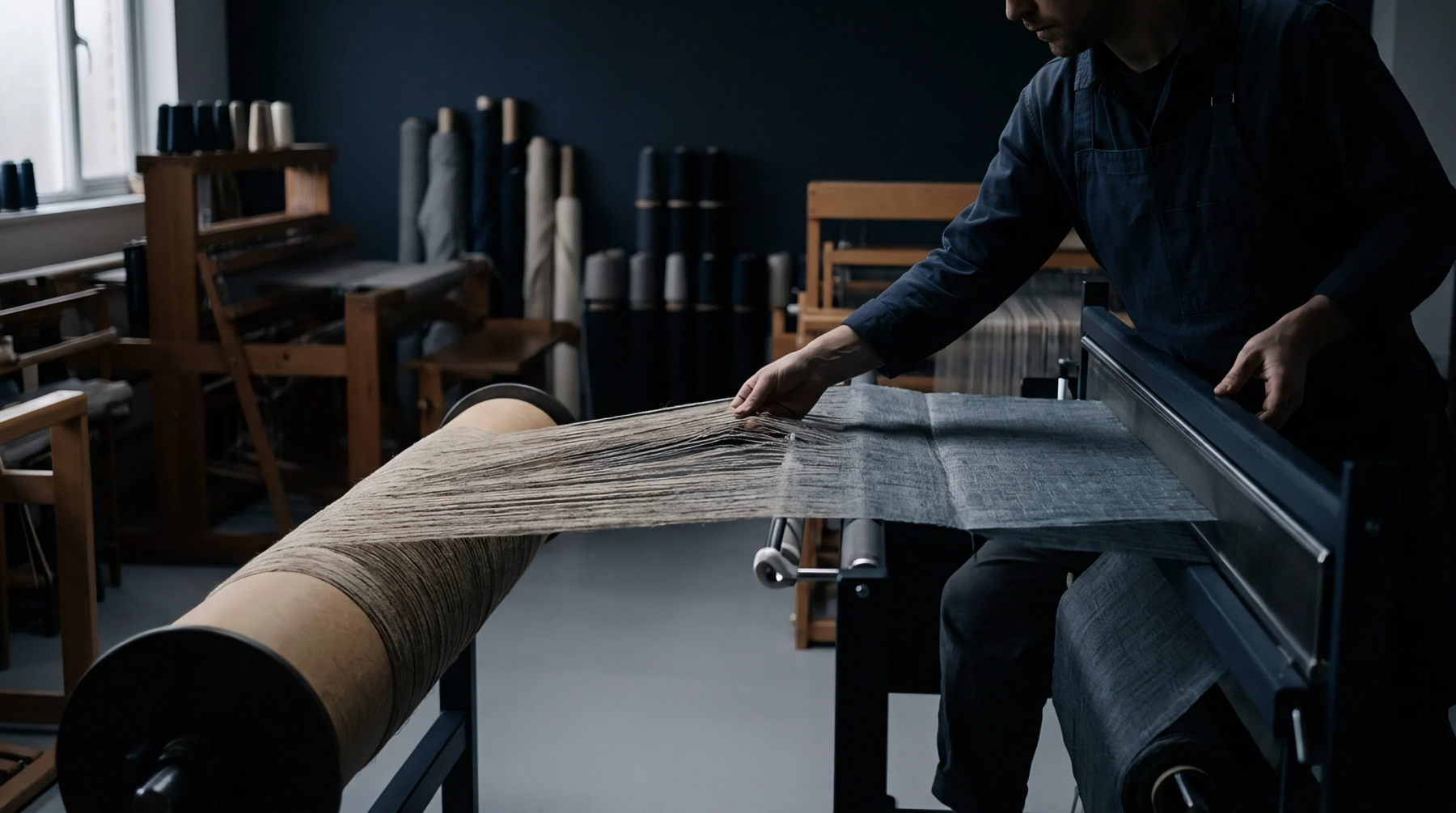
Structural Analysis
Standardized physical analysis of un-finished woven textiles determines thread density and yarn crimp prior to wet processing. Weaving mills reference ISO 7211 greige construction to audit loom state flax fabrics against contract specifications before shipping goods to dye houses. Inspection documents record warp and weft counts per centimetre alongside un-sized yarn linear density.
The standard governs un-finished loom-state fabrics, establishing a formal boundary where subsequent wet finishing shrinkage and chemical treatments alter physical fabric parameters.
Parameter Quantification
Laboratory technicians dissect fabric specimens using dissecting needles and counting glasses to tally threads across designated square areas. Mill quality teams apply ISO 7211 greige construction procedures to calculate warp and weft crimp percentages from unravelled yarn lengths under controlled tension. Specimen mass is measured after removing temporary warp sizing agents to establish baseline greige fabric weight per square metre.
Technical data sheets log these structural parameters, allowing mill engineers to adjust loom reed width and take-up gear ratios for subsequent production runs. Inconsistent thread spacing across the cloth roll signals improper warp tensioning or irregular let-off motion during weaving operations.
Finishing Allowance
Finishing houses use greige structural data to calculate expected width contraction and length shrinkage during wet scouring processes. Discrepancies between target greige specifications and measured thread density trigger contract price adjustments. Standardized testing sheets record measured warp density beside target weave diagrams.