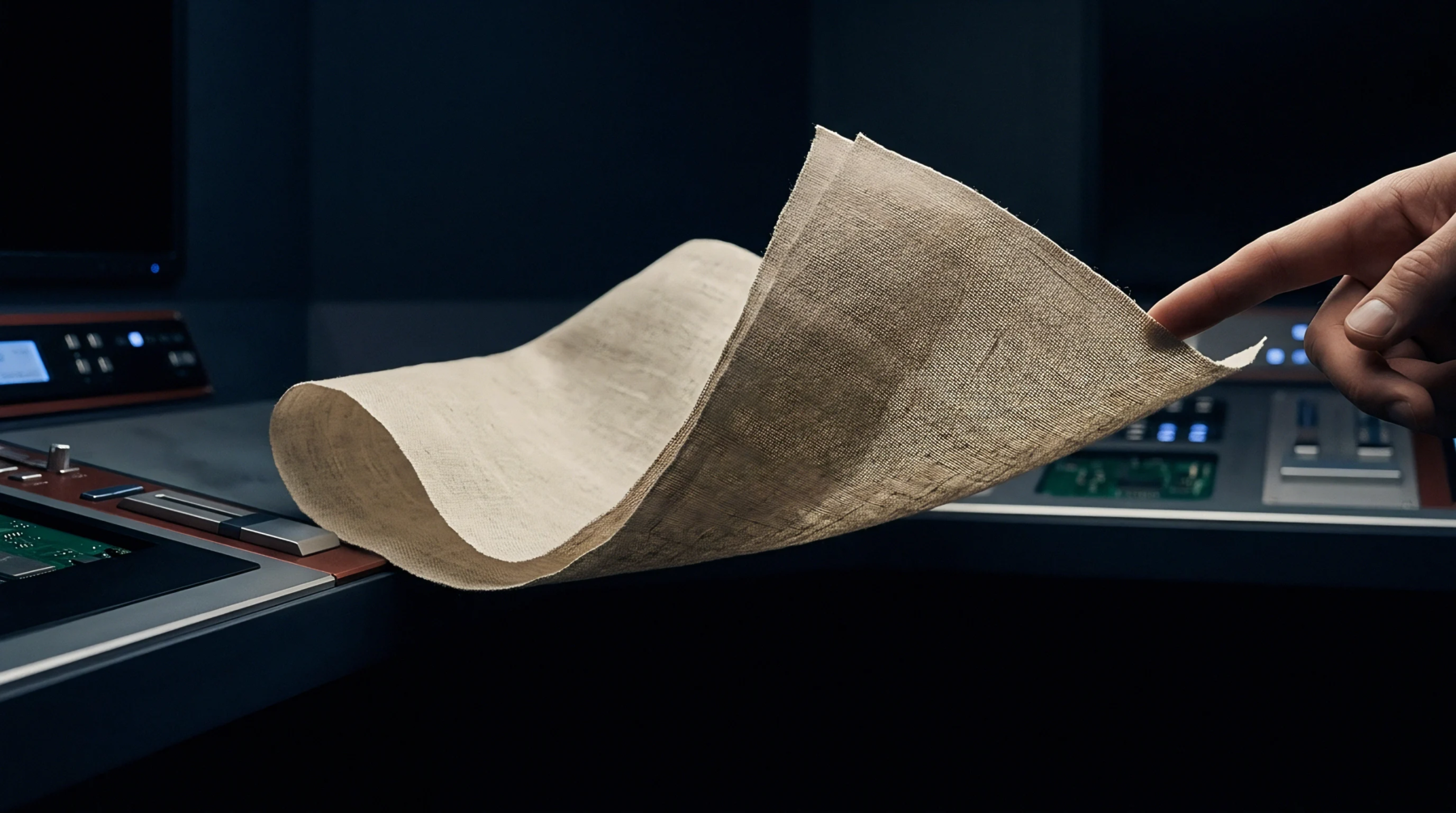
Mechanical Abrasion
Mechanical friction that occurs during the rise and fall of warp threads can abrade unprotected yarn structures. In linen weaving, heald wire chafing happens when the metal eyes of the heddles repeatedly rub against the flax yarns during shedding. This continuous friction strips away the protective size coating, exposing the raw fibers beneath to further wear.
Loom sheets record the frequency of this phenomenon because it indicates how quickly the warp is deteriorating.
Yarn Degradation
When the abrasive action is intense, the yarn starts to shred and lose its tensile strength. Uncontrolled heald wire chafing causes the individual flax fibers to fray, leading to warp snaps and costly loom downtime. These snapped ends can also tangle with adjacent yarns, which disrupts the fabric structure and ruins the weave pattern.
Mill records often track yarn failure rates to trace the root causes of these fabric-level inconsistencies.
Defect Prevention
Applying a high-quality sizing agent with excellent lubricating properties provides the best defense against this wear. Minimizing heald wire chafing requires selecting a durable starch or polymer binder that remains flexible under tension. Operators inspect the loom’s wire eyes for rough spots or rust during setup to ensure they do not catch on the flax yarns.
By logging these inspections in the maintenance journal, the mill ensures that export-grade linen is woven on smooth, undamaged equipment, thereby avoiding fabric grading penalties. This preventative approach is reinforced by regular yarn testing, which compares friction resistance across different size formulations to identify the most resilient blend.