Mechanical Extraction
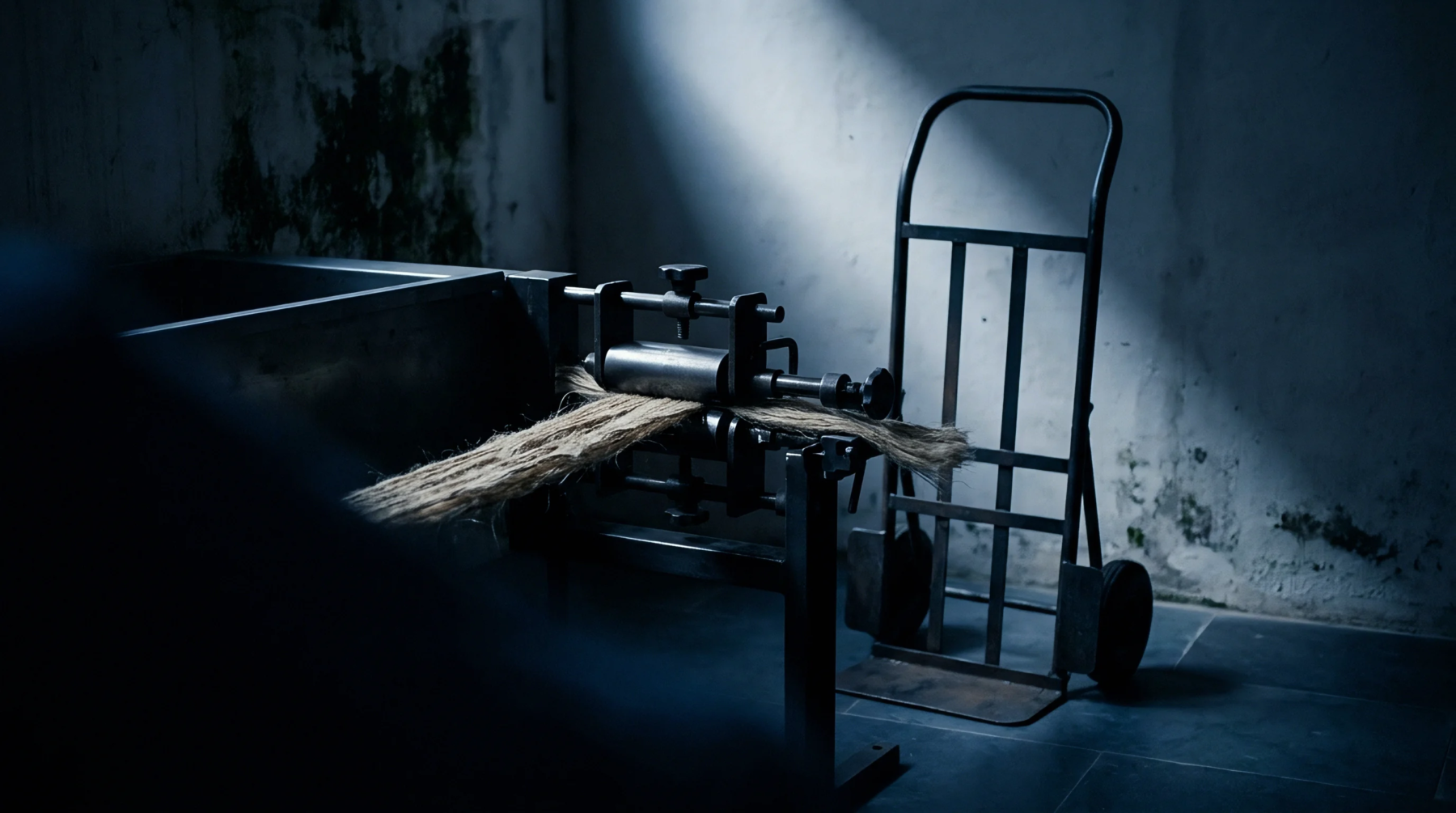
Direct mechanical processing of unretted flax straw separates bast fibres from the central woody core immediately after field harvesting and drying. Field-dried stems undergo green flax decortication using high-impact fluted rollers and breaker drums that crush the rigid stem structure without prior biological retting. This mechanical extraction path bypasses traditional field or water retting, reducing processing time from weeks to hours.
Scutched green fibre retains natural plant pectins and hemicellulose, producing a coarse fibre bundle suitable for industrial applications or specialized yarn blends.
Processing Dynamic
Decortication machinery applies intense mechanical forces to shatter the unretted woody shive while preserving structural fibre length. Crushing rollers flatten raw stems, followed by scutching turbines with steel blades that beat away outer bark and internal shive fragments. Unretted pectins hold bast bundles tightly to surrounding stem tissue, requiring higher mechanical energy than dew-retted straw processing.
Increased mechanical impact risks breaking individual fibres, which increases the proportion of short tow recovered relative to long fibre line. Dust extraction systems collect fine straw fragments generated during rapid mechanical breaking. Downstream chemical degumming is often required to soften green fibre before fine yarn spinning.
Technical Boundary
Processing unretted straw produces fibres with elevated pectin levels that resist fine dry spinning without prior chemical or enzymatic treatment. Green fibre processing does not produce traditional fine linen yarn directly from mechanical scutching.