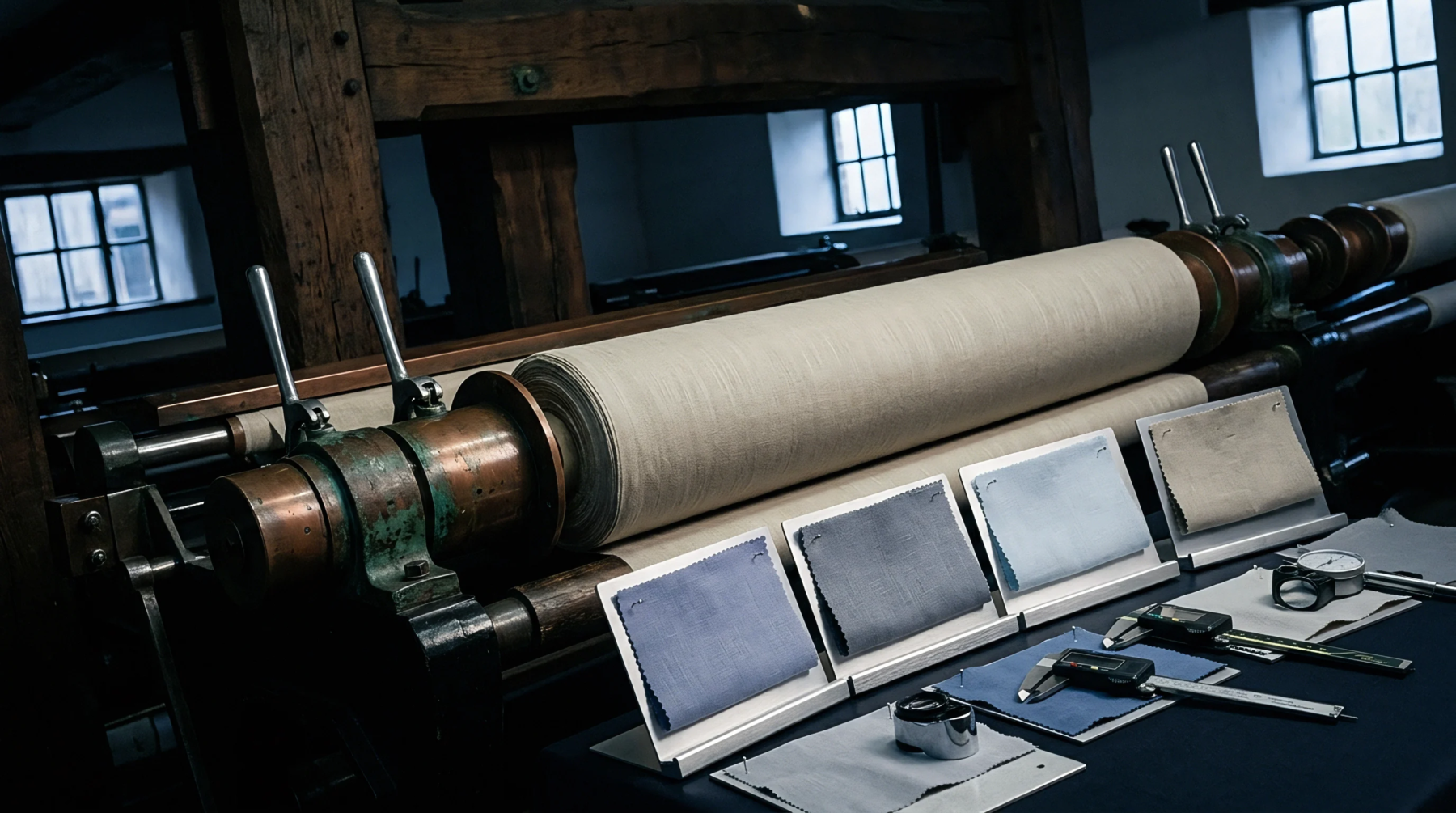
Weft density calibration
A filling bar identifies a structural defect within woven linen fabric that appears as a distinct horizontal line of irregular weft spacing. This phenomenon occurs during the shedding process when the loom fails to advance the warp beams at the correct interval or when the reed exerts uneven pressure across the pick. The physical presence of the filling bar alters the optical density of the textile and compromises the uniformity required for premium quality grades.
Manufacturers detect these irregularities during the inspection phase through high resolution optical sensors or manual light table examination before the material proceeds to the finishing stage.
Defect origin mechanics
Incorrect tensioning between the warp let off mechanism and the take up roller creates the primary mechanical conditions for this deviation. Mechanical resistance within the harness frame restricts the movement of individual yarns and forces the shuttle or projectile to deposit yarn with varying degrees of slack. A sudden stop or restart of the loom cycle often leaves a visible gap or over crowded alignment in the cloth which persists throughout the entire width of the textile.
Textile engineers evaluate the severity of the defect by measuring the variance in pick count per centimeter against the established technical specifications of the mill.
Acceptance control parameters
International trade standards for linen quality define specific tolerance levels for fabric irregularities that allow for the categorization of export goods. Commercial contracts classify a filling bar as a major defect when the disruption to the weave pattern exceeds the density deviation limits defined for Grade A linen cloth. Buyers enforce these thresholds by rejecting entire rolls if the count of horizontal line variations surpasses the stipulated frequency per meter of finished length.
Quality control reports document every occurrence of the defect to verify that the fault arose from loom calibration errors rather than inherent fibre flaws or inconsistent spinning output. The presence of these marks reduces the market value of the fabric regardless of the strength or origin of the flax fibre used in the production process.