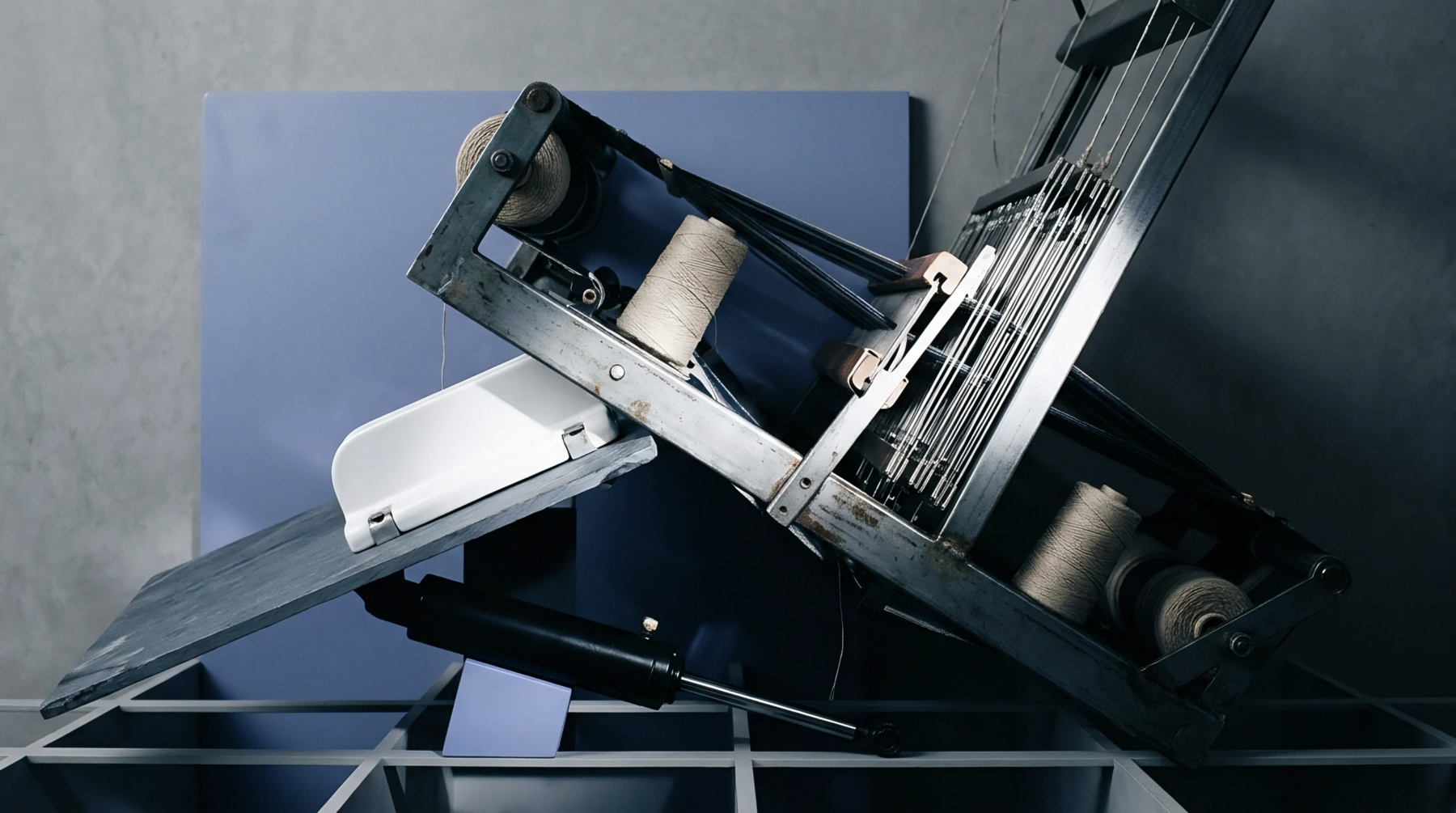
Structural Defect
Weaving anomalies occur when two filling threads insert into the same shed during air-jet or rapier loom operations. Greige fabric inspection protocols classify this specific condition as a double pick fault when evaluating woven linen bolts. Disrupted shedding cycles or failed weft catchers force multiple yarns across the warp width simultaneously.
Visible horizontal ridges disrupt fabric pattern uniformity across plain and twill weaves.
Weft Insertion
Mechanical timing errors in shuttleless loom feeder mechanisms cause improper thread release during insertion cycles. Secondary weft yarns fail to cut cleanly at the selvedge, allowing adjacent picks to drag together into the open shed. Optical yarn detectors trigger automated loom stops when extra yarn mass passes through the shedding area.
High density linen weaves amplify structural distortion because coarse flax fibers resist lateral compaction. Mill quality control logs detail defect counts per hundred linear metres prior to fabric wet finishing. Buyer acceptance criteria set strict maximum thresholds for density deviations before assigning downgraded fabric status.
Fabric Grading
Visual inspection tables confirm defect frequency under calibrated light sources. Repair technicians manually extract extra picks from loose structures before bleaching and dyeing operations. Fixed penalisation scales in export grading sheets reduce fabric monetary value based on defect length.