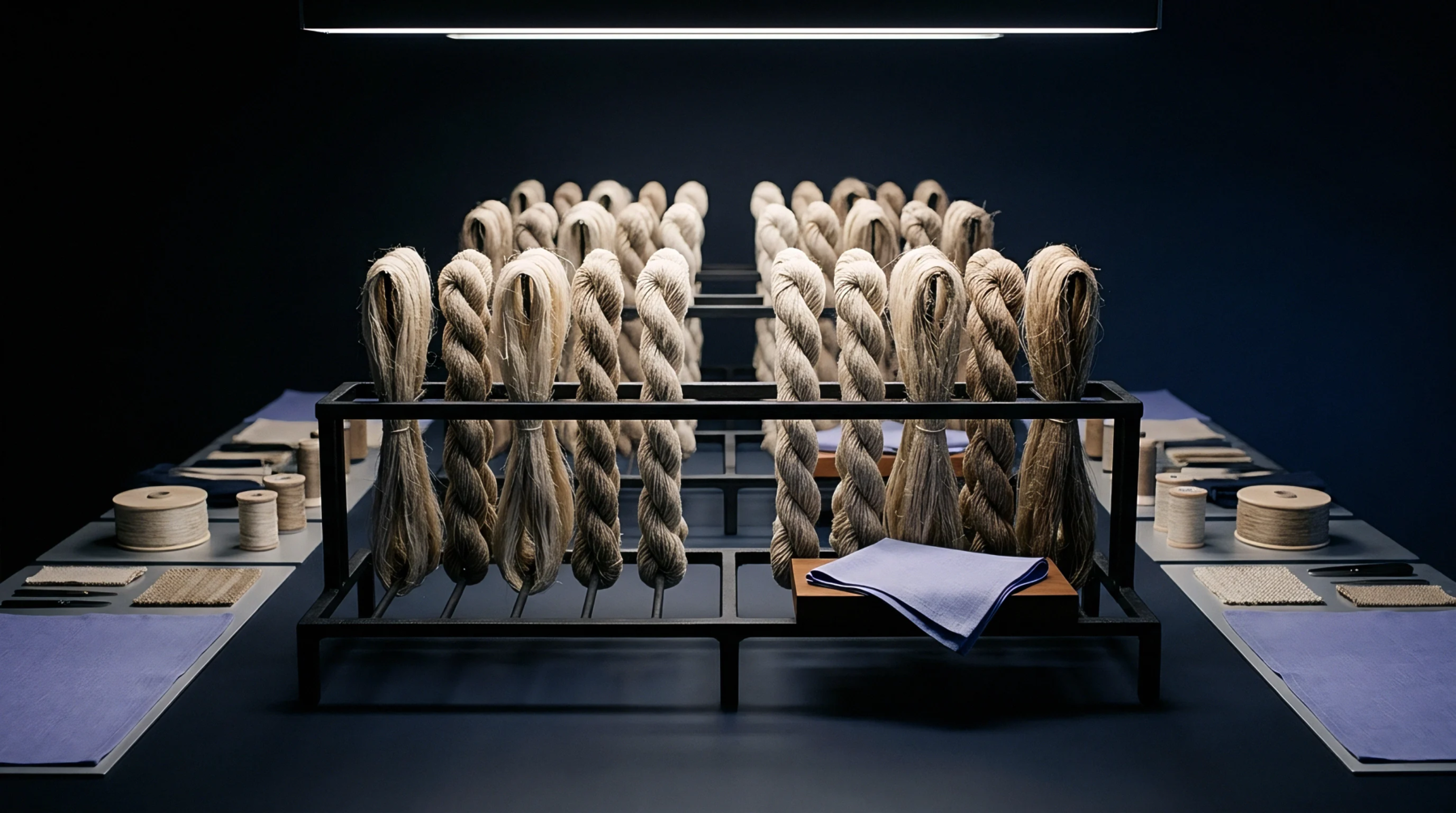
Fibre Classification
Long, parallel textile fibres extracted from the stems of Linum usitatissimum are categorized by the method used to dissolve the intercellular pectins. The term dew-retted flax line refers to these high-value long fibres that have been retted on the ground by soil microorganisms and dew before hackling. This specific raw material exhibits a characteristic silver-grey color and a high degree of flexibility that makes it ideal for spinning fine warp yarns.
Extraction Process
Field exposure of harvested flax straw relies on weather patterns to initiate the natural bacterial degradation of the plant stems. Workers turn the straw periodically to ensure uniform exposure to moisture and temperature changes before the fiber bundles are separated from the woody core. Incorrect timing of this field operation can lead to under-retting, which makes decortication difficult, or over-retting, which weakens the dew-retted flax line.
Mechanical scutching then extracts these long fibres from the retted straw while removing the shorter tow fibres.
Spinability Rating
Commercial valuation of grey yarn depends on the strength and consistency of the starting long fibres. Spinning mills measure the draftability and coefficient of variation of the dew-retted flax line to predict the frequency of yarn breaks during the winding stage. Higher grades of this long fibre yield smoother, stronger yarns with fewer thick-and-thin defects.