Liquid Retention
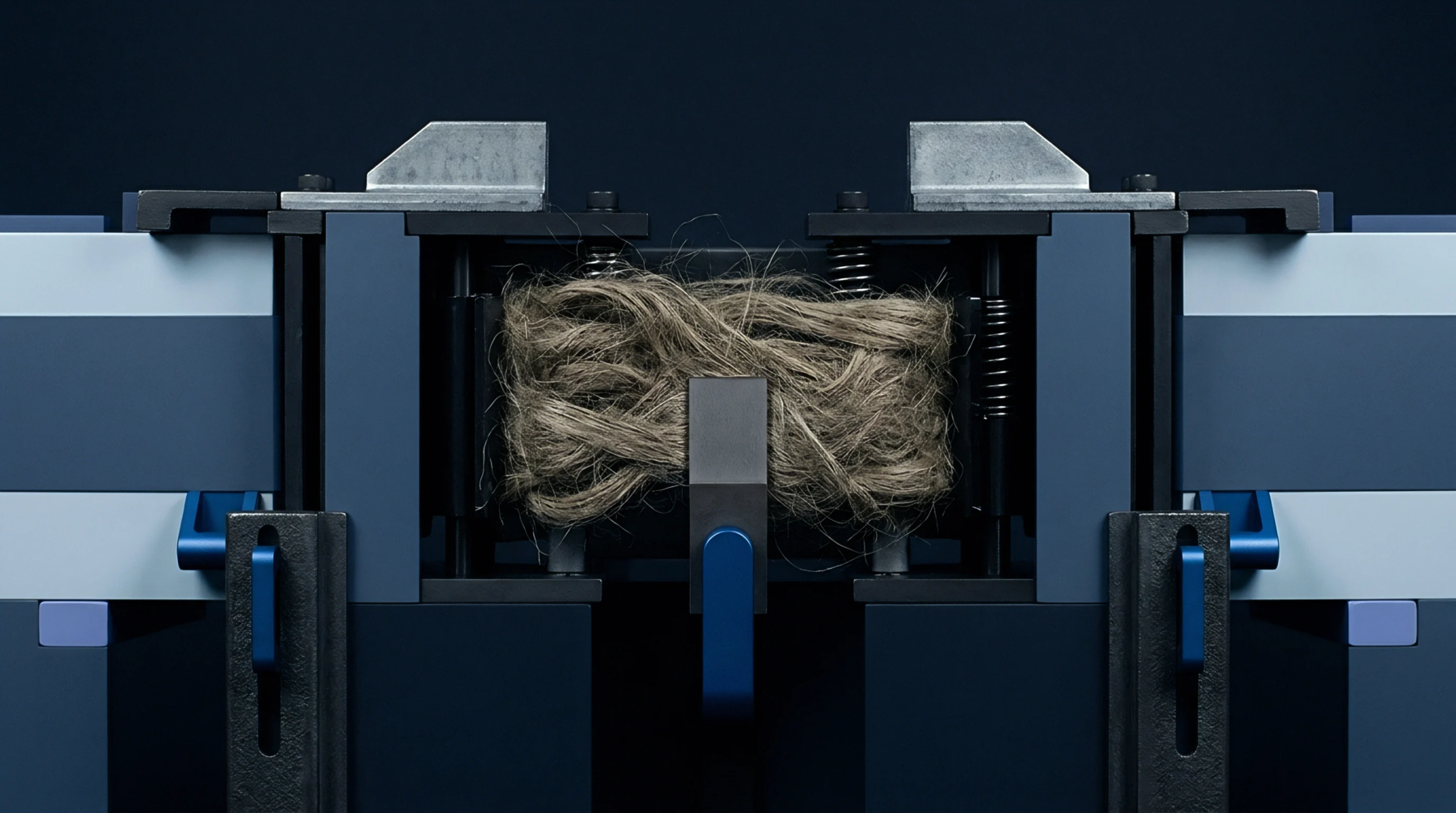
Moisture held within the interstitial spaces of processed flax fiber relies upon the capillary cohesion of water molecules. This phenomenon describes the internal force pulling liquid through the porous structure of organic strands during wet processing. Surface tension acts against gravity to pull the solution into the densest bundles of the plant material.
The interaction depends heavily upon the diameter of the voids and the chemical state of the hemicellulose coating the outer wall. A tighter packing density limits the available space for the fluid to migrate into the interior of the fiber stack.
Material Management
Processing plants monitor this physical trait to avoid the over-saturation of flax bundles before they move into the mechanical extraction stage. Operators check the absorption rates during the retting process to ensure that the water penetration remains uniform across the entire batch. High levels of liquid retention influence the mass of the fiber and change the performance of the rollers during the subsequent crushing phase.
Excess moisture distorts the friction coefficients recorded on the production logs and complicates the calculation of dry yield figures. Factories define the moisture content at the exit of the wash cycle to keep the material within the specified tolerance for the next machine unit.
Quality Verification
Technical inspectors compare the actual wet mass against the standard dry weight to identify any issues with fluid drainage. A sample taken from the output conveyor shows the degree to which liquid adheres to the fibers under a set pressure. Buyers verify that the final delivered batch meets the dryness requirements documented in the supply contract because uneven drying leads to mold growth during transit.
Consistent internal moisture levels prevent the degradation of fiber strength during long-term storage or maritime shipment. Low variability in this metric confirms the stability of the mechanical dehydration process.