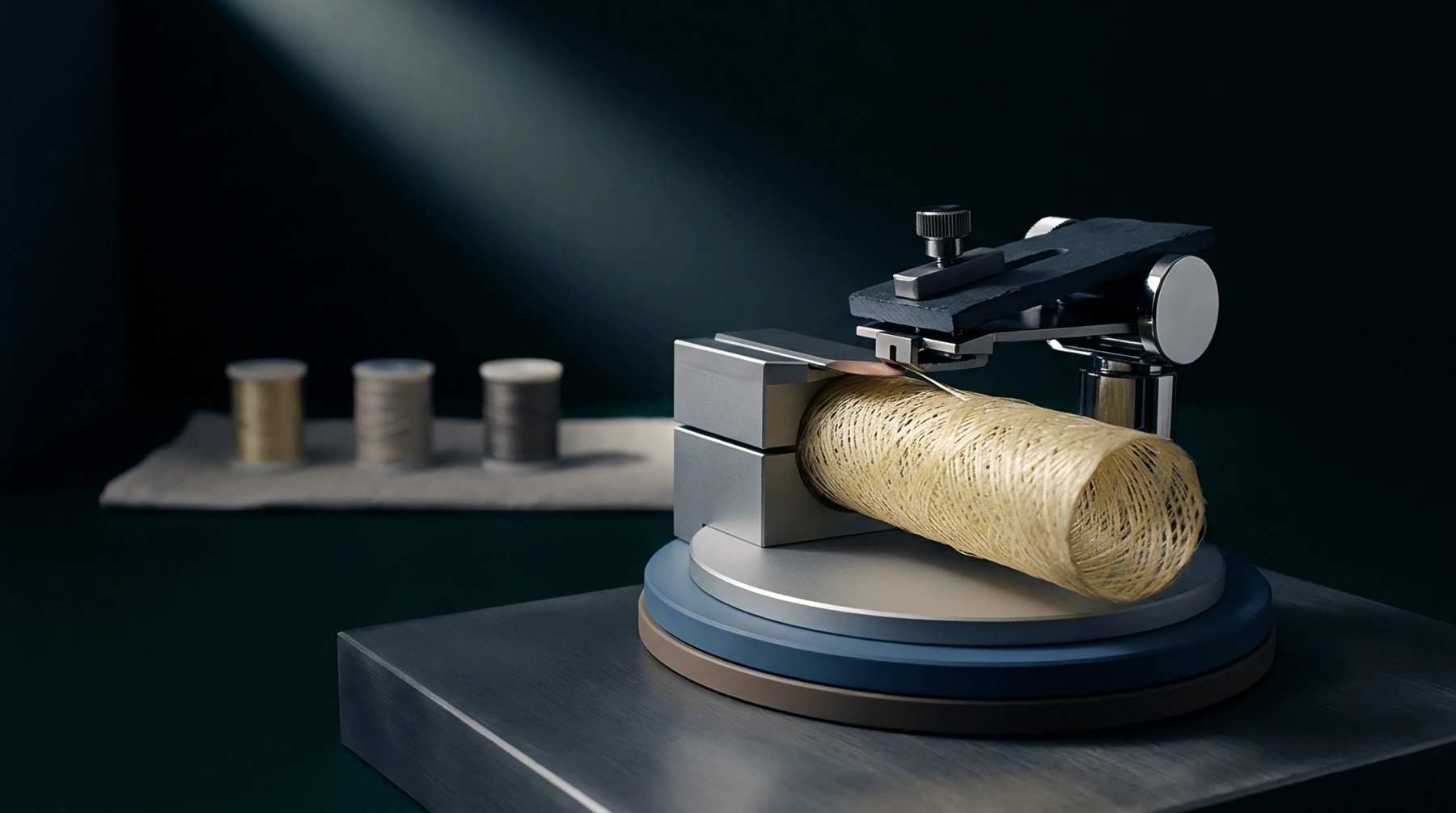
Mechanical Tensioning
Fabric uniformity depends on the dynamic position of the horizontal beam that guides warp yarns from the supply roll into the harness of a rapier loom. Adjusting this horizontal beam results in backrest rail displacement, which directly alters the path length of the yarns during the shedding cycle. Mill technicians record these mechanical movements in millimeters on the daily machine setup sheet to maintain uniform yarn tension across the loom width.
Weaving Geometry
Variations in the loom’s rear geometry change the angle at which the linen warp yarn approaches the heddles. This shift impacts the peak tension experienced by the yarn during beat-up, meaning that a larger backrest rail displacement softens the feel of the shed but can increase the risk of yarn abrasion. Spinning mills that process coarse flax yarns use a low placement to prevent excessive friction, whereas fine linen yarn requires a higher placement to ensure clear shed opening.
Technicians measure this height against the breastbeam level to establish a fixed baseline. Maintaining these geometric limits prevents yarn breakage.
Defect Avoidance
Improper loom configuration produces uneven density in the finished fabric. When backrest rail displacement occurs during a production run due to loose locking bolts, the resulting tension drop creates thin bands in the fabric. These pick-stripes fail the visual grading standards of international buyers, forcing the mill to sell the affected fabric roll as secondary stock.