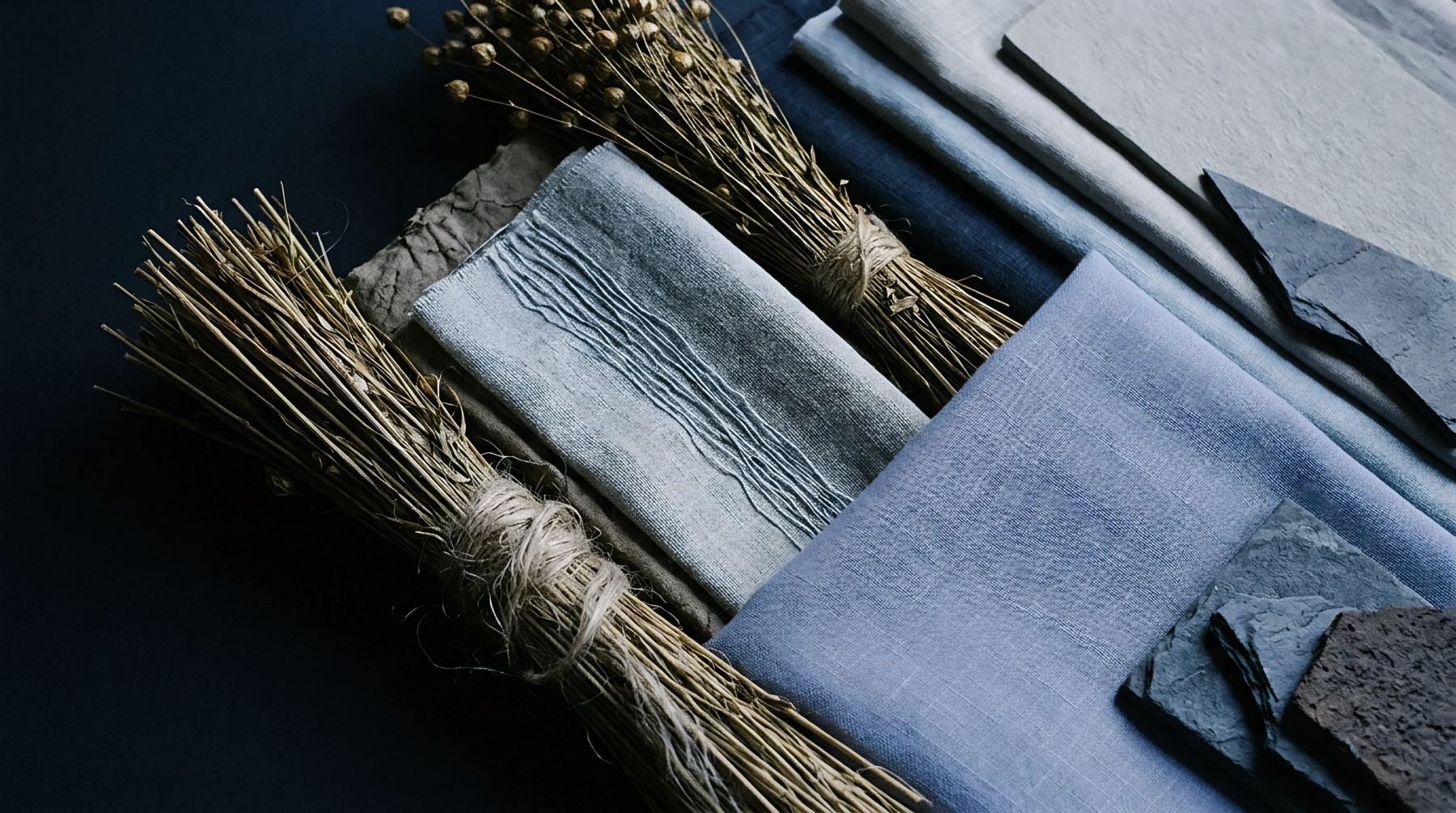
Coastal Deposit
Fine marine and river sediment deposits rich in minerals form low-lying agricultural soils in coastal river deltas. In European raw flax procurement, Zeeland alluvium provides the fertile soil foundation for growing long, high-strength bast fibre crops. Agronomic soil survey documents record particle size distribution and calcium content across coastal growing plots.
The balanced clay and silt composition supports uniform root development during early flax growth.
Moisture Dynamics
Subsurface moisture availability in river delta soils buffers flax crops against short periods of drought. Spinning mill purchasing managers trace scutched flax lots back to harvest regions because Zeeland alluvium supports steady, unbroken plant growth throughout the spring. Consistent cell division in the stem phloem creates long bast ribbons with fine microfibrillar structure.
When flax grows in these rich delta soils, stems attain uniform height and diameter across the entire field. Scutching mills report high long-fibre recovery rates from crops harvested off these alluvial grounds. Chinese spinning mills sourcing premium European flax specify delta crop origins to ensure high yarn yields and low spinning break rates.
Grade Outcome
Contract certificates list geographic soil origin as a key factor in raw flax classification. Grading sheets confirm higher tensile strength and lower coarse fibre percentages in straw harvested from alluvial delta regions. Mill buyers pay premium contract rates for scutched flax traced directly to these coastal soil origins.