Geometry Baseline
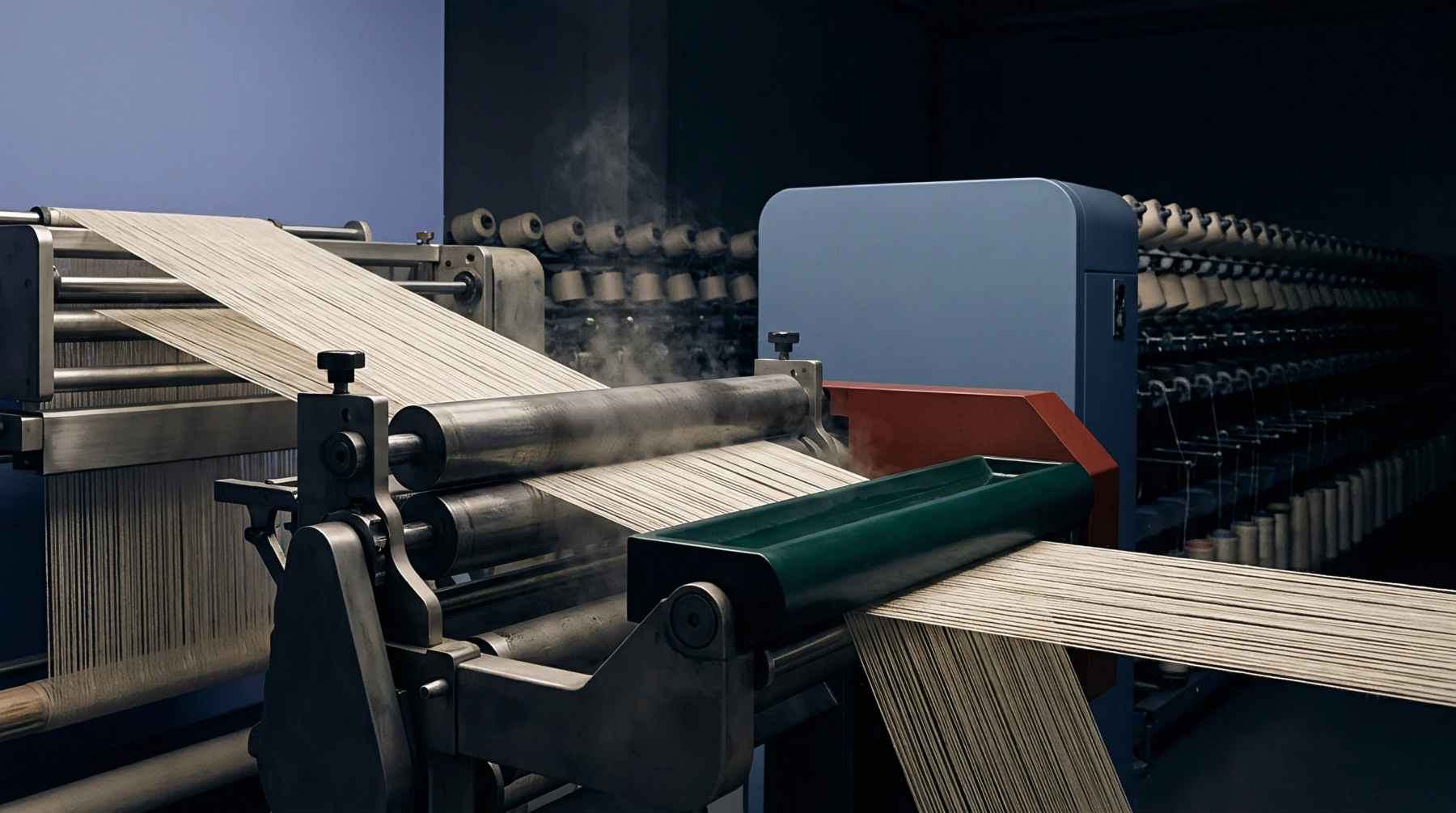
Vertical elevation of the rear oscillating warp beam roller relative to the horizontal breast beam plane establishes the primary tension balance across upper and lower shed sheds. Technicians adjust whip roll height on the machine frame chassis using slotted mounting brackets, jack screws or manual scale pins. Raising or lowering this roller changes the mechanical path length traversed by individual warp sheets during harness frame cycling.
When weaving inelastic linen yarns, small vertical variations dictate whether the upper and lower shed halves experience equal dynamic tension or asymmetric loading during the weft insertion step.
Shed Asymmetry
Raising the roller above the level plane slackens the upper shed sheet while increasing mechanical tension across the lower shed sheet during harness division. This asymmetric setup separates adjacent warp ends effectively, suppressing the clinging tendency common to hairy wet-spun bast fibres. Adjusting the whip roll height downward reverses this relationship, tightening the upper sheet and expanding bottom clearance for bulky shuttle or rapier insertion mechanisms.
Weaving masters document this elevation in machine setup records, measuring the vertical offset directly from the side frame datum mark using a steel rule.
Cover Uniformity
Precise whip roll positioning improves fabric cover factor and prevents reed mark striping across standard linen cloth constructions. Balanced tension lines yield uniform pick consolidation across plain weaves, eliminating horizontal shade differences in dyed or bleached finished goods. Incorrect roll elevation strains individual selvedge ends, accelerating yarn fatigue and causing edge drop-outs during beat-up cycles.
Maintaining certified roller heights ensures repeatable physical properties across wide-width industrial weaving halls.