Vat Dynamics
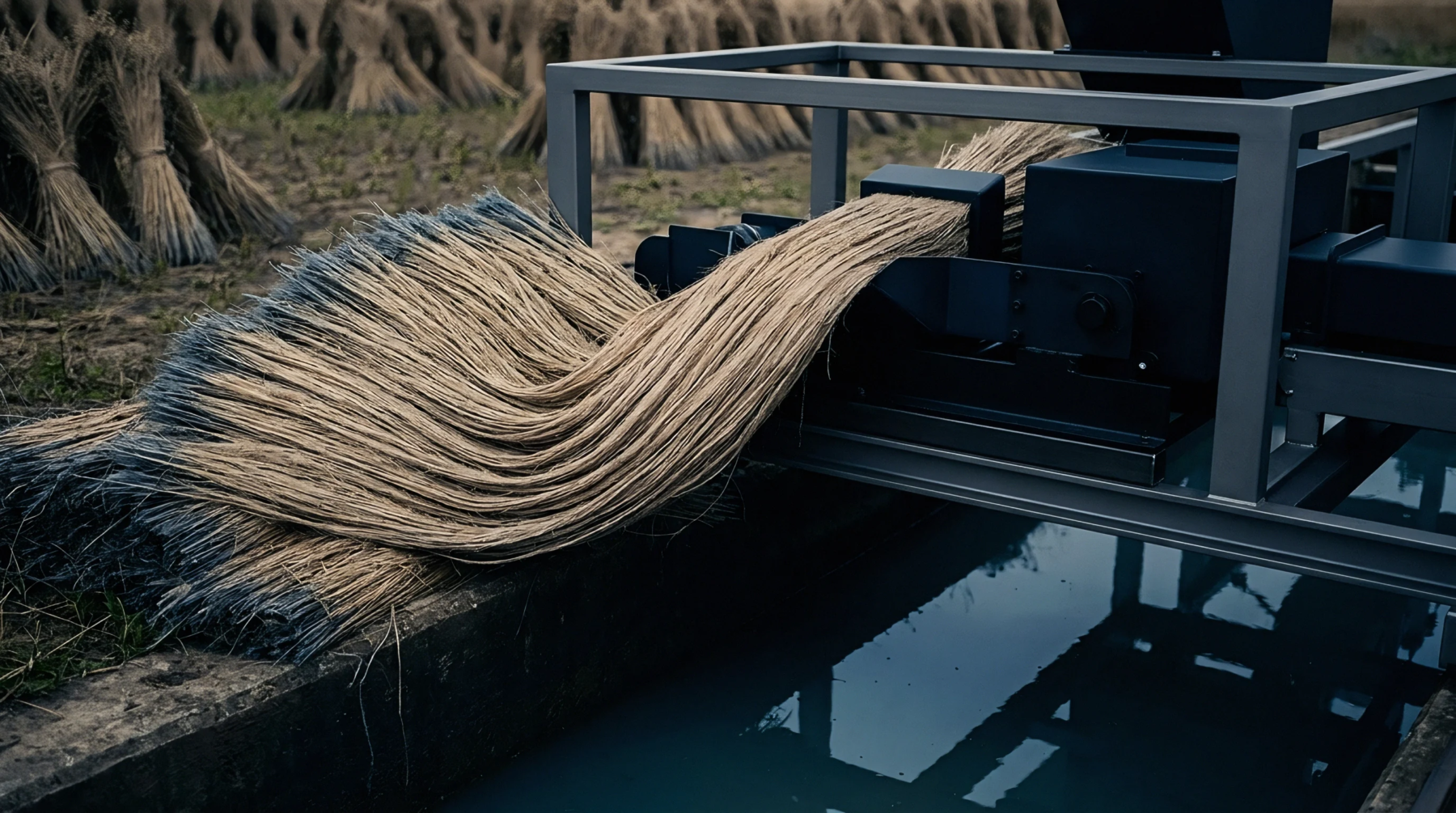
Settling behaviour governs the wet stage where flax roving rests inside steep vats before spinning proceeds. Sediment movement and liquor displacement shape how pectin breaks down around cellulose bundles during this immersion. Trough fluid kinetics controls particle suspension rates and chemical diffusion across plant cell walls inside the processing tank.
Operators measure flow velocity alongside suspended solid concentration to prevent silt accumulation at the vessel base. This hydraulic regime operates strictly between the raw water inlet and the final rinse discharge zone.
Scutching Mechanics
Mechanical separation follows steeping once dry stalks pass through breaking flutes and beating blades. Air currents and mechanical force strip woody shreds away from long flax strands inside the closed chamber. Trough fluid kinetics dictates how air velocity vectors carry away shive particles without damaging the underlying textile filaments.
Technicians calibrate suction pressure and rotor speed against the nominal mass of incoming plant matter. The process applies exclusively to dry decortication lines prior to carding and drawing operations.
Yarn Tenacity
Final tensile strength depends entirely on how evenly individual fibres consolidate during wet ring spinning. Twist insertion pulls parallel filaments together while liquid film friction determines inter-fibre cohesion limits. Trough fluid kinetics influences drafting tension by regulating hydrodynamic drag within the water bath guide eye.
Quality inspectors grade resulting yarn lots by breaking length values recorded on the dynamometer certificate. This final metric applies only to spun linen yarn tested under standard atmospheric conditioning.