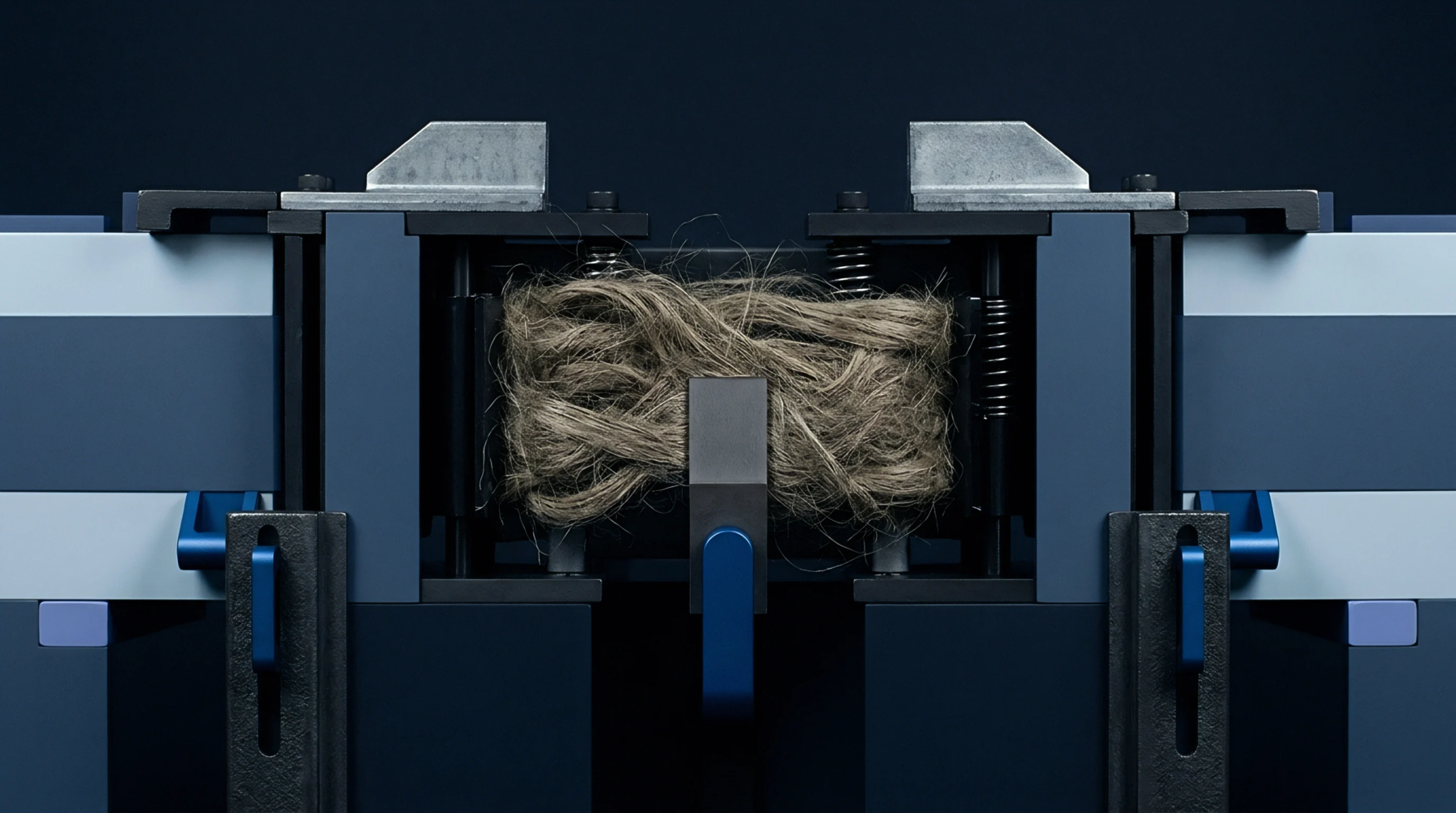
Defect Frequency
Yarn quality testing measures sudden cross-sectional increases exceeding standard diameter limits over specified test lengths. The thick places per kilometer count reflects short yarn enlargements, typically exceeding fifty percent of nominal diameter, detected by optical or capacitive yarn testing equipment. Linen spinning facilities record this count on official yarn quality certificates to verify compliance with trading standards before shipment.
Mill quality control managers use this metric to grade wet-spun flax yarn lots and classify yarn batches for warp or weft suitability.
Capacitive Testing
Laboratory evaluation using capacitive yarn testing instruments passes thread at high speed between measuring electrodes to record mass variations per unit length. When raw flax fiber bundles contain un-retted pectin clusters or fiber slubs, sensor signals trigger count registers when mass spikes exceed preset threshold percentages. High slub frequencies indicate poor fiber carding or insufficient drafting during wet spinning operations.
Adjusting carding flat clearances or cleaning drafting zone rollers reduces defect generation, improving thread appearance and performance on high-speed winding machinery.
Weaving Efficiency
Excessive yarn enlargements impair downstream textile operations by clogging reed dents and drop wires during high-speed weaving. Unremoved thick places cause filling stops on air-jet looms and create noticeable surface blemishes in high-end linen apparel fabrics.