Chemical Deterioration
Irreversible breakdown of cellulose polymer chains caused by excessive heat exposure diminishes textile tensile strength and generates surface yellowing. Prolonged exposure above one hundred twenty degrees Celsius triggers thermal degradation within flax structures, volatilizing bound moisture and oxidizing non-cellulosic pectin networks. Linen fabrics sustain permanent structural weakening when exposed to overheating during stenter drying, singeing or resin-curing steps.
The process reaches its upper boundary at thermal decomposition, where complete carbonization destroys fiber integrity.
Processing Hazards
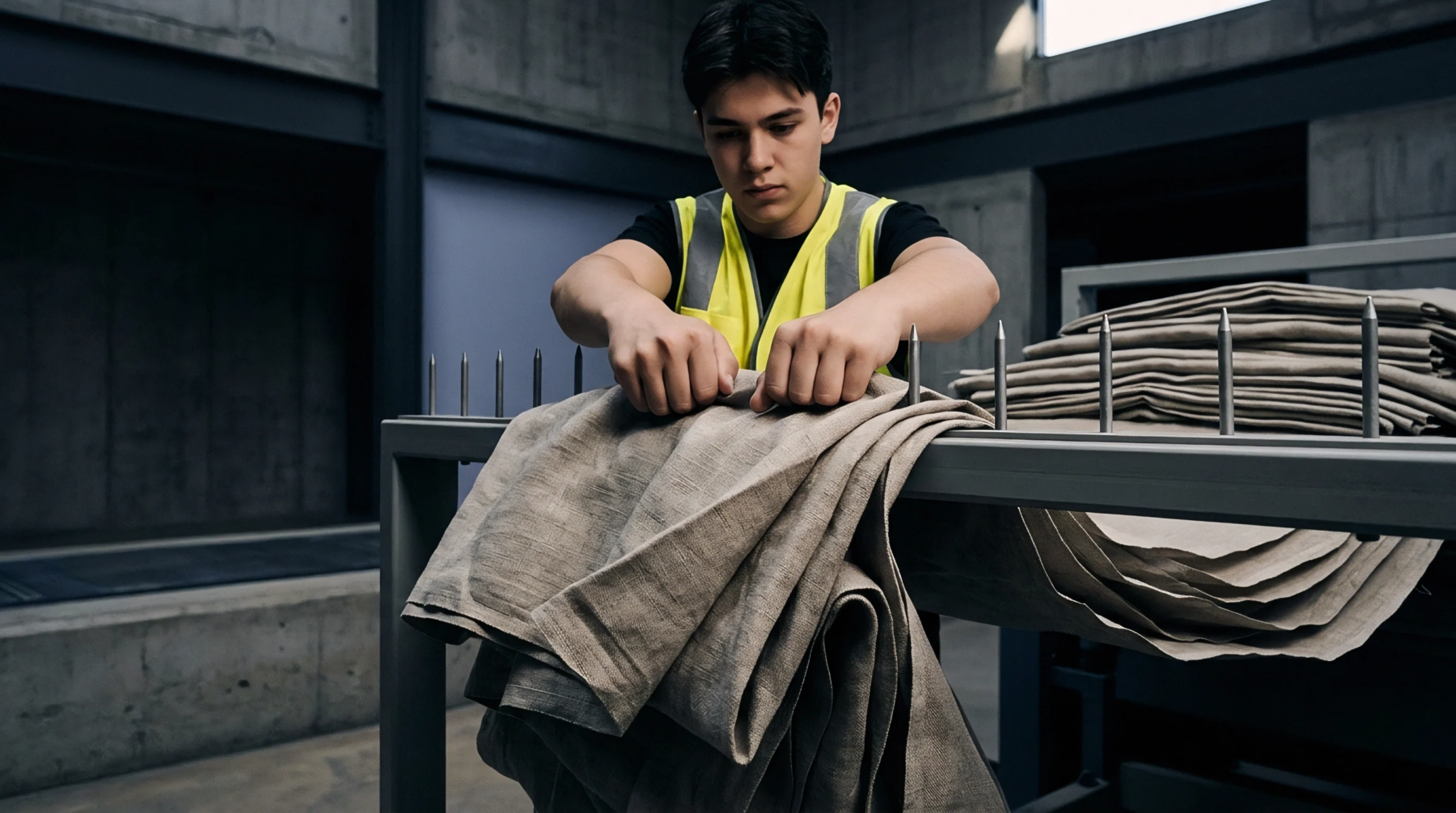
Drying wet-spun linen requires careful thermal control to balance rapid water evaporation against structural embrittlement. Overheated finishing stenters dry out internal crystalline bast bundles, causing outer cellulose fibers to crack under mechanical handling. Excessive heat in drying chambers also caramelizes natural plant pectins, imparting stubborn yellow stains that resist commercial bleaching routines.
Singeing lines must balance burner flame velocity against fabric transport speeds to burn off surface fuzz without scorching the base cloth. Routine laboratory checks test tensile losses after heat setting to ensure finishing temperatures stay within safe operating zones.
Export Specification
Buyer acceptance standards require rigorous whiteness and tensile verification following high-temperature finishing treatments. Laboratory technicians record whiteness indices alongside grab strength metrics, rejecting finished linen lots that display heat-induced brittleness or color reversion. Processing logs record stenter drying temperatures and chamber dwell times to verify standard temperature compliance.
Controlling heat exposure protects bast fiber suppleness during industrial garment processing. Controlled drying parameters maintain optimal mechanical strength across finished linen fabrics.