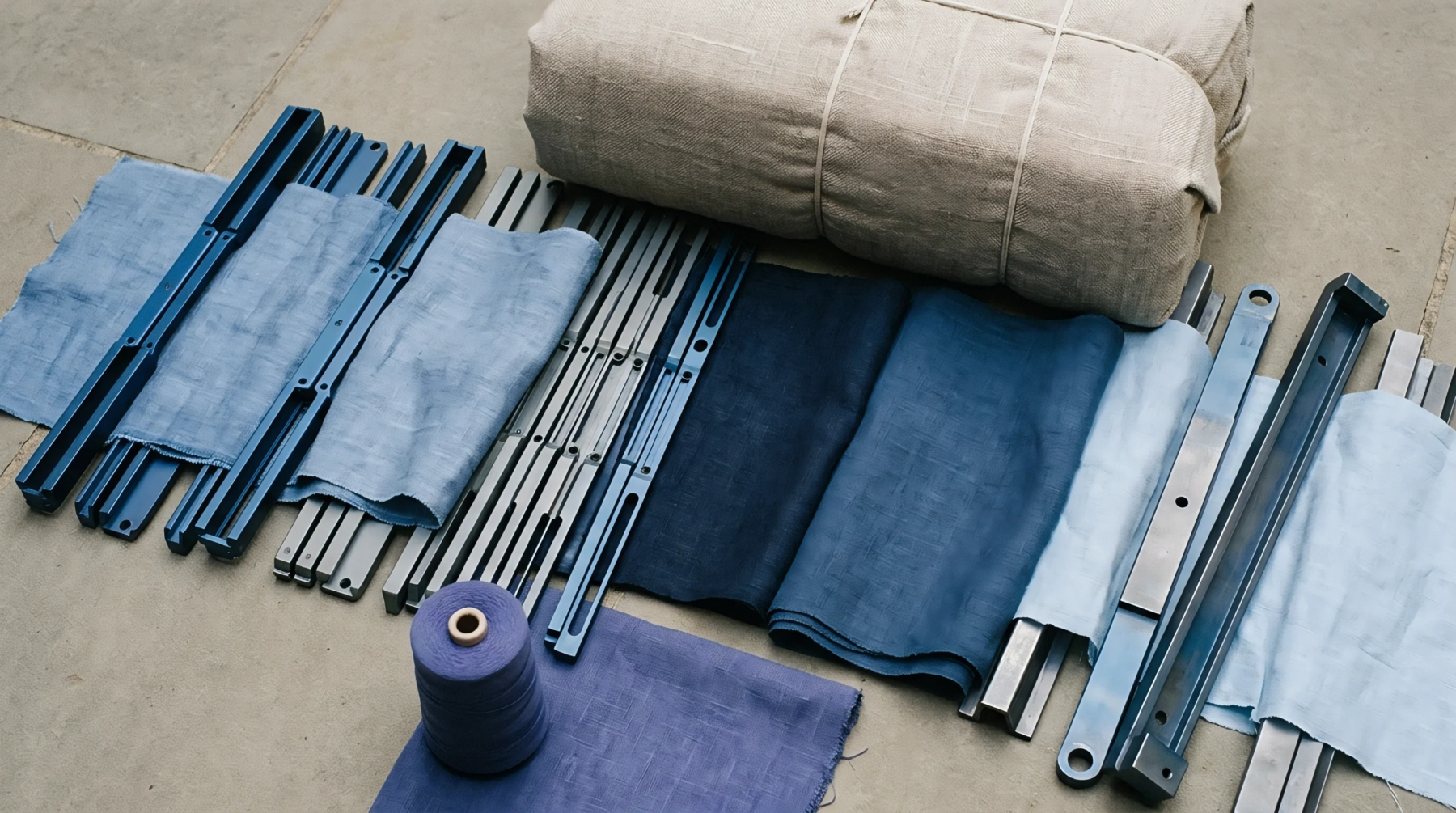
Reciprocating Drive
Mechanical linkage assemblies convert the rotary motion of the main loom drive shaft into the back-and-forth movement of the weaving reed. This action is driven by the sley crank mechanism, which must be engineered to deliver high forces at the front centre of the stroke to compress the weft yarn into the fabric. Maintenance teams inspect these crank components regularly to prevent timing errors during high-speed weaving.
Beatup Dynamics
Linen weaving requires a heavy sley to successfully beat up stiff flax yarns without causing vibration or machine instability. The geometry of the sley crank mechanism determines the acceleration of the reed as it approaches the fell of the cloth. If the acceleration is too abrupt, the sudden impact can snap fragile flax warp threads that are under tension.
Adjusting the crank eccentricity allows mills to fine-tune the dwell time when the shed is open, which optimizes weft insertion on wider looms.
Wear Resistance
Continuous operation of heavy looms in spinning and weaving mills puts immense stress on the bronze bushings and crank pins. Wear in the sley crank mechanism introduces play in the reed movement, which leads to starting marks and uneven weft spacing in the finished linen. Since global buyers reject fabrics with visible starting marks, maintaining zero play in the crank drive is crucial for export quality.
Regular lubrication and scheduled rebuilds of the crank assemblies are standard practices in competitive weaving mills.