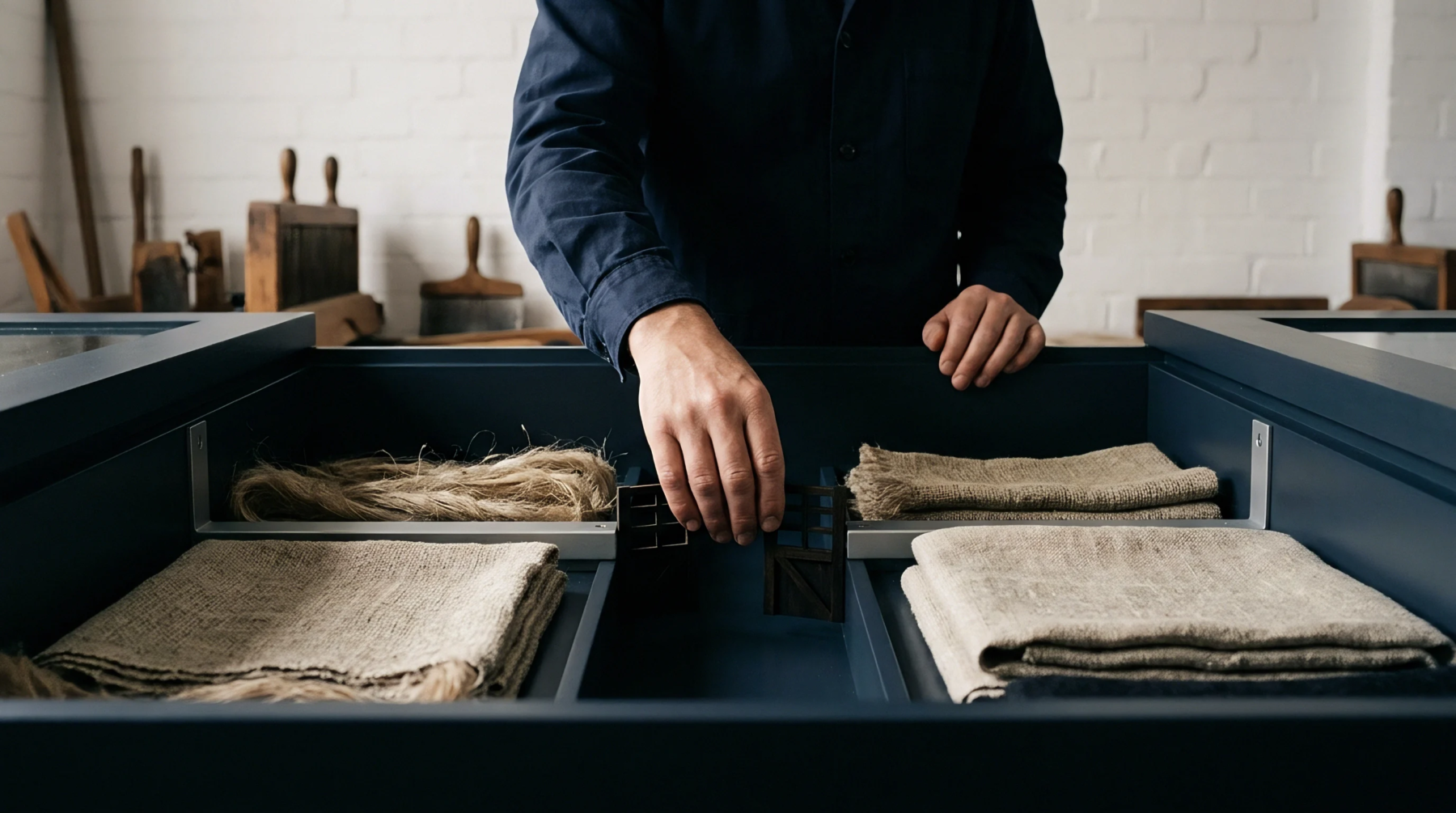
Fibre Measurement
The classification of impurity levels within flax output governs the shive fraction accounting process. This method quantifies non-fibre plant particles remaining after the mechanical scutching phase by dividing the mass of woody debris by the total weight of the sample. Precise values derived from this calculation inform the initial quality grade of the raw material before it moves toward hackling.
Processing Protocol
Technicians perform this evaluation at the mill entrance to establish a baseline for cleaning requirements. Machines separate the woody shives from the bast fibres through repeated rotating cylinders or beaters. Each batch undergoes sampling where the residual debris mass represents the efficiency of the previous stage.
High readings of this measurement trigger a re-entry into the cleaning line to prevent equipment damage during the subsequent spinning phase.
Commercial Impact
Contractual agreements for flax supply rely upon these values to set the final payment per kilogram. Buyers specify maximum allowable debris percentages in the purchase agreement to ensure that the fibre quality matches the intended end use of the linen yarn. Discrepancies between the mill grade and the inspection result force an adjustment in the price to compensate for the additional labour necessary to remove excess shives before textile production.
Consistent performance in this area ensures that the raw material meets the standards required for fine weaving and high-speed spinning equipment.