Fibre Parallelism
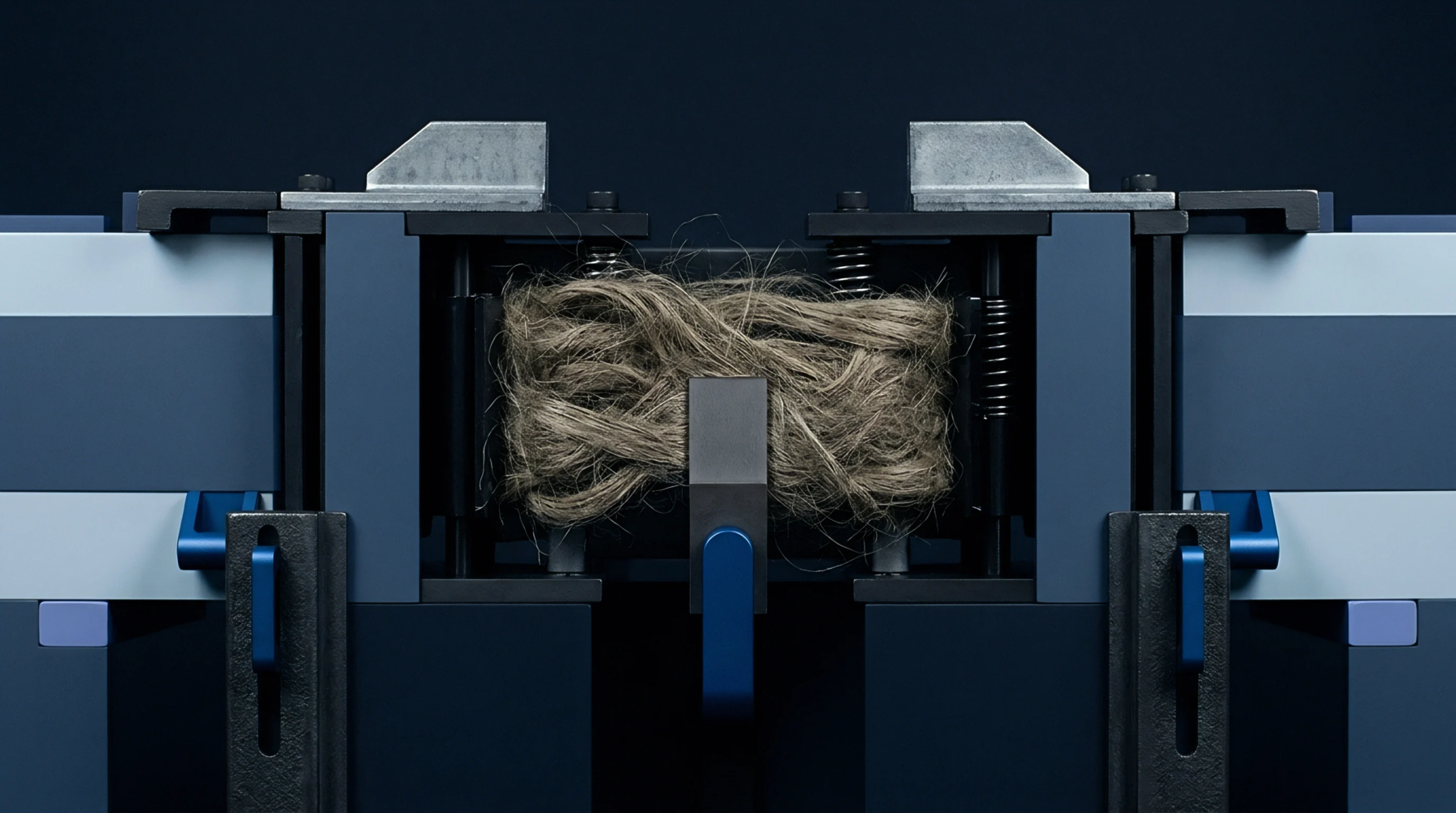
Mechanical processing within the spinning preparation stage aligns short flax fibres into a cohesive sliver of consistent weight per unit length. The screw gill drawing machine performs this function by pulling the fibre mass between two sets of faller bars moving at different speeds. The speed differential between these bars stretches the fibre bundle until individual filaments lie parallel along the longitudinal axis.
This mechanism reduces the mass variation of the sliver, ensuring the textile output meets the technical specifications required for high speed ring spinning. Proper regulation of the gill head creates the uniform density necessary for downstream yarn regularity.
Operational Precision
Mill supervisors monitor the pin density and the draft ratio of the screw gill drawing equipment to manage the degree of fibre extension. If the pins are damaged or spaced incorrectly, the machine fails to remove kinks or clusters within the flax sliver. The operator adjusts the faller bar motion to accommodate changes in the raw material quality, as a longer staple length requires a wider distance between the bars to prevent fibre breakage.
High friction between the pins and the material generates heat, so the timing of the cycles stays calibrated to avoid melting the protective cuticle of the plant stalk. Control of these mechanical variables determines the strength of the final sliver and prevents the formation of thick spots or thin sections that cause breaks during the subsequent stages of production.
Acceptance Criteria
Quality control documentation records the sliver weight per meter and the coefficient of variation in mass after the screw gill drawing process reaches completion. Buyers require these measurements to confirm that the sliver will pass through the roving frames without structural failure or uneven tension. Mill standards distinguish between the fibre grade assigned to the raw bale and the processed density of the sliver which confirms the success of the mechanical alignment.
The specific numeric output of this drawing step serves as the primary gauge for determining if the lot remains suitable for premium yarn production. Final yarn regularity depends on the consistency of the parallel alignment achieved during this single preparation phase.