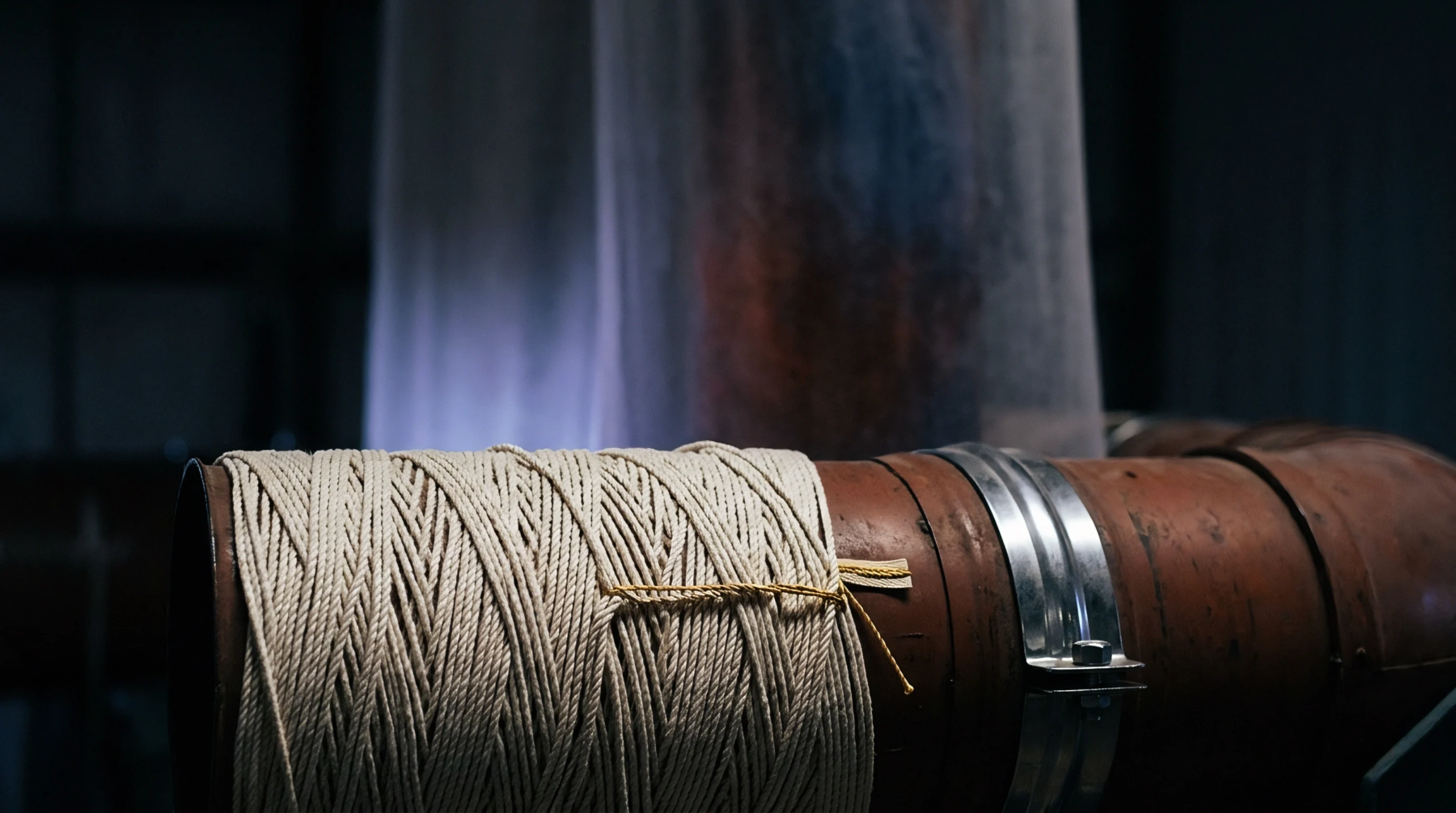
Physical Tension
Tensile stress relaxation drift defines the progressive dimensional recovery loss occurring when wet spun flax rovings experience sustained mechanical extension during high speed drafting operations. Mechanical stretch applied inside wet spinning frames forces long polymer chains within cellulose structures past equilibrium positions before moisture evaporation fixes the orientation permanently. Internal molecular bonds undergo permanent rearrangement while tension remains constant across the drafting rollers, causing subsequent yarn segments to fail dimensional recovery targets during final bleaching operations.
This specific form of dimensional instability manifests whenever ambient relative humidity drops below predetermined mill thresholds during drawing sliver production, altering linear mass density across standard testing lengths.
Recovery Loss
Stress reduction measurements recorded inside the quality control laboratory document force decay percentages over standard ten minute intervals on conditioned yarn samples. Constant elongation testing regimes quantify how much residual holding force disappears after the initial drafting load settles, providing technicians with verifiable data for export documentation. Quality inspectors compare measured tension reduction curves against established buyers acceptance criteria before issuing certificates of compliance for finished linen bolts.
High humidity environments inside spinning halls suppress internal friction, allowing cellulose molecules to settle faster and reducing overall force decay during subsequent winding phases.
Thermal Correction
Finished woven fabrics require precise thermal stabilization treatments to counteract residual molecular memory built into yarn bundles during earlier spinning stages. Heat setting chambers operating at elevated temperatures neutralize unbalanced internal stresses by supplying sufficient thermal energy for cellulose chains to adopt stable relaxed configurations. Adjusting steam pressure inside finishing autoclaves prevents subsequent shrinkage distortion during commercial garment manufacturing and retail laundering cycles.
Final inspection protocols verify that treated fabric batches maintain dimensional stability within acceptable tolerances specified by international textile standards.