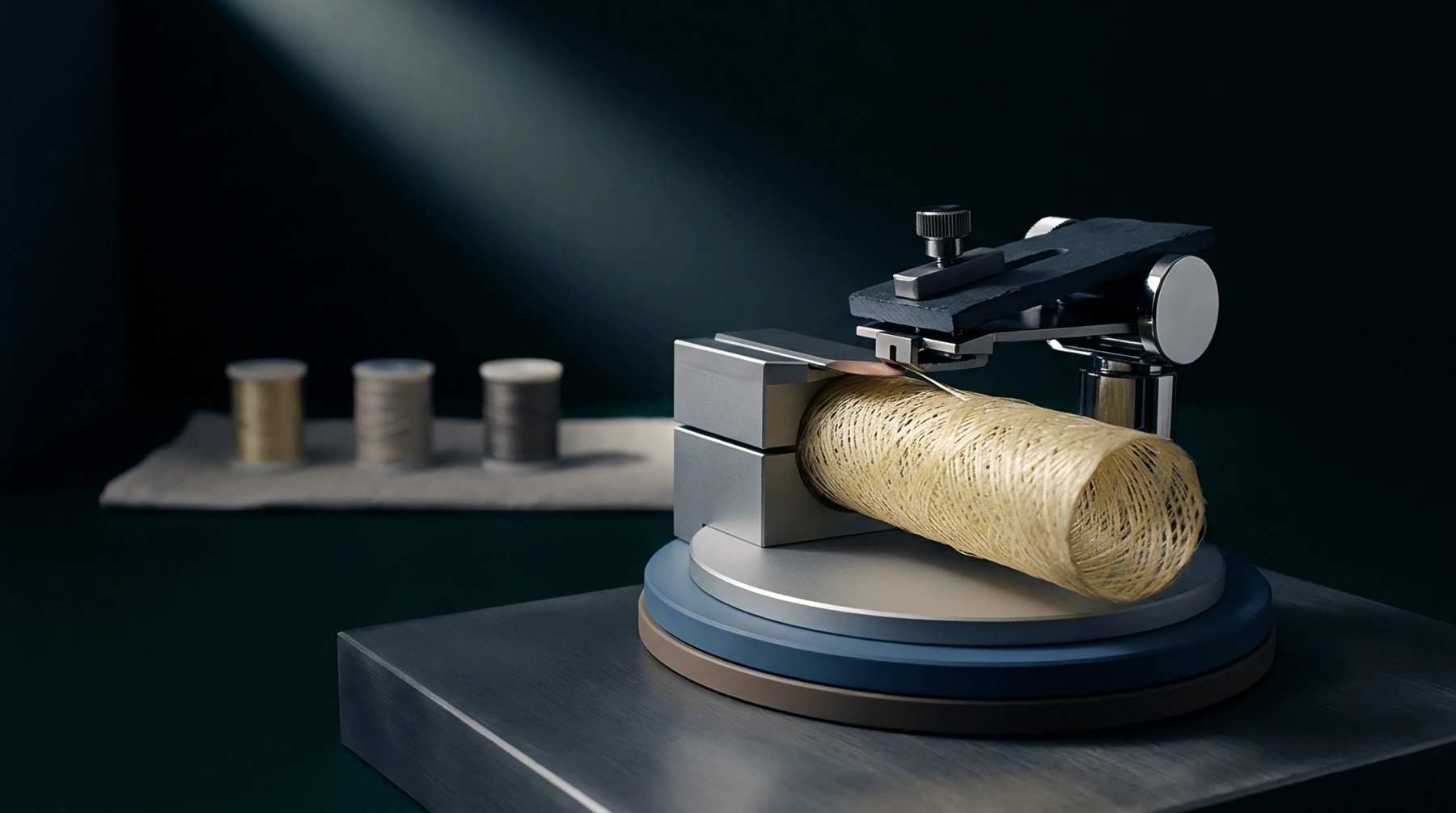
Fibre Metric
Quantitative assessment characterizes the spread of individual flax fibre widths within a bulk sample after harvest and preliminary mechanical processing. The optical diameter distribution provides a statistical profile of batch consistency before the material enters high speed spinning machinery. Analysts use this measurement to define the percentage of coarse versus fine elements in a lot of hackled fibre.
Variability within these profiles predicts potential breakage rates during the drafting stage of yarn production.
Process Specification
Measurement equipment scans thousands of fibres in a representative sample to record variations that affect downstream spinning performance. This procedure captures the transition from raw flax feedstock to processed rovings by identifying outliers that exceed nominal diameter targets set for a specific yarn count. Automated sensors detect fine shifts in width that human graders miss during visual inspection of the line.
Mill management relies on this data to adjust carding tension or draft settings for maintaining consistent linear density in finished textile products. Documented records of these distributions reside in the quality assurance ledger for each lot of flax fibre.
Quality Threshold
Commercial acceptance criteria for exported linen depend upon strict adherence to established diameter boundaries and the breadth of that statistical spread. Buyers stipulate maximum limits on the standard deviation of these widths to ensure evenness in weaving and consistency in chemical finish absorption. A narrow distribution across a bulk lot indicates stable growing conditions and effective mechanical separating, while a wide distribution suggests mixing from disparate harvest sources.
Large variances inside a shipment increase the risk of fabric surface irregularities during the final loom operation. Uniformity in this metric validates the technical value of the fibre lot relative to its price point.